

Your retail property's wayfinding directly impacts revenue, operational efficiency, and customer satisfaction. When tenants move locations, shoppers can't find stores, and your staff spends hours answering "Where is...?" questions. This experience equates to lost revenue, shorter dwell times and unhappy tenants.
The question isn't just which wayfinding solution to choose. It's whether implementing modern wayfinding technology to complement traditional wayfinding methods you have today—physical signage, staff assistance—is worth the investment.
Here's what matters most when evaluating the best wayfinding solutions for retail spaces:
- Update speed and accuracy — Tenant changes happen constantly in retail. Can your wayfinding system update instantly across all touchpoints, or do you wait 3+ weeks for new signage to arrive while visitors navigate with outdated information?
- Infrastructure and maintenance requirements — Some solutions require hundreds of Bluetooth beacons throughout your property, each needing battery replacements and ongoing service. Others work immediately with existing technology. The difference in operational burden is substantial.
- Revenue generation potential — Digital directories and kiosks represent premium advertising real estate in your highest-traffic areas. Are these touchpoints generating revenue, or just serving as cost centers?
- Accessibility and compliance — With nearly 48% of retail guests dissatisfied with the current accessibility standards in stores, WCAG compliance isn't optional. Does your wayfinding solution include built-in accessibility features, or are you cobbling together add-ons and hoping for the best?
This guide compares four approaches to retail wayfinding:
- Digital wayfinding platforms
- Beacon-based systems
- Traditional GIS solutions
- Static signage
We'll examine what each delivers, where they fall short, and what the actual cost of “status quo” looks like for your properties.
Looking for an indoor mapping solution to enable retail guest wayfinding, power digital kiosks, simplify operations, and improve venue analytics? Book a custom demo of Mappedin →
Option #1. Mappedin: The digital wayfinding solution built for complex, multi-level retail properties
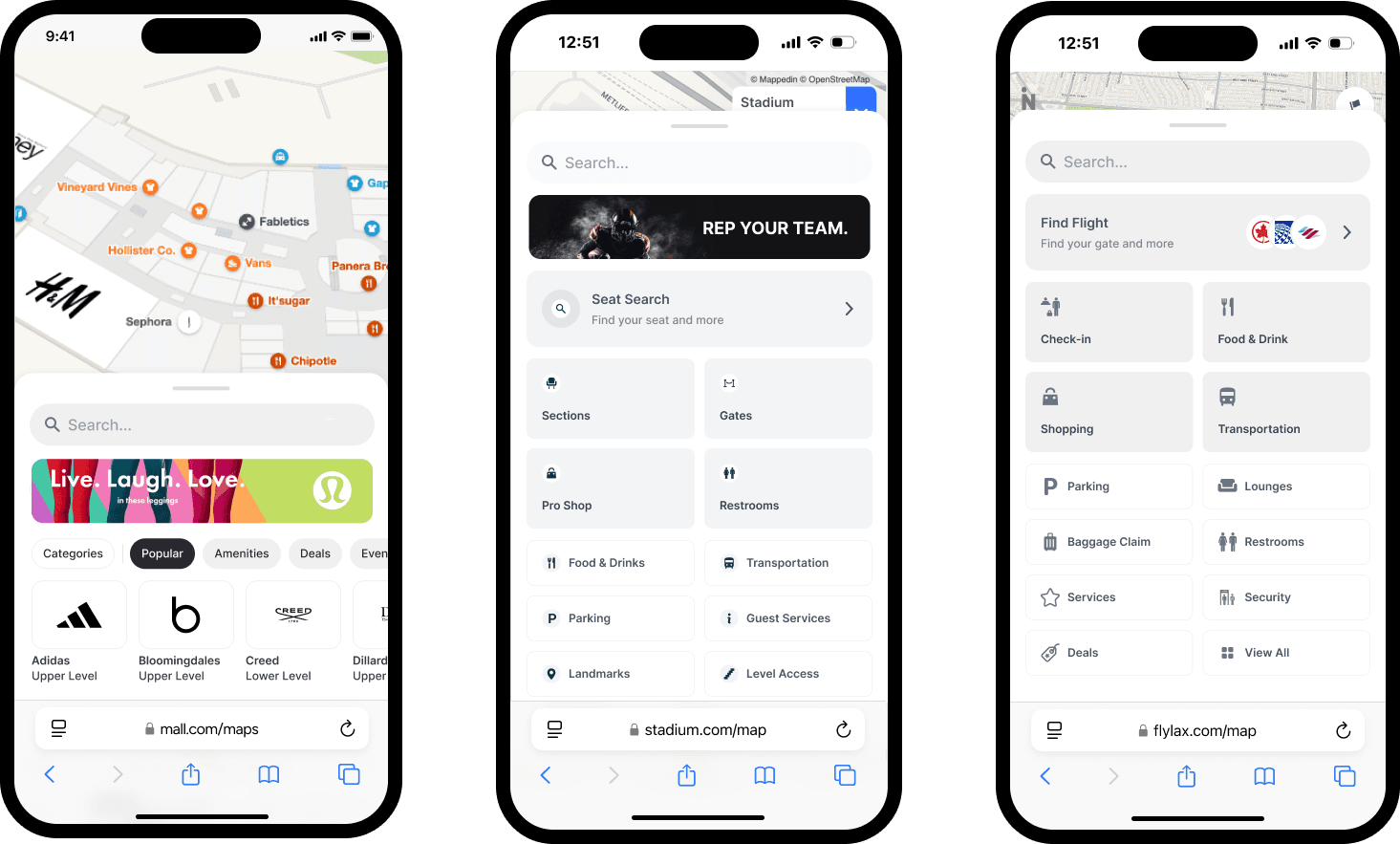
Mappedin is an integrated indoor mapping and wayfinding platform designed specifically for retail properties, shopping centers, and mixed-use developments. The platform combines AI-powered map creation, infrastructure-free positioning, revenue-generating digital directories, and WCAG 2.1 AA accessibility, eliminating the need to manage multiple vendors or systems.
Simon Property Group, Cadillac Fairview, and Brookfield Properties use Mappedin across hundreds of properties because it solves the core challenges that make traditional wayfinding expensive and operationally complex.
— Ana Fé, Digital Marketing Coordinator, Sonae Sierra
What makes Mappedin different
AI-powered mapping (not manual design work)
Mappedin's AI processes your floor plans automatically, identifying walls, doors, columns, and room labels to create accurate 3D maps in hours instead of weeks. Just provide architectural drawings, and the platform extracts spatial data, recognizes structural patterns, and generates map geometry without manual tracing.
When tenants relocate, you update location information once in the CMS. The change instantly propagates across your web maps, mobile apps, and digital directories.
No design team coordination, no 3-week print cycles, no manual updates across multiple displays.
- Easy implementation for immediate impact: 30-45 days from integration to live deployment versus 3+ months for traditional approaches.
- Real-world benefit: A tenant moves from Space 204 to 301? Update it in 30 seconds. Every visitor sees accurate information immediately across every touchpoint.
Infrastructure-free positioning (no beacon installations or maintenance)
Mappedin delivers accurate indoor positioning through GPS integration and Apple's Indoor Positioning System (no Bluetooth beacons required). iOS devices receive blue dot positioning throughout your venue after a one-time setup survey.
This matters because beacon-based systems create ongoing operational headaches. A 500,000 square foot mall requires 10,000+ Bluetooth beacons. Each beacon needs battery replacement every 1-3 years. That's continuous maintenance cycles, unexpected downtime, and staff time spent troubleshooting positioning failures.
Mappedin eliminates the need for expensive, high-maintenance beacons. For complex properties, QR code-based positioning and camera-based location setting require no specialized infrastructure beyond QR stickers.
Bottom line:
- Deploy in weeks, not months.
- No hardware to purchase, install, replace, or maintain.
- Your IT team focuses on strategic initiatives instead of beacon battery management.
— Wendy Albert, Vice President of Marketing, Miracle Mile Shops
Revenue-generating digital directories
Mappedin Directory transforms high-traffic kiosks and digital displays into advertising inventory. Full-screen ads display during idle moments, featured location placements appear on home screens, and sponsored routes guide visitors past specific stores—all managed through the same CMS that controls your maps.
Revenue channels include:
- Full-screen video or image advertisements during directory idle time
- Premium tenant placement in search results and home screen visibility
- Sponsored route promotions that guide visitors strategically
- Integration with ad management platforms like Broadsign for multi-property campaign management

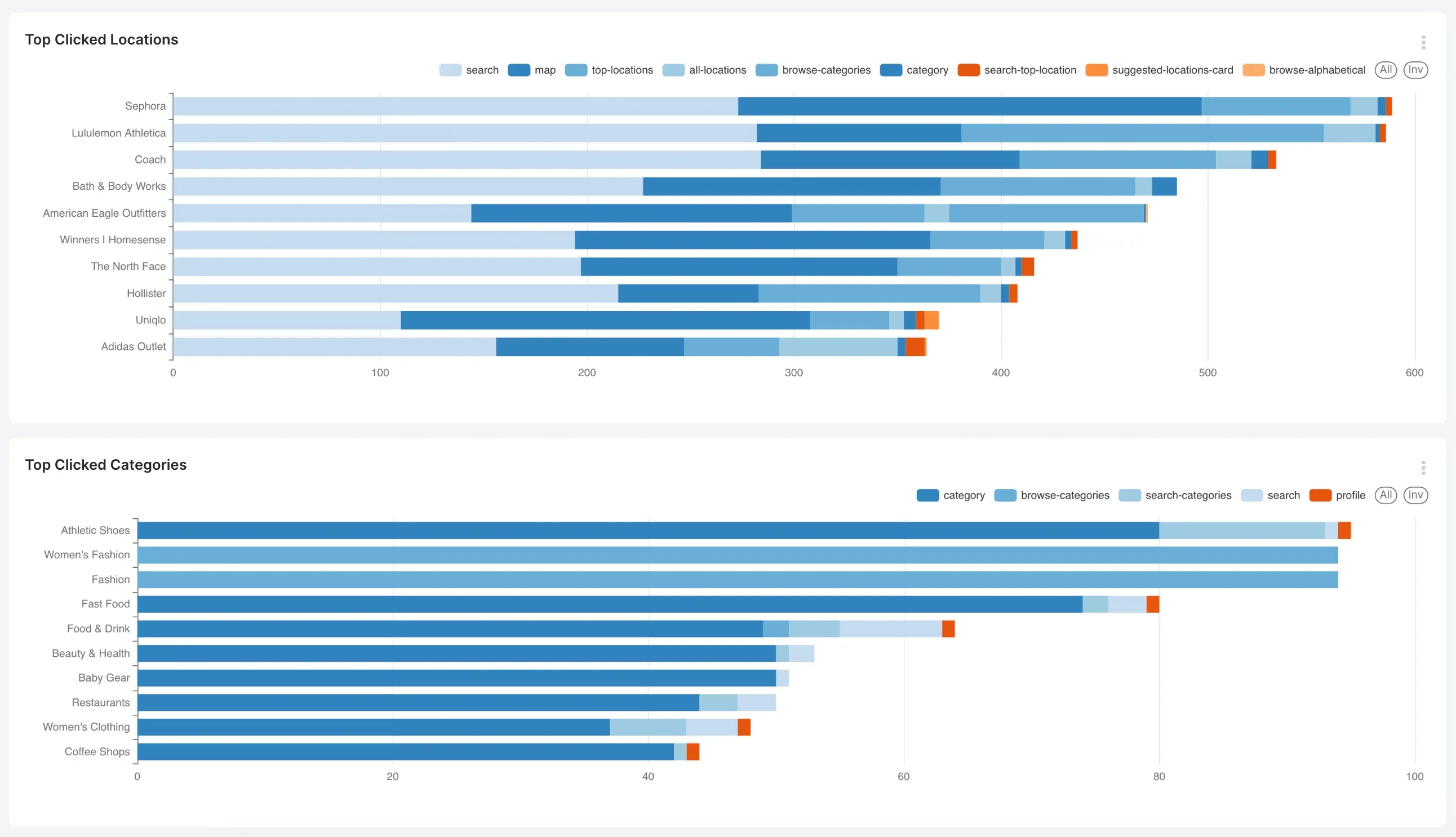
Beyond advertising, the directory includes Mobile Pass functionality (visitors scan QR codes to transfer directions to their phones), customizable location profiles with store hours and promotions, and behavioral analytics showing which stores receive the most searches, peak usage times, and navigation patterns.
Bottom line:
- Your wayfinding system becomes a profit center instead of a cost center.
- Analytics data informs leasing decisions and demonstrates ROI to advertisers.
Built-in WCAG 2.1 AA-compliant accessibility
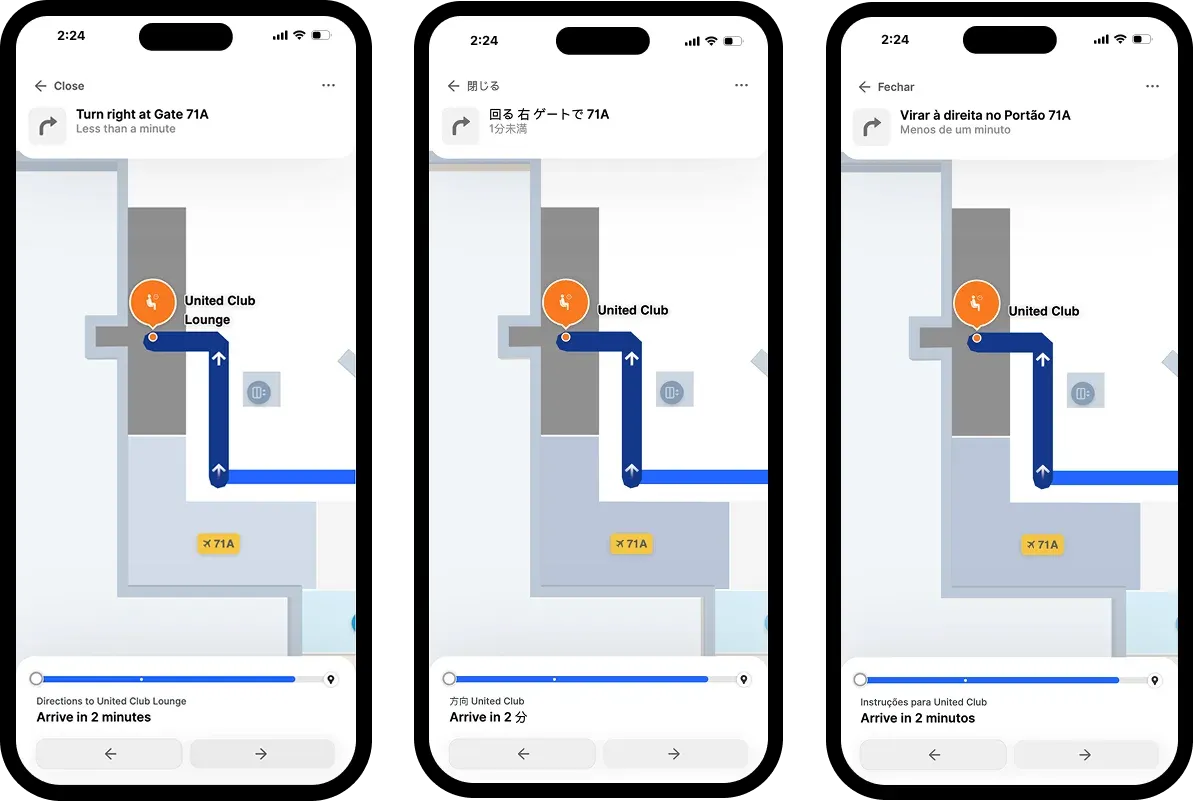
Mappedin maintains WCAG 2.1 AA compliance through independent Level Access audits and testing by professionals with lived disability experiences. This compliance covers all products—web maps, mobile SDKs, and digital directories—ensuring consistent accessibility across every visitor touchpoint.
The platform includes:
- Screen reader compatibility with iOS VoiceOver and Android TalkBack
- Accessible route planning that prioritizes elevators and gradual inclines
- High and low interface modes on digital directories for wheelchair users
- Localization in 40+ languages
- Identification of inclusive spaces like prayer rooms, sensory spaces, nursing areas and family restrooms
Bottom line:
- You solve every accessibility dimension (physical, sensory, cognitive, and cultural) through a single platform.
- No multiple vendors, no compliance gaps, no accessibility lawsuits.
What Mappedin costs and who it's for
Mappedin pricing follows a per-venue model based on property size, feature requirements, and number of locations. Implementation includes AI map generation, positioning setup, CMS training, and ongoing platform access with updates.
Best for: Shopping centers, outlet malls, mixed-use developments, and retail portfolios managing 1-200+ properties requiring enterprise-grade wayfinding with revenue generation capabilities and built-in accessibility.
Not ideal for: Small, single-tenant retail stores or properties where basic static signage meets navigation needs adequately.
Looking for an indoor mapping solution to enable retail guest wayfinding, power digital kiosks, simplify operations, and improve venue analytics? Book a custom demo of Mappedin →
— Rachel Bell, VP of Client Development, Product at Intersection, Hudson Yards New York
Option #2. Pointr: Beacon-based indoor positioning platform
Pointr offers comprehensive indoor mapping built on Bluetooth beacon infrastructure, serving high-profile retail customers including Harrods, Macy's, and Home Depot. Pointr positions itself as a category leader in indoor positioning technology and enterprise-scale deployments.
Some of Pointr’s pros include:
- Sub-3 meter positioning accuracy consistently when properly installed and maintained. For large retail properties where GPS struggles, beacon networks provide reliable positioning.
- Developers can customize navigation interfaces, integrate with existing apps, and build bespoke features using Pointr's SDKs. If you need wayfinding deeply integrated into your branded mobile experience, this flexibility matters.
- Tracks visitor heatmaps, journey patterns, dwell times, and occupancy trends.
At the same time, Pointr as a wayfinding solution for retail spaces has some drawbacks:
- Infrastructure dependency: Pointr requires extensive Bluetooth beacon installations throughout your properties. Each beacon runs on batteries typically requiring replacement every 1-3 years, creating continuous maintenance cycles and unexpected operational costs.
- Implementation complexity: Beacon installations require site surveys, electrical considerations, ongoing signal testing, and technical troubleshooting when positioning fails. Your IT team manages hardware infrastructure instead of focusing on strategic initiatives.
- Revenue generation limitations: While Pointr offers positioning technology, it doesn't include integrated advertising capabilities or directory monetization features. You'll need separate systems for revenue generation.
Pointr works well for large retailers with existing beacon infrastructure and internal IT resources to manage hardware maintenance. On the other hand, if you're starting from zero, you're committing to significant upfront installation costs and ongoing operational burden.
Option #3. Esri ArcGIS Indoors: Enterprise GIS platform for venues with existing ArcGIS infrastructure
Esri, an established provider of mapping & spatial analytics technology, offers ArcGIS Indoors—a solution designed primarily for government facilities, universities, and corporate workplaces—with some application to large retail properties. As a large geographic information system provider, Esri brings a history of enterprise experience and broad integration capabilities with existing GIS infrastructure.
Benefits of Esri ArcGIS Indoors:
- Excels at managing complex geographic data, spatial relationships, and multi-layer mapping across entire portfolios. If you already use ArcGIS for property management, indoors integration makes sense.
- Analysis tools let venues measure space utilization, asset tracking, facility management, custom cartography, and data layer creation all work within one ecosystem.
- Provides robust access controls, role-based permissions, and enterprise-grade security suitable for large organizations with strict data governance requirements.
Selecting ArcGIS Indoors for a retail wayfinding application, however, presents significant drawbacks:
- Steep learning curve: Esri platforms require GIS expertise and specialized training. Your team needs dedicated staff who understand spatial data structures, coordinate systems, and GIS workflows—not just basic CMS skills.
- Retail-specific limitations: ArcGIS Indoors was built for facility management, not consumer-facing wayfinding. Features like tenant advertising, visitor analytics, and mobile-optimized navigation require significant customization.
- Complex pricing structure: Licensing follows enterprise models with per-user costs, module-specific fees, and implementation services billed separately. Total cost of ownership may exceed initial budget projections.
In short, Esri ArcGIS Indoors can work well for large retail organizations already invested in Esri infrastructure. If your priority is visitor-facing navigation and revenue generation, ESRI's complexity may exceed your requirements.
Option #4. Static signage & staff assistance: The "status quo" approach to wayfinding
Traditional static signage remains the most common wayfinding approach in retail spaces – printed directories, blade signs, and mounted wayfinding boards positioned throughout properties will likely remain a key element to a venue layout and wayfinding strategy.
Static signage is a tried-and-true cornerstone of venue navigation. Here’s what it does well:
- No technology requirements—Static signage works universally without devices, apps, or batteries. Every visitor can use it regardless of smartphone ownership or technical literacy.
- Zero ongoing software costs—After initial design and installation, static signage requires no subscriptions, no software licenses, no platform fees.
- Permanent and reliable—Physical signage doesn't depend on Wi-Fi connectivity or device compatibility.
However, venues may pay a price for using static signage and staff assistance as the only wayfinding strategy.
The real cost of static signage
- Tenant change delays ruin revenue: When tenants relocate, your signage becomes outdated. Reprinting directories takes 3+ weeks minimum. During that time, visitors navigate with incorrect information, miss stores entirely, and leave frustrated. A typical shopping center experiences 20-30 tenant changes annually. That's months of cumulative inaccuracy.
- Staff time answering "Where is...?" questions: Your team may spend 2-3 hours daily answering navigation questions that digital wayfinding handles automatically. At $15/hour, that's $10,950-16,425 annually per property in staff time directed away from customer service, problem-solving, and operational priorities.
- Limited advertising revenue generation: Static signage offers limited or no advertising inventory, sponsorship opportunities, or data on visitor behavior. Your highest-traffic touchpoints generate zero return.
- Accessibility compliance gaps: Physical directories don't work for visitors with visual impairments. Static signage provides no multi-language support, no accessible routing, no screen reader compatibility.
- No analytics or insights: You don't know which stores visitors search for most, what times experience peak traffic, or how navigation patterns influence purchasing behavior. You're making leasing and operational decisions without data.
A static signage-based wayfinding solution feels like the safe, low-cost option. The real cost, though, appears in lost revenue opportunities, operational inefficiency, and competitive disadvantage when nearby properties offer better visitor experiences.
How to choose the best wayfinding solution for your retail space
The best wayfinding solutions for retail venues solve four interconnected challenges:
- Maintaining accuracy: Can you update tenant information instantly, or do you wait weeks while visitors navigate with outdated maps?
- Minimizing infrastructure burden: Does your solution require extensive hardware installations and ongoing maintenance, or does it work with existing technology?
- Generating revenue: Do your wayfinding touchpoints create advertising inventory and sponsorship opportunities, or just serve as cost centers?
- Ensuring accessibility: Does your solution include WCAG 2.1 AA compliance and comprehensive accessibility features, or are you cobbling together add-ons?
Most alternatives excel in only one or two areas:
- Beacon-based platforms offer accurate positioning but create ongoing maintenance obligations and provide no revenue generation
- Legacy GIS platforms provide robust data management but require extensive training, enterprise licensing, and retail-specific customization
- Static-only signage programs work universally but becomes instantly outdated, offers zero analytics, and generates no revenue
Mappedin’s wayfinding solution delivers across all four dimensions: AI-powered mapping that updates in seconds instead of weeks, infrastructure-free positioning that works without beacon maintenance, revenue-generating directories that transform wayfinding into a profit center, and built-in WCAG 2.1 AA accessibility that ensures every visitor can navigate independently.
This combination—backed by the world’s most prestigious retail properties like Simon Property Group (200+ properties), Cadillac Fairview, Cenomi Centers, Central Pattana, One Bangkok, Brookfield Properties, and others—positions Mappedin as the complete solution for retail wayfinding that combines visitor experience, operational efficiency, and revenue generation.
Book a custom demo of Mappedin →
Frequently asked questions about wayfinding solutions for retail spaces
What is the best wayfinding solution for shopping malls?
The best wayfinding solution for shopping malls combines four capabilities: instant map updates when tenants change (eliminating 3+ week printing delays), infrastructure-free positioning (avoiding beacon maintenance), revenue-generating digital directories (transforming wayfinding into profit centers), and built-in WCAG 2.1 AA accessibility (ensuring universal access). Platforms like Mappedin deliver all four, while beacon-based systems, static signage, and in-house development each excel in only one or two areas.
How much does digital wayfinding cost for retail spaces?
Digital wayfinding costs for retail spaces vary by approach. AI-powered platforms like Mappedin follow per-venue pricing based on property size and features. Beacon-based systems require $50K-200K in hardware installations plus ongoing maintenance. Static signage costs $15K-40K for initial printing with 3-week reprints for every tenant change. Total cost of ownership over 3 years often favors integrated platforms over static signage or internal development.
Do I need Bluetooth beacons for indoor wayfinding?
No, you don't need Bluetooth beacons for indoor wayfinding. Infrastructure-free solutions like Mappedin use GPS integration and Apple's Indoor Positioning System to deliver accurate positioning without installing hardware. Beacon-based systems offer sub-3 meter accuracy but require extensive installations with ongoing battery replacement every 1-3 years. Most retail properties achieve sufficient positioning accuracy without beacon infrastructure.
How does digital wayfinding generate revenue for retail properties?
Digital wayfinding generates revenue through integrated advertising capabilities on directories and kiosks. This includes full-screen video or image ads during idle time, premium tenant placement in search results, sponsored routes that guide visitors past specific stores, and mobile engagement tools. Digital mapping platforms like Mappedin integrate ad management, behavioral analytics, and sponsorship opportunities within the wayfinding system—transforming high-traffic touchpoints from cost centers into profit centers.
Is digital wayfinding accessible for visitors with disabilities?
Yes, when properly implemented. Accessible digital wayfinding includes WCAG 2.1 AA compliance, screen reader compatibility with iOS VoiceOver and Android TalkBack, accessible route planning that prioritizes elevators over stairs, high and low interface modes on kiosks for wheelchair users, and multi-language support. Platforms like Mappedin build accessibility into core features rather than treating it as an add-on, while static signage and many custom solutions create accessibility gaps that risk compliance issues.
How long does it take to implement digital wayfinding?
Implementation timelines vary by approach. AI-powered platforms like Mappedin deploy in 30-45 days from integration to live activation. Beacon-based systems require 3-6 months for hardware installation, site surveys, and positioning calibration. Static signage installs immediately but requires 3+ weeks for reprints every time tenants change. Infrastructure-free solutions deploy fastest while delivering comprehensive functionality.
Related resources:


Powerful wayfinding and discovery for retail spaces
With proven expertise powering 6+ billion square feet and the world's leading retail properties like Simon Properties, Cenomi Centers and Bangkok One, Mappedin helps you turn floor plans into searchable, interactive maps for wayfinding, operations and venue analytics.
Share