

A new chapter for Pittsburgh
Pittsburgh International Airport’s new terminal marks a defining moment in the region’s story of renewal. Once known for steel and industry, Pittsburgh has grown into a center for technology, healthcare, and education. The terminal reflects that transformation through thoughtful design, natural materials, open spaces, and family-style gathering areas that make travel feel warm and connected to community.
As part of the $1.57 billion Terminal Modernization Program, the airport has partnered with Mappedin to create an indoor mapping experience that unites architecture and technology into one foundational digital layer. Built to serve nearly 10 million passengers each year, the platform helps people navigate the terminal with confidence while giving airport teams new ways to manage information, improve operations, and uncover opportunities for growth.
Mappedin’s platform acts as a foundational digital layer within the terminal, connecting people, data, and decisions across every digital touchpoint. It enhances navigation, strengthens coordination, and supports Pittsburgh’s long-term goal of expanding non-aeronautical revenue through better engagement and discoverability.
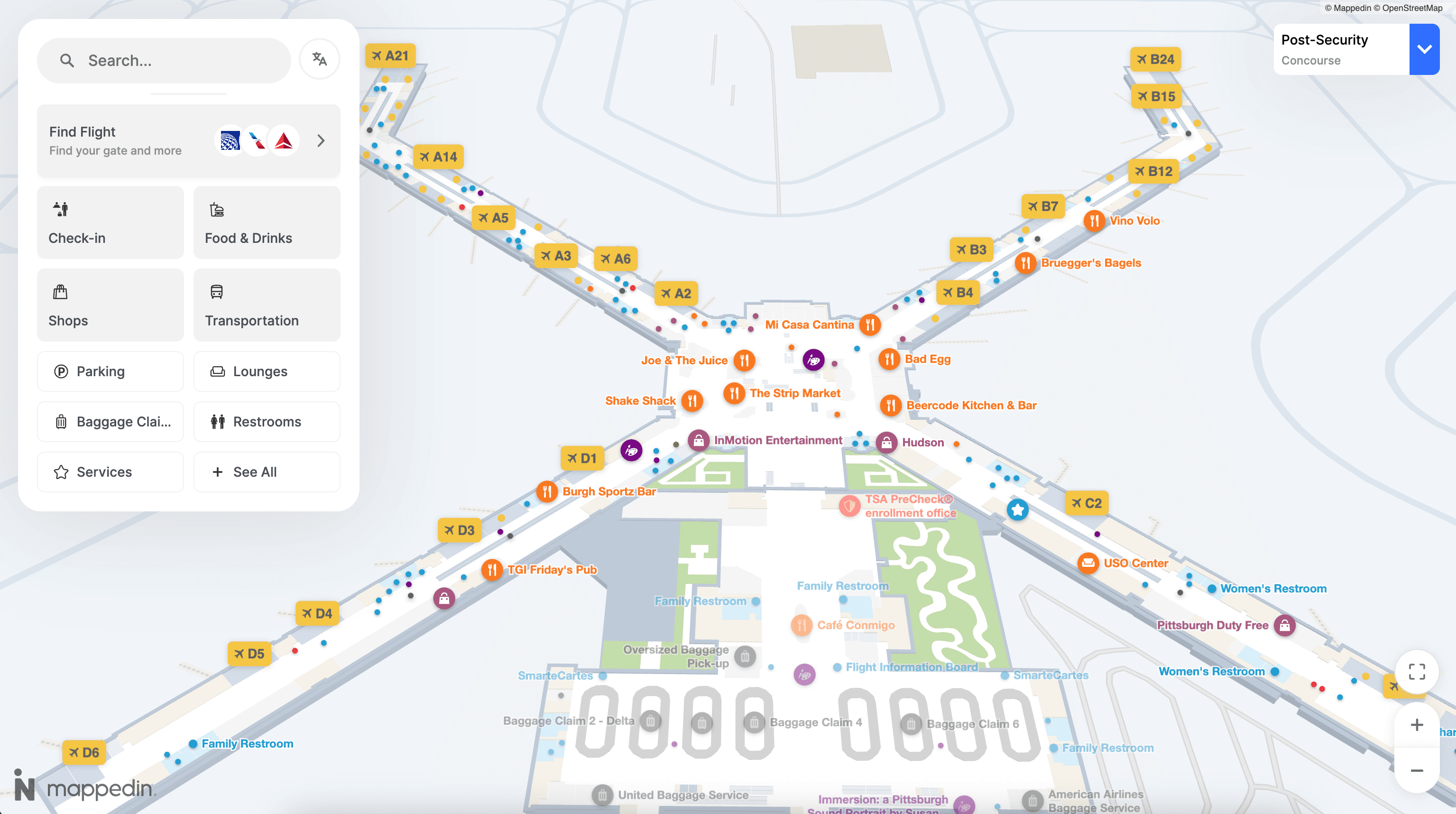
Together, Mappedin and Pittsburgh International are shaping what the future of airport experience looks like — a space where design and technology move in harmony and every journey reflects the spirit of the city itself.
Inside the passenger experience
The first moments inside the new terminal feel different. Passengers step into a space that feels organized and calm, guided by live information that adapts to their journey. The map adjusts to each traveler, presenting what matters most in that moment, whether it is the fastest route to the gate or nearby options to eat and recharge.
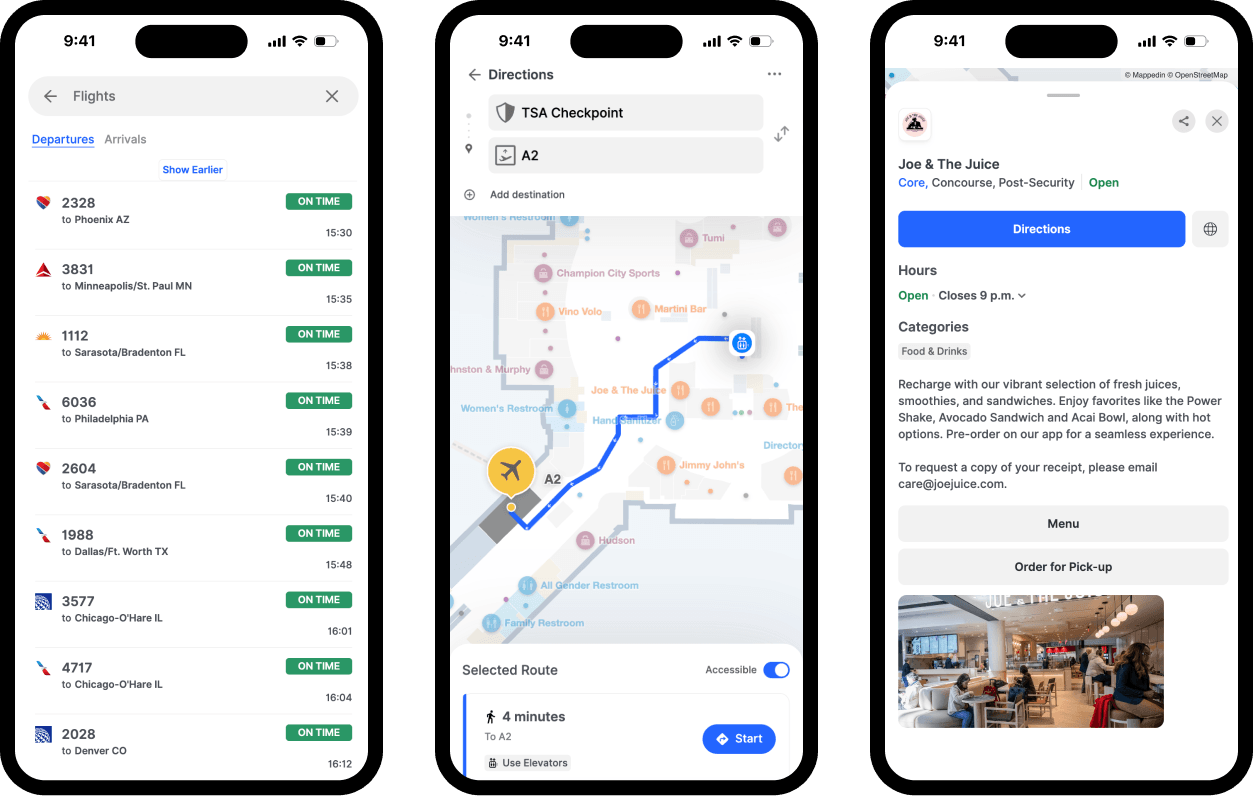
Accessibility is built into every detail. Routes include elevators and ramps, interfaces adjust for text size and color contrast, and screen readers describe each turn. A parent with a stroller, a traveler using a wheelchair, or someone visiting for the first time all move with the same ease.
Elements shaping the passenger experience:
- Personalized navigation that adapts to flight details, location, and timing
- Integrated updates that combine gate, wait time, and terminal information in one place
- Seamless movement across web, mobile, and kiosks for a consistent experience
- Inclusive design that prioritizes accessibility and clarity for every traveler
- Built-in discovery that reveals dining, retail, and services along the way
How the platform transforms operations
For airport teams, Mappedin’s platform simplifies coordination across departments. Information that once lived in separate systems now flows through a single dashboard. A change made once appears everywhere, keeping signage, kiosks, and mobile devices aligned.
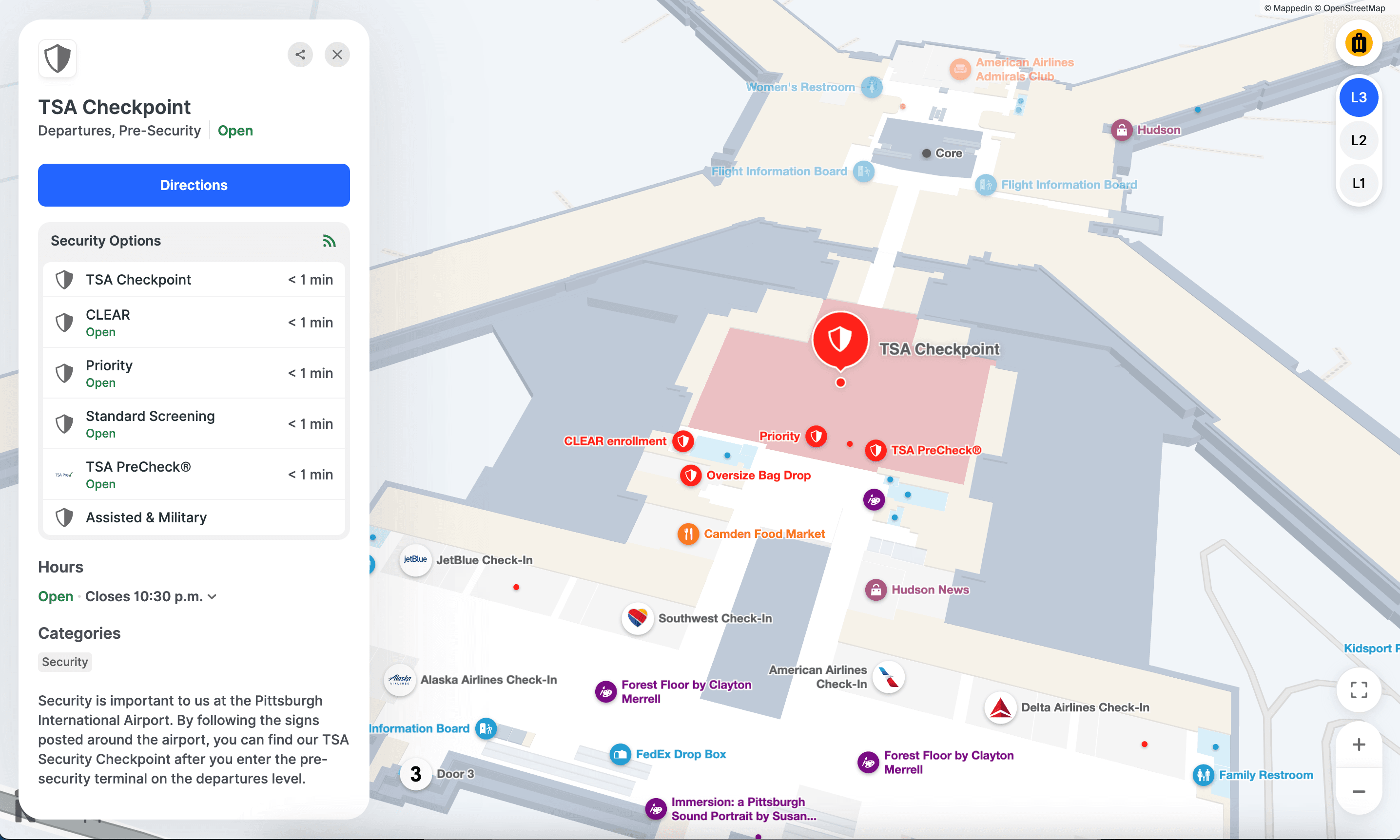
Analytics turn that visibility into action. The system helps PIT understand how travelers move, what captures attention, and where opportunities for improvement exist. Each insight supports better planning and stronger performance.
How airport teams use these insights:
- Identify popular search patterns to understand what travelers value most
- Track movement and dwell areas to see where people gather and which spaces perform best
- Use real-time data to refine layouts, adjust staffing, and highlight retail or dining zones
- Share performance snapshots with tenants and partners to guide promotions and placement
These insights turn everyday activity into direction for the airport’s growth, helping PIT refine the passenger experience while supporting measurable commercial results.
Making discovery part of the journey
Mappedin’s platform helps travelers notice more of what surrounds them. Dining, retail, and services appear naturally within each route, encouraging exploration without distraction. A traveler arriving early might see a nearby café with open seating. Another might find a boutique featuring local makers. These moments of discovery add value for passengers while strengthening visibility for airport partners.
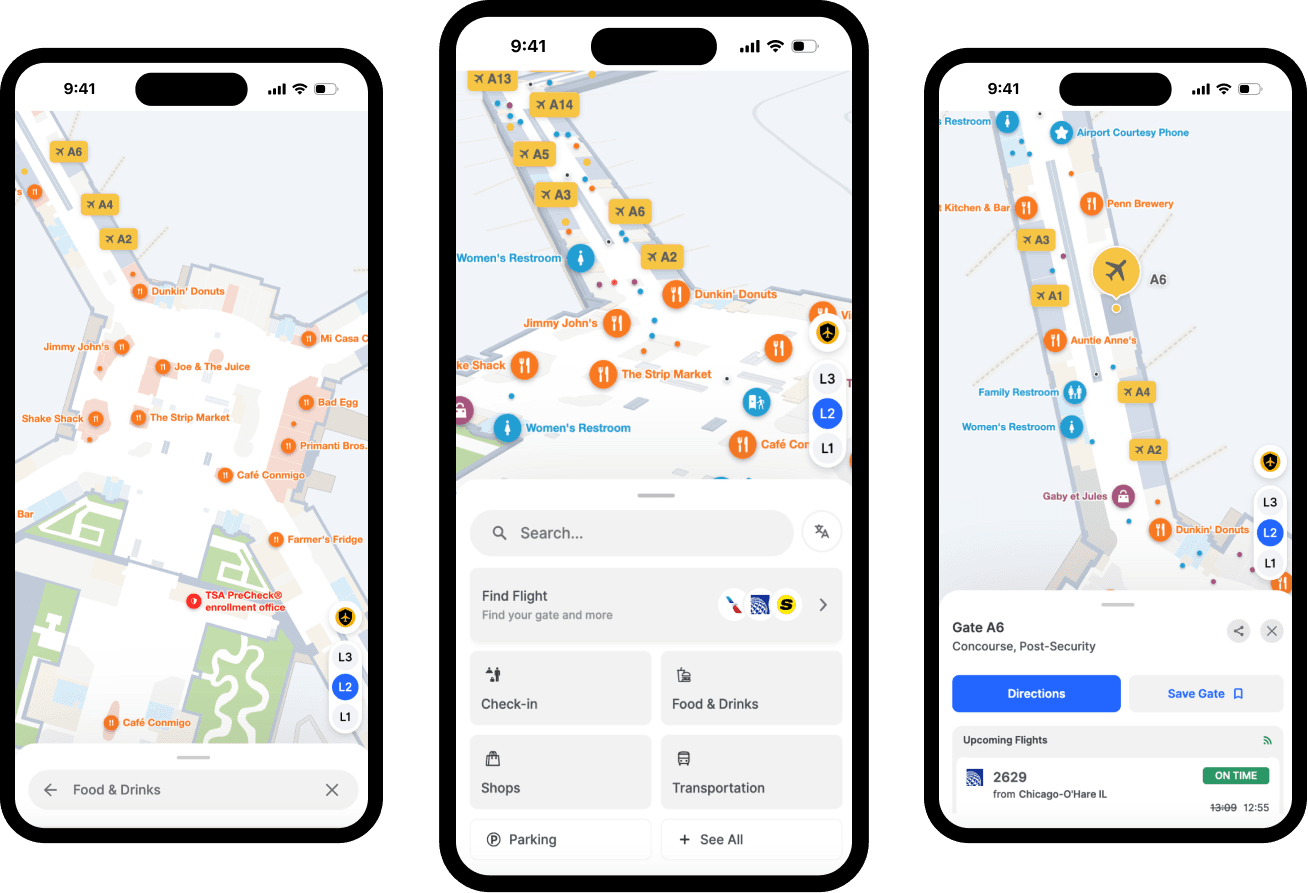
Each interaction creates insight. Promotions can be measured by clicks, impressions, or store visits, and over time, this data helps PIT understand what resonates and how passengers move through the space. The map becomes an integral part of the airport’s commercial rhythm, connecting the experience with performance. Every action contributes to the airport’s broader revenue strategy.
Setting a new standard for airports
Pittsburgh International’s new terminal shows what happens when architecture, data, and design come together to serve travelers in a unified way. Every part of the experience feels intentional, from how information moves to how passengers discover what’s around them.
With Mappedin as its foundation, the airport operates with a system that adapts to every flight, update, and traveler. It transforms movement, engagement, and discovery into measurable business results, setting a benchmark for how airports worldwide can enhance the experience and grow revenue within their existing terminals.
Share