

According to our recent report, nearly one-fourth of visitors report wasting time searching for specific stores, gates, or amenities in the past six months.
That navigation friction is costing malls real revenue every day.
Interactive kiosk software has come a long way from a static tenant list on a screen. Today's best platforms combine 3D touchscreen wayfinding, searchable tenant directories, promotional content, and visitor analytics in a single physical touchpoint that meets shoppers where they are.
But not all kiosk software is built for the complexity of a shopping mall. Some are designed for offices, some prioritize digital signage over navigation, and some require expensive beacon hardware just to show a blue dot. Others don't connect the kiosk experience to the mall's website or mobile app, leaving shoppers with a different map depending on where they look.
This guide compares the seven best interactive kiosk software platforms for shopping malls.


How smart malls turn foot traffic into sales
Malls aren't dead. But the strategies behind driving mall revenue? They're critically out of date. This guide makes the case for the one tool most operators have systematically underestimated, and shows exactly how to use it to drive revenue at every stage of the visit.
What to look for in mall kiosk software
Before comparing platforms, here are five criteria that actually matter in a shopping mall environment.
Wayfinding depth
A list of tenant names with floor numbers is not wayfinding. Look for true turn-by-turn, multi-floor routing, including accessible step-free routes.
Omnichannel consistency
The kiosk map should be the same map powering the mall website and mobile experience. A single CMS means one update reflects everywhere, with no conflicting information for shoppers.
Revenue tools
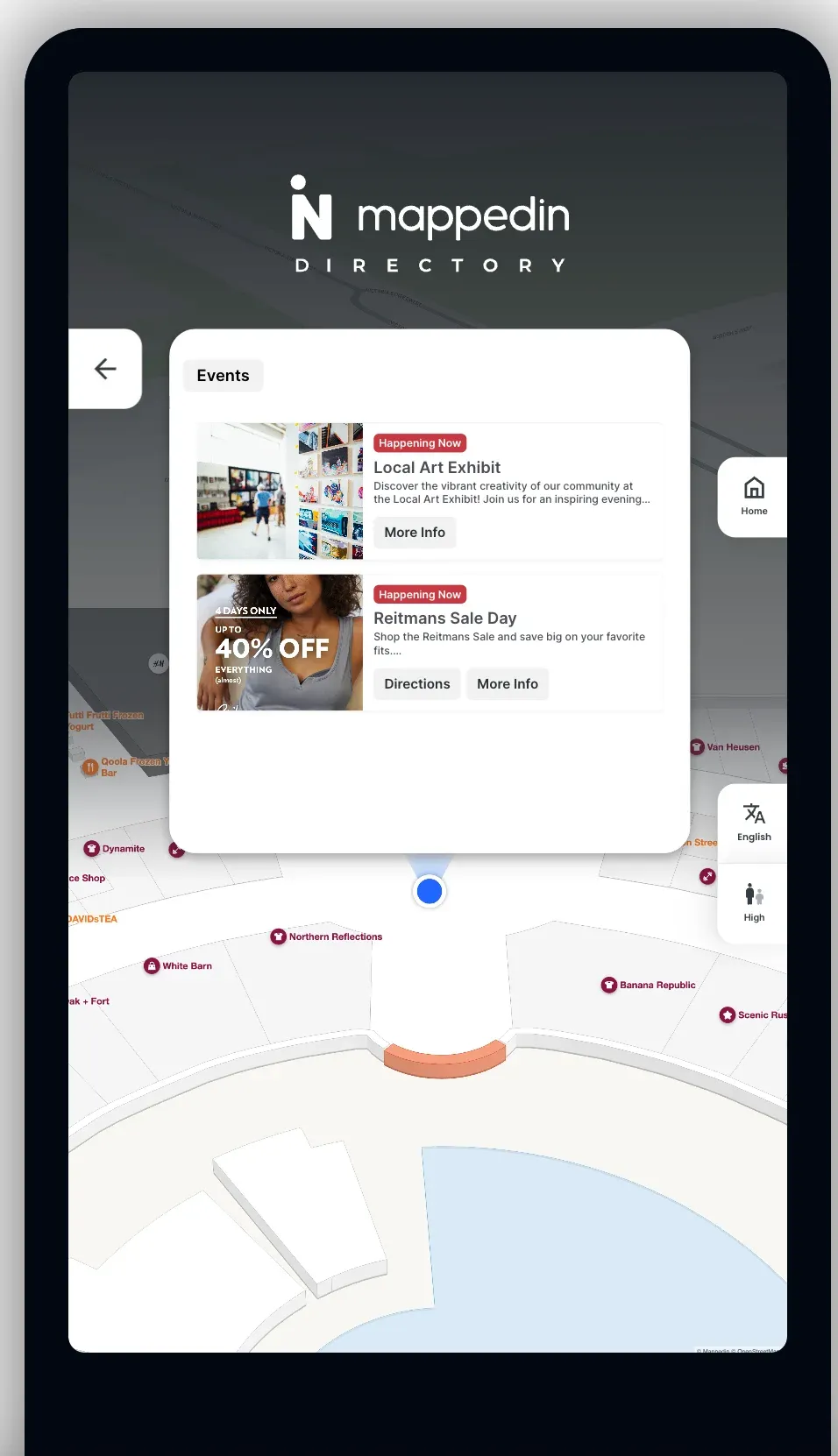
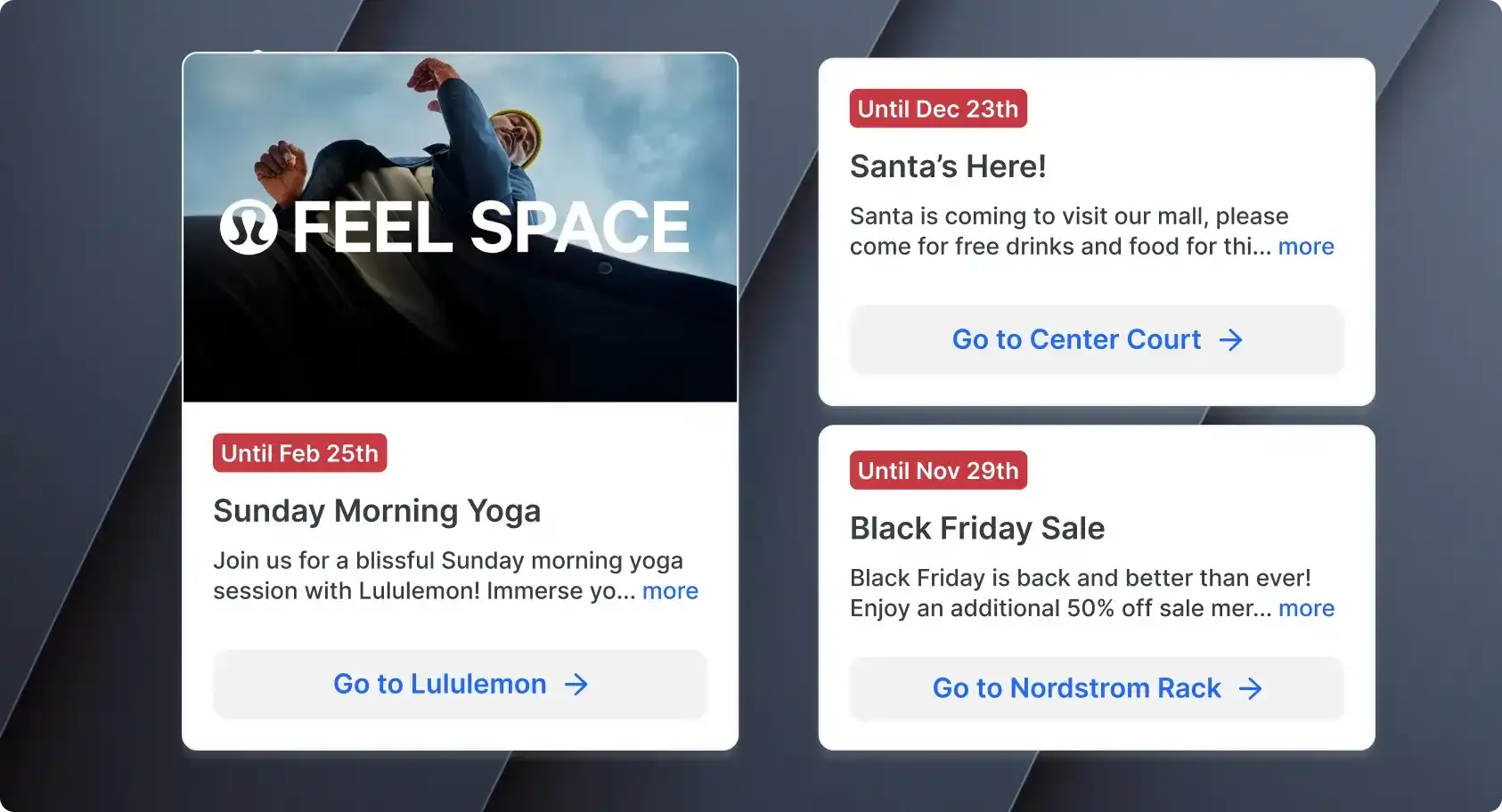
Banner ads, sponsored tenant listings, and full-screen idle overlays turn the directory from a cost center into a revenue line.
WCAG 2.1 AA accessibility
Adjustable kiosk height modes, high-contrast display options, and accessible routing defaults matter for ADA compliance and more importantly, for serving every visitor.
No-code content management
Marketing teams need to push event promotions and updated store hours themselves, without submitting IT tickets.
The 7 best interactive kiosk software platforms for shopping malls
1. Mappedin
Mappedin Directory is purpose-built for complex multi-tenant venues like malls, open-air lifestyle centers, and mixed-use retail properties.
Unlike general-purpose digital signage platforms, Mappedin starts with wayfinding as the core experience, then layers in content management, advertising, and analytics on top of it.
Interactive mall wayfinding
The 3D interactive map gives shoppers a pan, zoom, and tilt view of the entire venue across multiple floors simultaneously, so visitors see their complete route in a single view. Accessible routing is built in by default, with step-free paths, high-contrast display modes, and an adjustable kiosk height designed for wheelchair users and visitors of all heights. WCAG 2.1 AA compliance is included out of the box, not a paid add-on.
Build-in revenue generation
Banner ads and sponsored tenant listings appear directly on the home screen, while full-screen idle overlays run video or image ads during low-traffic moments. Operators can also enable a Broadsign integration to manage large-format ad content within the same workflow.
Shopper analytics
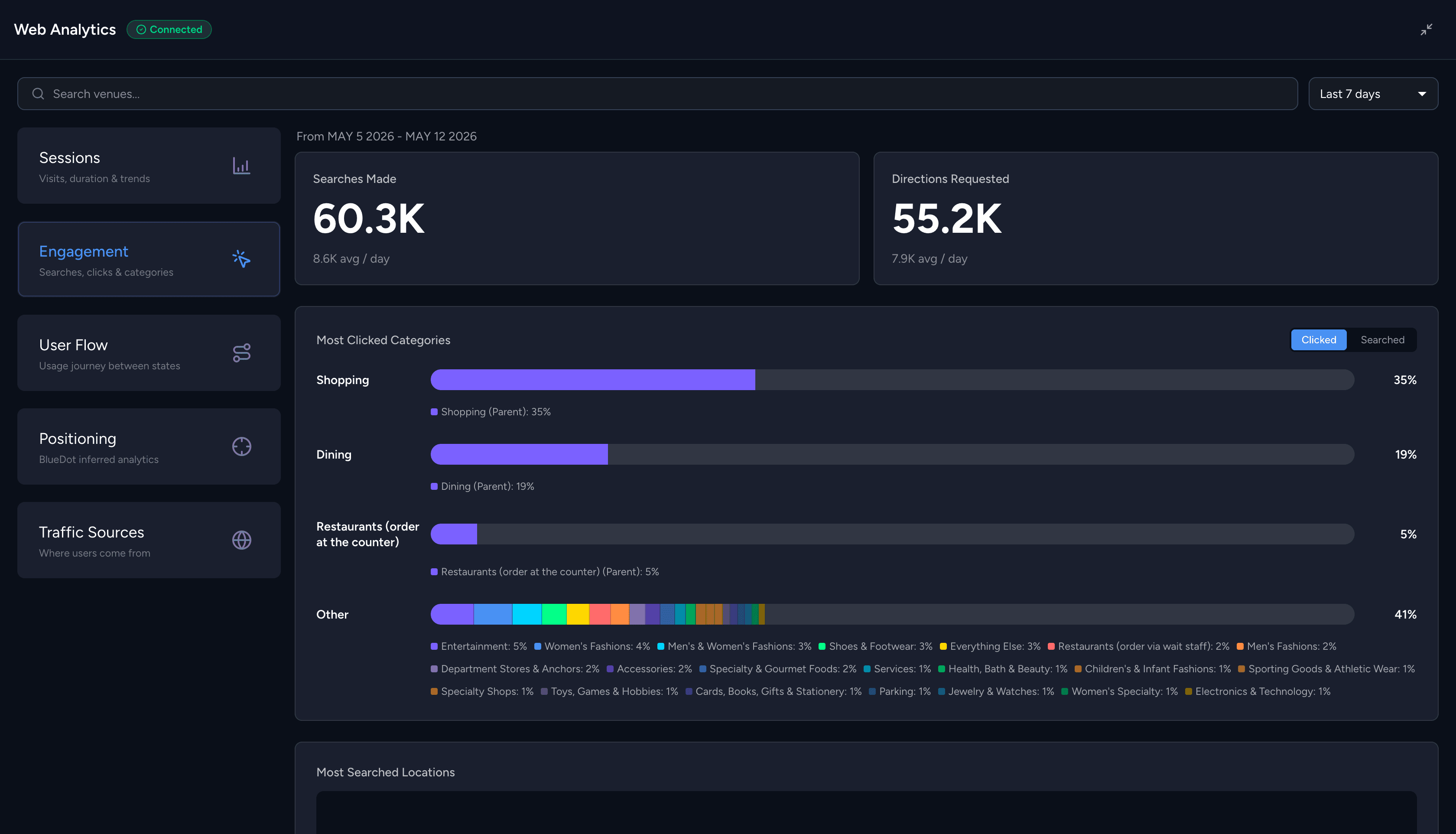
Analytics surface exactly which destinations shoppers are actively searching for (and which ones they're struggling to find) giving leasing and marketing teams actionable data rather than generic foot traffic counts.
Omnichannel visitor experience
The most operationally significant feature for multi-location operators is the omnichannel CMS. One map data source powers the physical kiosk, the mall website, and the mobile experience simultaneously. Update a store's hours or add a seasonal promotion once, and it reflects across every channel.
— Kim McNulty, Head of Marketing & Communications, Blanchardstown Centre


2. 22Miles
22Miles is an all-in-one visual communications platform with strong retail and hospitality roots — Las Vegas retail properties, Four Seasons, and Royal Caribbean are in its customer base.
Its greatest strength is turnkey deployment: hardware and software are available as a bundled package, making it a natural fit for operators who want a single vendor relationship for both the screen and the software running on it.
Best for: Operators who want turnkey hardware + software bundles, or those with complex enterprise customization requirements.
3. MapsPeople
MapsPeople offers a developer-friendly indoor mapping SDK with growing adoption in retail and commercial real estate. It's a capable platform for organizations with in-house technical resources that want to build a custom kiosk experience on top of a reliable mapping foundation rather than deploy a turnkey solution.
Best for: Tech-forward operators with development capacity who prefer a configurable SDK to a pre-built product.
4. Acquire Digital
Acquire Digital is a UK-based interactive kiosk and content management platform with retail deployment experience, particularly across European markets. It handles multi-location screen management and scheduled content distribution reliably.
Best for: European mall operators, or those evaluating a signage-first solution where wayfinding is a secondary requirement.
5. Navori
Navori is an enterprise digital signage platform that supports interactive touchscreen kiosk deployments across retail, transit, and hospitality. It handles large-scale screen network management and multi-channel content distribution with strong operational reliability.
Best for: Mall operators already running large-format digital signage networks who want to bring kiosk management under the same platform to reduce vendor complexity.
6. Spectrio
Spectrio provides digital signage and customer engagement solutions for retail environments, including touchscreen kiosk software focused on in-store content and basic digital directories. It's a known name in retail digital experience with a straightforward content management layer.
Best for: Operators prioritizing content scheduling and promotional displays over full-featured wayfinding.
7. MapVX
MapVX is an indoor mapping platform with a kiosk product that covers the core bases: 3D visualization, touchscreen navigation, QR code mobile handoff, and integrated route and promotion display. The platform integrates with Lazarillo, a navigation app for visitors with visual impairments.
Best for: Small to mid-size shopping centers looking for a transparent, entry-level pricing model with solid accessibility support.
Frequently Asked Questions
What is interactive kiosk software for shopping malls?
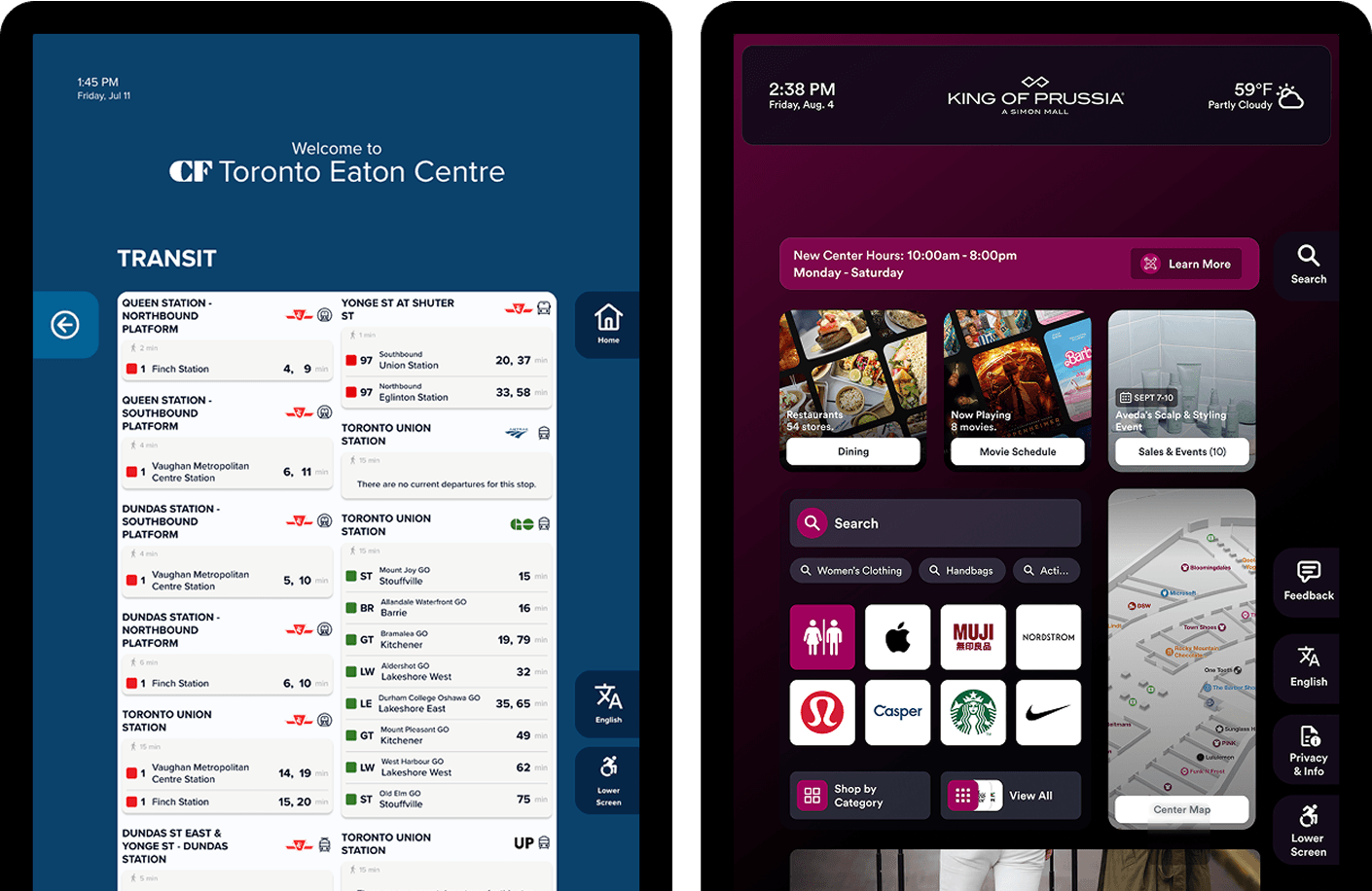
Interactive kiosk software for shopping malls is a touchscreen platform that combines tenant search, turn-by-turn wayfinding, multi-floor maps, and promotional content in a single physical directory unit. Unlike static signage, it responds to visitor input and guides shoppers through complex layouts in real time.
Do shopping mall kiosks need beacons for blue dot navigation?
Not all of them. Some platforms including Mappedin offer infrastructure-free indoor positioning that doesn't require BLE beacon hardware. Beacon-dependent platforms can deliver blue dot capability but come with added hardware costs, ongoing battery maintenance, and accuracy degradation over time, particularly on Android devices and web browsers.
What's the difference between a wayfinding kiosk and a digital directory?
A digital directory lists tenants and their locations. A wayfinding kiosk adds active navigation through turn-by-turn directions, multi-floor routing, accessible path options, and destination search. The best mall platforms combine both: a searchable directory that launches a full guided navigation experience.
How do shopping mall kiosks generate revenue?
Through banner ads, sponsored tenant listings, and full-screen idle overlays that run partner content during low-engagement periods. Beyond direct ad revenue, kiosk search analytics reveal which store categories shoppers are actively looking for, data that directly informs leasing strategy and promotional planning.
What should I ask a vendor before buying?
Ask whether the kiosk map shares a data source with the website and mobile experience, whether blue dot positioning requires hardware installation, how marketing teams manage content updates without IT involvement, and whether WCAG 2.1 AA compliance is built in or requires custom configuration.
Interactive kiosk software: The bottom line
The best interactive kiosk software for a shopping mall isn't just the one with the most features. It's the one that makes it effortless for shoppers to find what they came for, and that earns revenue while they do it.
If your priority is a platform built for the full complexity of mall operations including multi-floor wayfinding, an omnichannel map, built-in ad revenue tools, and accessibility compliance without custom development, Mappedin Directory is the strongest fit on the market today.

Share