Start Here
Digital signage is revolutionizing how venues guide and engage visitors, offering interactive wayfinding, real-time updates, and seamless integration with other systems. This guide explores the top digital signage companies for 2026, highlighting how solutions like Mappedin deliver dynamic navigation, boost customer satisfaction, and empower venues across industries to manage spaces more efficiently.
Digital signage is transforming how we navigate complex spaces.
The best digital signage programs go beyond displaying information to venue visitors. They help create seamless experiences, improving customer satisfaction, driving revenue and making venues safer.
These days, digital signage companies are transforming wayfinding and visitor experience by:
- Integrating advanced technologies like AI to enhance user experiences
- Making it easy to update signage content based on vendor or map changes
- Providing interactive and personalized journeys
- Combining content management and software to power holistic signage solutions
As we look to the future, digital signage will play an increasingly critical role in complex, thriving venues like hospitals, airports, malls and stadiums. It will aid in personalized experiences, wayfinding, traffic management, and public information dissemination.
In this blog, we’ll explore the current landscape of digital signage solutions, and get a deeper understanding of what to look for in today’s leading vendors. Let’s dive in.
Looking for an indoor mapping solution to power visitor navigation, simplify operations, and improve venue analytics? Book a custom demo of Mappedin →
What is digital signage?
Digital signage refers to the use of electronic displays to show information. This technology replaces traditional static signs, bringing dynamic content to life through vivid and customized visuals.
The main purpose of digital signage is to display content for the purposes of wayfinding, venue directories, and business promotion. Digital signage vendors provide solutions for diverse industries, ranging from retail and hospitality to education and healthcare. Each industry benefits uniquely from the adaptability digital signage offers.
Digital signage content might include text, images, and/or videos. It can even incorporate interactive elements for user engagement (think: searchable directory).
Digital signage systems usually consist of hardware and software components, as well as a content management solution.
These include:
- Physical displays: LED, LCD, or projection screens.
- Media players: Devices that play the content.
- Content Management Software (CMS): Systems for creating and updating content.
The best digital signage providers also offer integrations with other technologies, like Internet of Things (IoT) and mobile connectivity. These advancements are reshaping how information is shared and consumed, leading to more personalized, timely visitor experiences.
In essence, digital signage is transforming the way information is shared in large-scale venues like malls and hospitals. It offers a dynamic platform for communication and engagement, opening new doors for Marketing, Operations and Customer Experience teams to reach their visitors.
How digital signage enhances wayfinding
Wayfinding is one of the most common use cases of digital signage.
By offering a way to provide real-time updates and directions, digital signage is making it easier for venue staff to guide visitors through their venues, giving them information they need when they need it.
Traditional signage can be difficult to update, often leading to it becoming outdated quickly. Digital signage, on the other hand, allows for instant updates and changes made from an admin view in the CMS. This flexibility lets venues provide accurate information almost immediately.
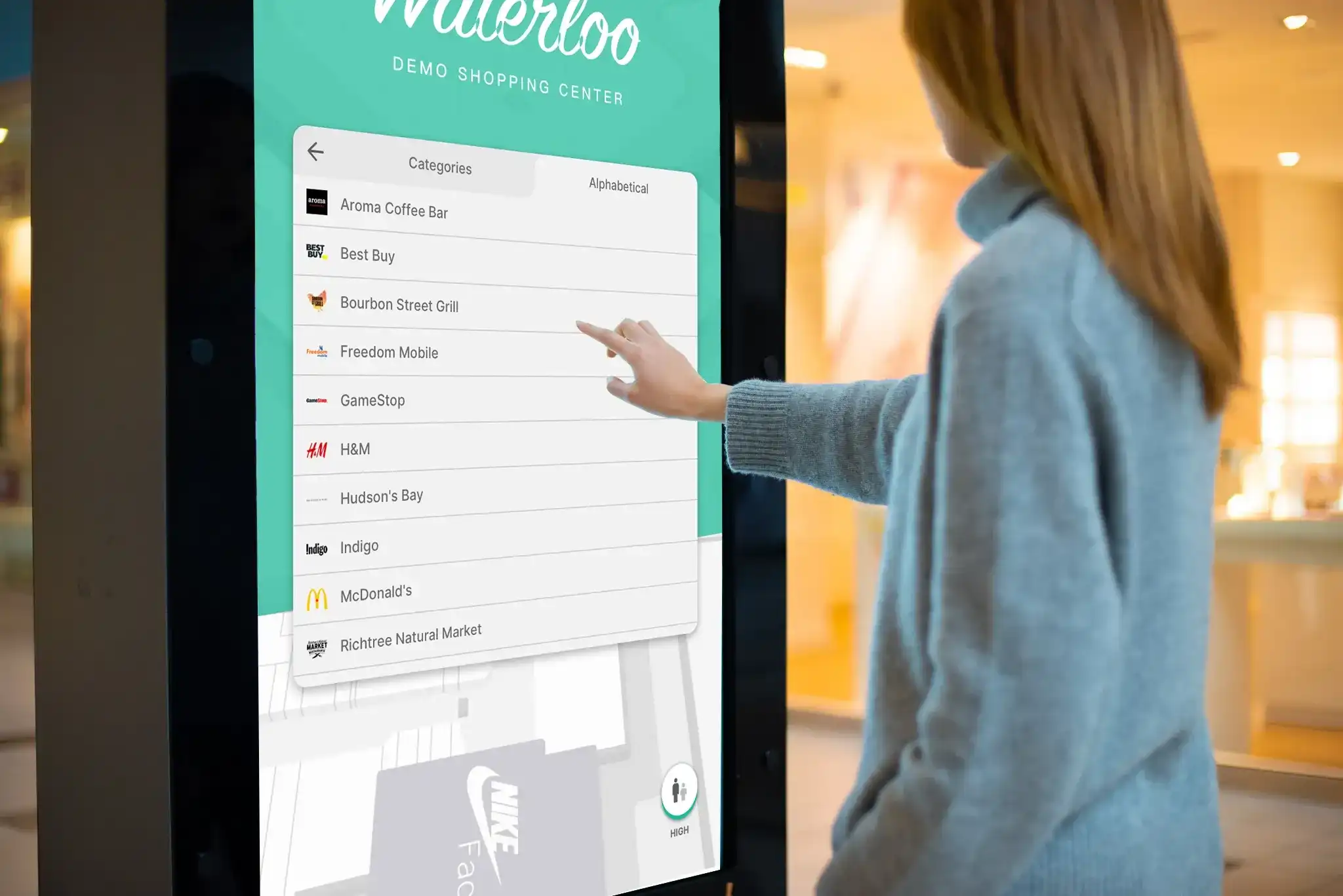
Many venues use interactive displays to guide users through touch-based interfaces, like a mall directory on a kiosk or an airport flight finder. These interfaces can display detailed maps and route suggestions. This interactivity simplifies navigation in large, complex and often hard-to-navigate venues.
Modern digital signage providers also offer the integration of mobile connectivity to further enhance the wayfinding experience for visitors on the go. Users can get step-by-step directions on their mobile devices through apps linked to the signage.
To recap, the best digital signage includes countless features that aid in effective wayfinding:
- Interactive maps and directories
- Real-time updates on events or changes
- Multiple languages for diverse audiences
- Integration with mobile apps for personalized navigation
Ultimately, digital signage transforms the wayfinding process. It offers clarity and ease for users navigating unfamiliar environments. This technology is continuing to grow and become more sophisticated, providing innovative solutions for directional needs.
Benefits of digital signage for navigation
When it comes to digital versus static, traditional signage, which offers greater benefits for visitor navigation?
Because of many of the factors we discussed above, digital signage offers distinct advantages for navigation over traditional signage systems, ultimately improving user satisfaction and efficiency.
- Dynamic content enhances visibility and engagement. Vibrant visuals draw attention, making it easier for users to notice important information. This is crucial in crowded or busy environments.
- Digital signage can dynamically update content to reflect current conditions. This adaptability is vital in managing unexpected changes, like closures or detours. It minimizes confusion and aids in effective crowd management.
- Digital signage often includes analytics to understand visitor behavior and bottlenecks. Marketing and Operations teams can gather insights into user patterns and preferences, enhancing the effectiveness of wayfinding and adjusting where needed.
- Digital signage supports diverse environments. From hospitals to universities, this technology addresses unique navigation challenges. By offering clear, adaptable, and interactive paths, digital signage improves user experiences across all sectors.
Overall, it’s clear that digital signage is the ideal solution for modern wayfinding. Visitors today are digital natives, looking for solutions that adapt to their preferences and understand their needs.
The role of content management software for digital signage
A built-in CSM is crucial in managing digital signage content, whether it’s a programmatic ad campaign or a complex navigation route. A CMS helps venue managers create, organize, and schedule content effortlessly.
With a CMS, updating signage systems becomes straightforward and systematic instead of cumbersome. Users can remotely manage and change displays—no need for manual intervention. This easy management capability makes it great for multi-location operations and networks.
With a CMS, venues don’t have to worry about multiple information sources and making updates in 20 locations – it ensures content consistency across all displays, maintaining brand integrity and message clarity throughout multiple locations.
Advanced CMS solutions offer analytics and reporting tools. These tools provide insights into audience engagement and screen performance. Businesses can use this data to refine their content strategies and improve overall impact.
In addition, some CMS platforms integrate with external data sources. This enables dynamic content updates based on real-time information like weather or traffic. This type of seamless integration enhances the relevance and timeliness of the content displayed.
Advantages of content management software for digital signage are clear:
- Centralized control over multiple displays
- Easy scheduling and automation of content updates
- Integration with existing IT infrastructure
- Built-in analytics
Ultimately, a well-managed CMS is the backbone of a successful (and scalable) digital signage strategy. It empowers organizations to deliver consistent, relevant, and timely messages, ensuring a seamless experience for both operators and users.
The best digital signage companies to watch in 2026
As we approach 2026, several digital signage companies are leading innovation and shaping the industry. These companies are setting new standards in quality and functionality.
One of the main objectives of today’s top digital signage companies is to enhance wayfinding for venues – easier and faster than ever before. They offer solutions that integrate cutting-edge technology and offer scalable systems. Their focus is on user-friendly interfaces and seamless integrations, striving to improve user experience and operational efficiency. Some trailblazing digital signage companies are even incorporating AI into their solutions to power more personalized, adaptable experiences.
A deep dive into industry leaders
Leading digital signage companies excel in offering innovative products and solutions. These industry leaders drive change and elevate global standards.
Some companies focus heavily on hardware innovations—delivering high-resolution displays with superior durability. Others concentrate on software, creating platforms that are intuitive and feature-rich.
We’ll explore leading 7 digital signage companies, including:
- Mappedin
- Mandoe Media
- Abuzz
- Xibo
- BrightSign
- Click Grafix
- Rise Vision
1. Mappedin: Best for holistic wayfinding, signage & venue management across verticals and sizes
Mappedin is a key player in the digital signage space. With digital signage solutions for malls, airports, stadiums, hospitals and other large, complex venues, Mappedin is trusted by hundreds of customers around the world. Mappedin’s indoor mapping solutions have provided guidance to more than 450+ million visitors.
Enterprise customers across retail, transportation, and professional sports industries leverage Mappedin’s digital signage solutions to power their visitor wayfinding, in-venue advertising, and more enjoyable (and less stressful) customer experiences.
— Daniel Lombardi, VP Donor Success & Revenue at Grand River Hospital Foundation
Mappedin wayfinding signage
Mappedin’s maps can be integrated into digital signage solutions, so visitors can get directions at key Points of Interest (POI). With Mappedin’s wayfinding signage, venues offer stress-free navigation, making it easier for customers to find what they need when they need it.
Features of Mappedin’s wayfinding signage:
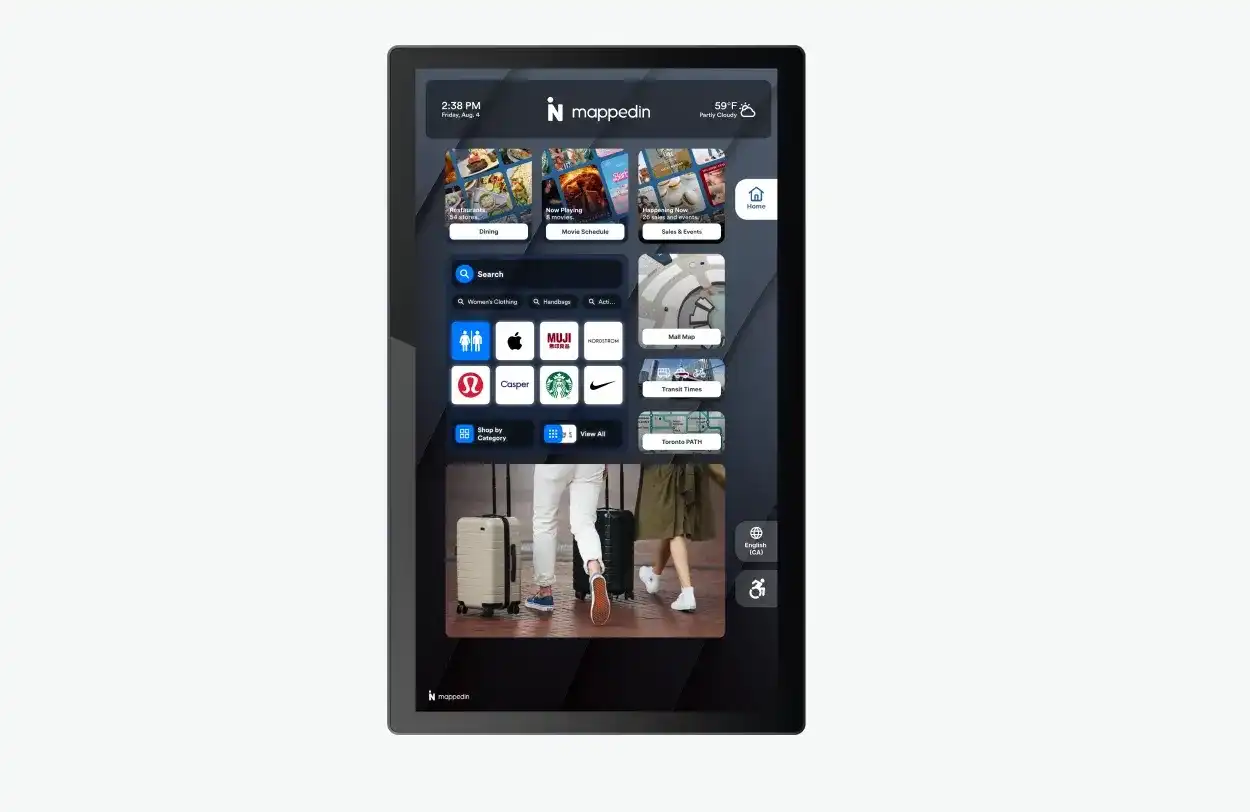
- Interactive directories & kiosks
- Real-time updates through a centralized CMS
- Dynamic content and monetization
- Integrations with other venue systems (tenant feeds, flight information display systems, etc.)
- Scalable regardless of size, from single venues to global portfolios

Good in-venue advertising means more revenue opportunities for venues. With Mappedin’s holistic indoor mapping platform, venues can promote offers and campaigns within the directory experience, then measure engagement and optimize.
Mappedin integrates with Broadsign, a leading digital out-of-home (DOOH) ad tech provider, enabling programmatic ad delivery on digital directories. With this solution, venues can run automated ad campaigns through an easy-to-use dashboard, and measure campaign results via analytics.
Mappedin digital signage analytics
If you can’t measure success, did it really work?
Mappedin’s robust analytics let advertisers and venues alike understand the impact of their content. Mappedin's Analytics Dashboard delivers detailed reports on visitor searches, advertising performance, and operational insights like peak usage times and kiosk performance. Venues can access these analytics through the dashboard or export data for reporting.
Mappedin verticals:
- Retail
- Airports & transportation hubs
- Stadiums
- Hospitals
- Offices & workspaces
- College & university campuses
- Museums & cultural institutions
- Cities
- First responders
- Multifamily
Notable Mappedin customers:
- Simon Property Group
- Cadillac Fairview
- Melbourne Airport
- Brookfield
- Banner Health
- Bowie State University
Contact us today to get a personalized demo or check out our map gallery to see what’s possible.
2. Mandoe Media: Best for template-driven signage for small businesses
Mandoe Media offers a user-friendly, cloud-based digital signage platform called Mandoe Studio. The platform is designed for businesses of all sizes to easily create, schedule, and manage digital content across one or many screens.
Mandoe stands out for its Canva-like drag-and-drop interface, a vast library of templates, and affordable pricing. It’s particularly popular with retail, hospitality, and franchise businesses that want to empower non-technical staff to manage signage.
Mandoe is primarily a software company and relies on customers to source their own hardware. Advanced integrations and analytics may be more limited compared to enterprise-focused competitors. Some larger organizations may find the feature set less robust for complex, multi-site deployments.
Mandoe Media verticals:
- Retail
- Hospitality
- Restaurants
- Healthcare
- Fitness
Notable Mandoe Media customers:
- Asics
- Bonds
- Boost Juice
- Domino’s
3. Abuzz: Best for turnkey hardware + software
Abuzz delivers turnkey digital signage and wayfinding solutions, including both custom hardware (kiosks, LED walls) and proprietary software. They are especially strong in Australia and the Middle East, with a reputation for robust, branded hardware and end-to-end project management. Abuzz’s CMS allows for content scheduling, dynamic feeds, and advertising integration, and their solutions are often bundled for competitive pricing.
Abuzz’s software is less self-serve than competitors—clients rely on Abuzz for most updates, leading to slower content changes. Analytics are basic, and integrations with third-party systems are limited. Their web and mobile wayfinding experiences are less developed, and innovation pace has lagged behind software-first vendors.
Abuzz verticals:
- Malls
- Airports
- Hospitals
- Commercial properties
Notable Abuzz customers:
- Dubai Mall
- Eastland Shopping Centre
- Lendlease
- The Avenues Mall, Kuwait
4. Xibo: Best for open-source flexibility and cost control
Xibo is a cost-effective, open-source digital signage platform with a global user base. It offers flexible deployment (cloud or on-premise), a powerful web-based CMS, and a robust API for custom integrations. Xibo is known for its adaptability, allowing organizations to use existing hardware and tailor the solution to their needs. It also supports DOOH advertising and monetization features.
As an open-source solution, Xibo may require more technical expertise to deploy and maintain, especially for custom integrations. Support is available, but enterprise-level SLAs and onboarding are not as comprehensive as some commercial competitors.
Xibo verticals:
- Hospitality
- Retail
- Education
- Healthcare
- Corporate
Notable Xibo customers:
- KFC
- AIMST University
- Open ICT
5. BrightSign: Best for enterprise-grade digital signage hardware
BrightSign provides digital signage media players, offering reliable, high-performance hardware for any signage application. Their players are used in conjunction with various CMS platforms and are known for durability, 4K/HD playback, and support for interactive and synchronized content. BrightSign is trusted by major brands for mission-critical deployments.
BrightSign is hardware-focused; customers must select and integrate their own CMS. Some users report compatibility or update issues with certain software stacks. The platform is best suited for those with IT resources to manage hardware and software integration.
BrightSign verticals:
- Retail
- QSR
- Corporate
- Entertainment
Notable BrightSign customers:
- Best Buy
- LG
- GoPro
6. Click Grafix: Best for Southeast Asian organizations needing custom digital signage
Click Grafix is a digital signage integrator based in Malaysia and Singapore, with nearly 30 years of experience. They offer a full suite of hardware, software (multiple CMS options), and value-added services like content creation, consultancy, and custom app development. Click Grafix is known for its regional expertise and ability to deliver end-to-end solutions for diverse industries.
Click Grafix’s primary market is Southeast Asia, so global support may be limited. Their solutions are often tailored, which can increase complexity and require more hands-on project management. Some customers may prefer a more standardized, SaaS-first approach.
Click Grafix verticals:
- Banking
- QSR
- Corporate
- Healthcare
Notable Click Grafix customers:
- Asia Pacific College
- Indian Institute of Technology
- Intel Malaysia
7. Rise Vision: Best for nonprofits and K-12 organizations
Rise Vision is a cloud-based digital signage software provider with a strong focus on education, corporate, and non-profit sectors. It offers an easy-to-use CMS, 600+ customizable templates, and broad hardware compatibility (including their own media player and Avocor displays). Rise Vision is praised for its affordability, scalability, and exceptional customer support, including free training and onboarding.
Rise Vision is less focused on advanced enterprise features or deep integrations for complex, multi-site retail or transportation deployments. Its hardware is only available in North America, and some features are tailored more for education and SMBs than for large-scale commercial use.
Rise Vision verticals:
- K-12
- Higher education
- Healthcare
- Corporate
- Finance
Notable Rise Vision customers:
- CIBC
- Cedarville University
- Morrison Industries
How to select the best digital signage software solution
Assessing digital signage software vendors isn’t easy. It involves defining your venue’s specific needs and goals, then analyzing each available solution.
The best digital signage solution providers offer software and hardware that blends intuitive interfaces with robust functionality to address your needs. They emphasize compatibility and integration with existing systems, which is crucial for seamless operation.
At the same time, emerging technologies continue reshaping the landscape: AI and machine learning are surfacing new capabilities like personalized content and predictive maintenance.
In general, it’s essential to know what you need in a digital software solution before you begin to analyze vendors. Outlining must-haves, success metrics and requirements for support and implementation will speed up—and simplify—the process.
What makes the best digital signage software?
Determining the best digital signage software involves evaluating multiple factors. Overall, effectiveness hinges on features, usability, and support quality.
Consider these key elements when choosing a software:
- User-friendly interface: Ensures ease of use for both technical and non-technical users.
- Comprehensive features: Offers content scheduling, playback management, and real-time updates.
- Integration capabilities: Supports seamless interoperability with existing systems and network infrastructures.
- Support and implementation: Makes it easy to get up-and-running, and gives assurance support is available for future improvements or fixes.
- Flexibility & customization: Ability to adapt software to specific needs and branding.
- Digital signage analytics: Enables data-driven decision-making, enhancing content relevance and engagement.
- Stability: Prevents disruptions in content display.
Ultimately, the best solutions balance these factors, delivering a comprehensive package that enhances digital signage effectiveness.
Digital signage software integrations & compatibility
In the realm of digital signage, integrations and compatibility form the backbone of effective systems. These aspects ensure seamless communication between different software and hardware.
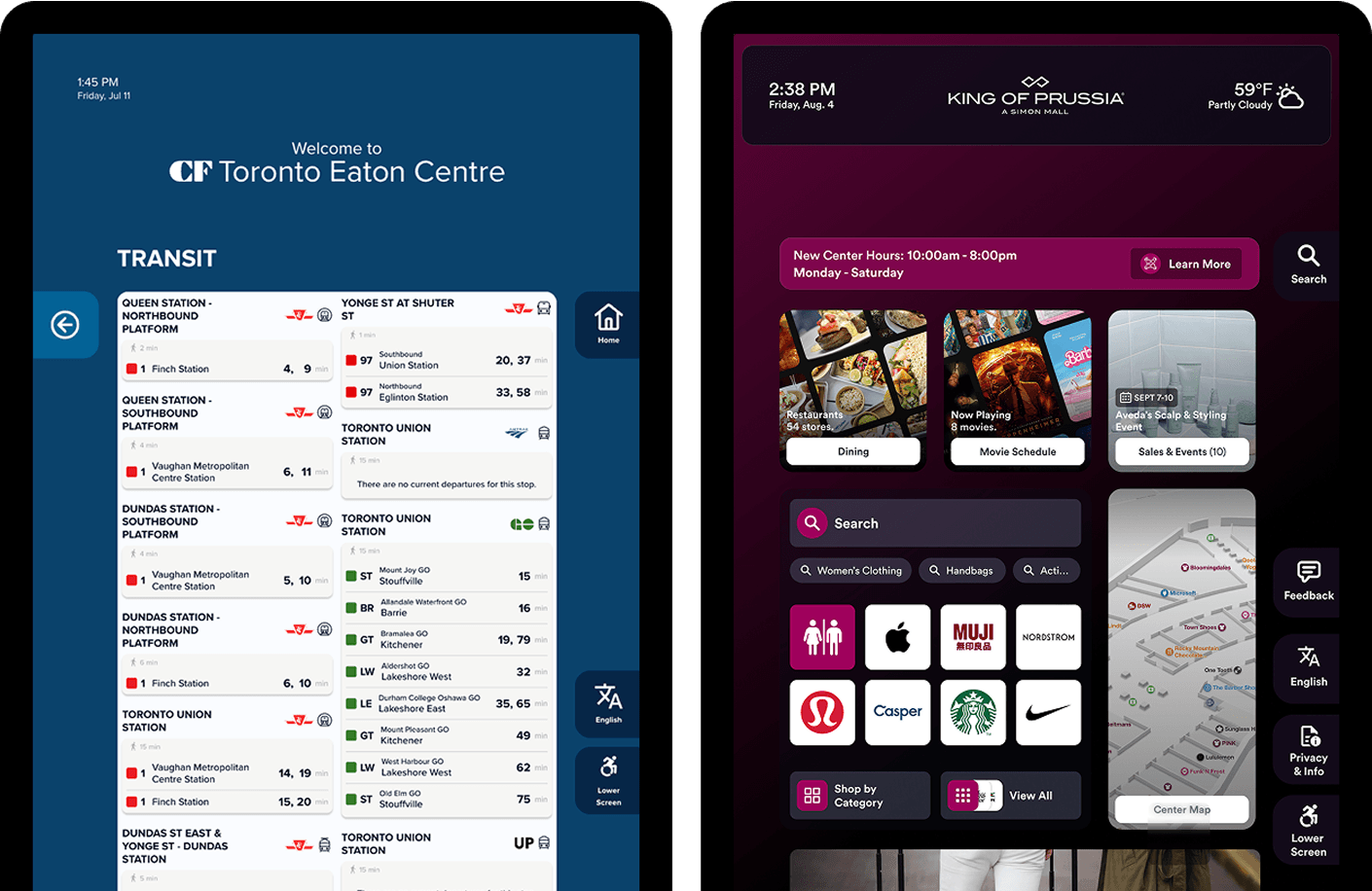
Consider a typical airport; digital signage systems should integrate seamlessly with the airport’s flight information display system for seamless passenger navigation.
Compatibility enhances operational efficiency by allowing these venue systems to function together smoothly, without disruption. Solutions that support a wide range of protocols and interfaces enable businesses to leverage their current IT infrastructure. This flexibility is essential for adapting to future technological advancements without incurring prohibitive costs.
Connecting with other venue systems
Digital signage systems thrive when integrated with other operational systems, creating a cohesive technology ecosystem. Interoperability between signage software and systems like ERP or CRM enhances data flow and informed decision-making.
Key integration benefits include:
- Streamlined operations: Unified systems reduce data silos, improving process efficiency.
- Enhanced communication: Real-time data exchange supports agile responses to changing business conditions.
- Cost efficiency: Leveraging existing systems minimizes overhead while maximizing functionality.
Building a connected infrastructure requires careful planning and execution. Integration specialists ensure compatibility and smooth transitions, avoiding disruptions. By maintaining open communication between systems, businesses can drive innovation and improve responsiveness.
This holistic approach makes sure that digital signage not only informs but also aligns with broader organizational goals.
FAQs about digital signage
What is digital signage?
Digital signage is the use of electronic displays like LCD, LED screens, or interactive kiosks to present dynamic content like information, advertisements, maps, and directions in public or private spaces. Unlike static signs, digital signage can be updated in real time and often includes interactive elements, making it a powerful tool for communication, wayfinding, and customer engagement across venues like malls, airports, hospitals, and offices.
How does digital signage work?
Digital signage systems combine hardware (screens, media players) and software (content management systems, or CMS) to deliver multimedia content to audiences. Content is created and managed centrally, then distributed to displays over a network. Advanced digital signage can integrate with other systems – including indoor maps, event feeds, and flight information display systems (FIDS) – and support real-time updates, interactive touchscreens, and analytics to measure engagement.
How can digital signage enhance wayfinding?
Digital signage transforms wayfinding by providing interactive maps, real-time directions, and search functionality at key decision points. Visitors can search for destinations, receive step-by-step routes, and access accessible paths or multilingual support. Digital signage also enables instant updates for closures or events, reducing confusion and improving navigation in complex environments like airports, malls, stadiums, multifamily properties, college campuses and hospitals.
What is digital signage software?
Digital signage software is a platform that allows organizations to create, schedule, and manage content displayed on digital screens. A robust CMS enables centralized control over multiple displays, supports real-time updates, integrates with other IT systems, and provides analytics to track performance. Leading solutions, like Mappedin, offer APIs and SDKs for custom integrations and interactive experiences.
How to choose the right digital signage for your business?
To select the best digital signage solution, assess your venue’s needs, integration requirements, and scalability. Look for features like user-friendly interfaces, real-time content updates, robust CMS, analytics, and compatibility with your existing IT infrastructure.
Consider vendor support, customization options, and the ability to integrate with wayfinding, event feeds, or emergency alerts. Pilot testing and clear success metrics are recommended before full deployment.
Which digital signage software integrates with existing IT infrastructure?
The best digital signage software offers open APIs, SDKs, and integration capabilities to connect with your current IT systems, such as CRM, ERP, event feeds, or indoor mapping platforms.
Mappedin, for example, is designed for seamless integration, supporting real-time data exchange, centralized management, and compatibility with leading digital signage CMS platforms, ensuring your signage network works within your existing workflows.
How can hospitals use digital signage for patient communication?
Hospitals use digital signage to guide patients and visitors with interactive directories, real-time updates, and multilingual support.
Displays can show directions, wait times, emergency alerts, and health information, reducing staff interruptions and improving patient satisfaction. Integration with hospital IT systems ensures information is always current, supporting both navigation and effective communication throughout the facility.
How can digital signage improve in-store customer engagement?
Digital signage in retail environments boosts customer engagement by delivering targeted promotions, interactive product directories, and personalized recommendations. Shoppers can search for products, receive real-time offers, and navigate stores efficiently.
Dynamic content and analytics help retailers optimize messaging, increase basket size, and create memorable, branded experiences that drive loyalty and sales.
The future of wayfinding with digital signage
Digital signage is the ideal solution for optimizing visitor wayfinding and sharing real-time. It can also give venue management a deeper look into visitor behavior, intent and navigation roadblocks.
Incorporating these innovations into large or complex indoor-outdoor spaces like airports, malls, universities and hospitals, will help improve not just navigation but also visitor engagement. As more businesses adopt these systems, we’ll begin to see even broader applications in public and private spaces.
Interested in seeing how Mappedin’s digital signage solution can work for your space? Contact us today to get a personalized demo or check out our map gallery to see what’s possible.

Share