

Hotels and resorts are some of the most navigationally complex properties in commercial real estate, and most operators underestimate why.
A typical resort property might span multiple buildings connected by covered walkways and outdoor paths. A single floor can hold a conference center, three restaurants, a spa entrance, and a pool deck. Guests arrive from parking garages, valet zones, and airport shuttles into lobbies that connect to wings they've never seen before. And the layout shifts constantly—a ballroom configured for a wedding on Friday becomes a trade show floor on Monday.
This decision may be more complex than even wayfinding in an airport or a mall. Those properties have relatively predictable floor plates and traffic flows. A resort serves guests who are unfamiliar with the property, often arriving from different countries and speaking different languages, and need to navigate indoor, outdoor, and transitional spaces within minutes of checking in.
The evaluation should consider which approach fits the property's complexity and guest expectations.
3 approaches to hotel wayfinding
There are three main approaches to wayfinding in hospitality properties, and each one is the right answer for a different set of problems.
Physical signage
Physical signage includes static directional signs, you-are-here maps, and room number plaques. This is the right choice for permanent corridors, room-level navigation, and fire egress routing — situations where the information doesn't change and reliability matters more than flexibility.
The limitation is that physical signage can't adapt to events, it's expensive to update when restaurants or amenities change, and it rarely supports more than two or three languages. For a resort that serves guests from a dozen countries on any given day, that's a real constraint.
Hotel digital signage and kiosks
Interactive screens placed at key decision points like lobbies, conference levels, and high-traffic intersections solve the update problem. Content can change in real time, and multilingual support is easier to build into a screen than a printed sign.
Mobile-first digital wayfinding
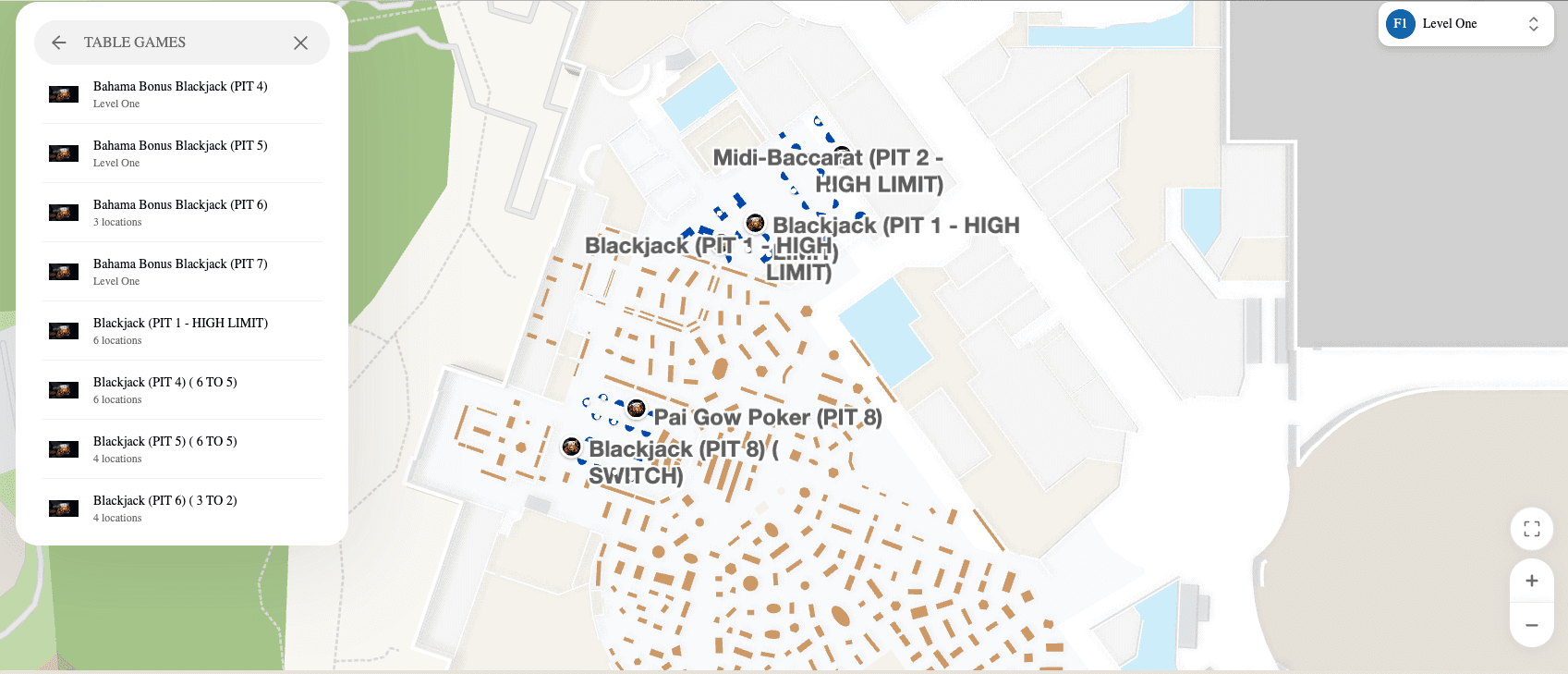
Browser-based or app-based maps guests access on their own device are ideal for complex, shifting hotel and resort layouts. It's best suited for complex, multi-zone properties where routing needs to adapt to events, closures, and real-time changes. Guests carry the map with them from parking to lobby to conference room to pool deck.
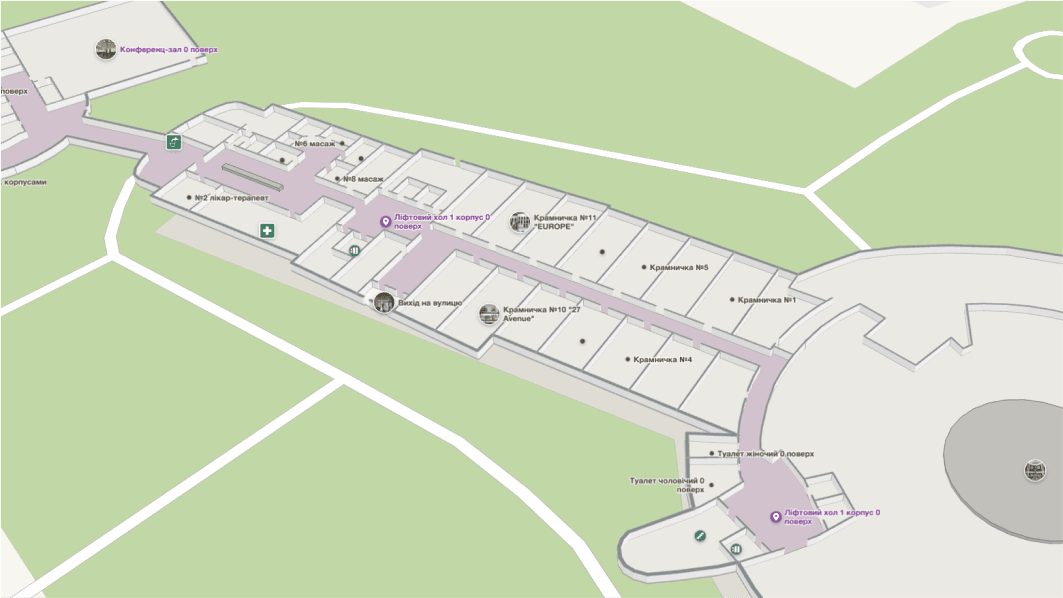
None of these approaches is universally superior. Most properties need a combination. The question is how much weight each one should carry.
What to evaluate when choosing a hotel wayfinding solution
Five criteria separate a wayfinding system that works from one that creates a different set of problems.
Property complexity
Count buildings, floors, indoor-outdoor transitions, and how frequently spaces are reconfigured. A single-building hotel with a stable layout has different needs than a multi-building resort that reconfigures event spaces weekly. Multi-building navigation—connecting a parking garage to a lobby to a convention center to a pool complex—is where most legacy approaches break down.
Guest profile
What percentage of guests are international? What's the age distribution? A luxury resort serving predominantly international travelers needs multilingual support across every wayfinding touchpoint. A conference hotel with a tech-savvy corporate audience can lean more heavily on mobile-first tools.
Integration requirements
Does the wayfinding system need to pull from the property management system, event scheduling platform, or booking engine? Without that connection, map content drifts out of sync with what's actually happening on property.
Hotel accessibility and inclusivity
Hospitality properties have specific accessibility requirements: step-free routing across multi-level buildings, compatibility with screen readers, and clear visual contrast for low-vision guests. Evaluate whether the system can route around stairs and escalators, not just acknowledge they exist.
Maintenance and updates
An out-of-date map is virtually useless. Who updates the map when a restaurant rebrands, a pool closes for renovation, or an event moves rooms? If the answer is "submit a ticket to the vendor and wait," the system will be out of date within a month.

Common mistakes operators make with hospitality wayfinding
Treating wayfinding as a one-time signage project.
A resort's layout is a living thing. Restaurants open and close, seasonal amenities rotate, conference configurations change weekly. Wayfinding that can't keep pace with those changes becomes inaccurate, and an inaccurate map is as bad or worse than no map at all.
Ignoring the outdoor-to-indoor transition.
Guests navigating from a valet drop-off across a courtyard into a lobby and down to a conference level cross zones that most systems treat as separate environments. If the wayfinding experience breaks every time a guest steps outside, it solves only part of the problem.
Assuming property management integration is optional.
Without it, someone on your team is manually updating map content every time a room assignment changes or a restaurant adjusts its hours. That approach may work for a month, but won't work for years-long management.
Underestimating multilingual needs.
A resort serving international guests with English-only wayfinding signage is creating friction at every decision point — and most operators don't see it because the friction is silent. Guests often don't complain, but they won't find—or spend at—the spa, the restaurant, or the retail shop.

The hidden revenue casinos are leaving on the table
Casinos are investing billions in restaurants, entertainment, retail, and event space. But if guests can't find those amenities, that investment doesn't pay off. This guide shows Ops and Marketing teams how indoor mapping closes the gap, and what it's worth when it does.
Where digital wayfinding fits in a hotel or resort
For properties where layouts change, guest populations are international, and the operator needs a single system that updates across all touchpoints, mobile-first digital wayfinding is the ideal supplement to physical signage.
The question becomes which platform handles the specific complexities of hospitality.
Mappedin is one platform built for this kind of multi-zone complexity. It supports 40+ languages, meets WCAG 2.1 AA accessibility standards, and includes a self-service CMS that lets property teams make real-time updates without submitting a ticket. It can be embedded directly into a property's existing app or website, so guests don't need to download anything new.
For properties exploring how wayfinding can also drive revenue through promoted dining locations, spa bookings, or sponsored event content on the map itself, Mappedin is purpose-built to drive predictable revenue through in-map monetization.


Share