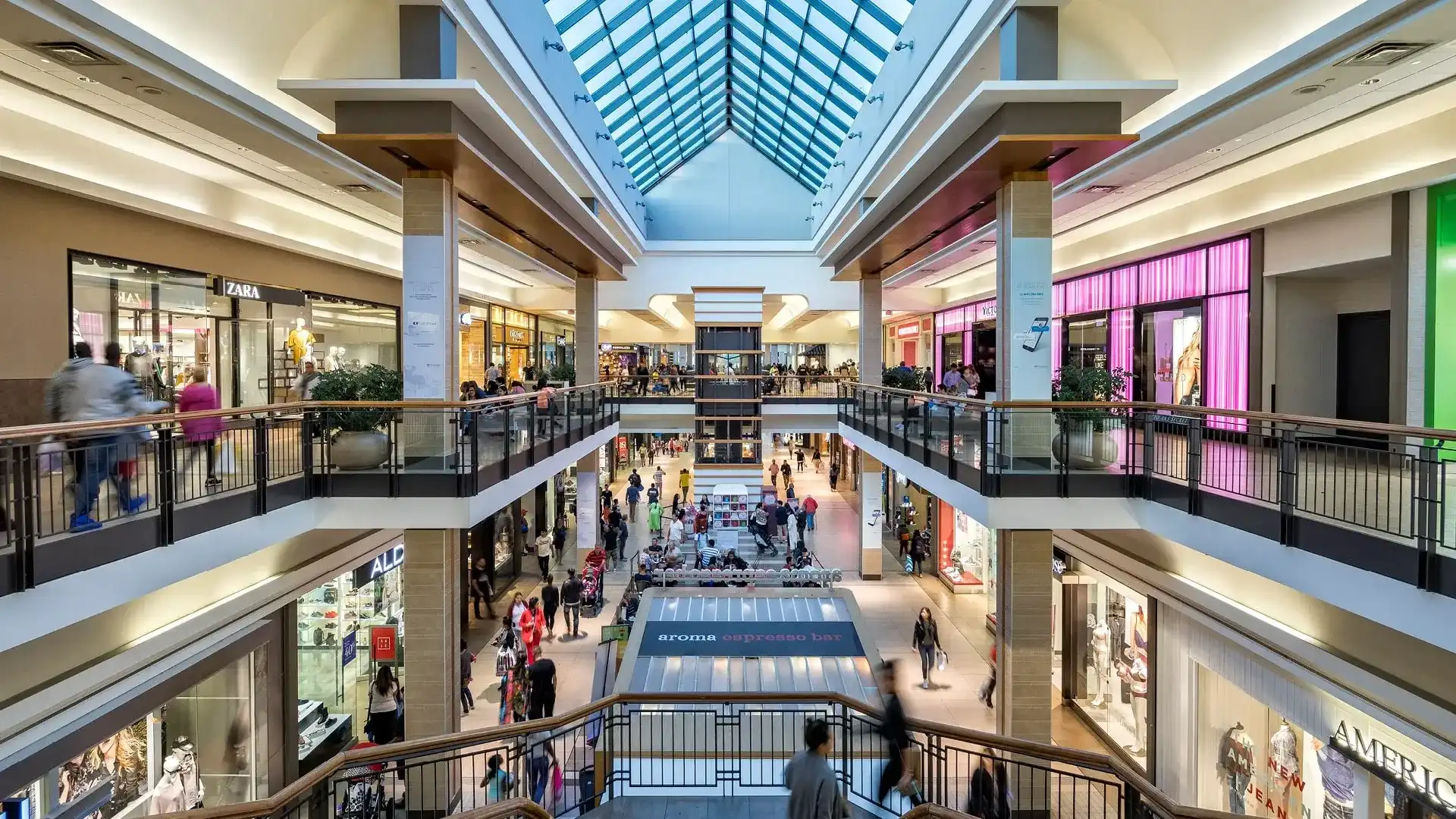
Retail has always competed on experience. But the stakes are higher now. Visitors arrive with higher expectations, shorter patience, and smartphones that make it trivially easy to compare alternatives.
According to a recent Mappedin report, 53% of visitors experience at least one navigation problem per visit. They couldn't:
- Locate a store
- Find a restroom
- Figure out how to get from one end of a property to another
These aren't just inconveniences. Friction compounds. A visitor who gets lost, feels disoriented, or can't find what they came for is less likely to return, and less likely to recommend the venue to others.
This guide covers what retail customer experience actually means in a physical venue context, why it drives measurable revenue outcomes, and five practical strategies for improving it.
What does "retail customer experience" really mean?
Customer experience (CX) in retail refers to the sum of every interaction a shopper has with a venue—from how they plan their visit to how they navigate the space to how they feel when they leave. It includes the physical environment, the digital touchpoints layered over it, the ease of finding what they want, and the quality of service they encounter along the way.
For shopping centers and mixed-use retail environments, CX is particularly multidimensional.
A visitor's journey might look like this:
- Discover a venue through a social post
- Arrive by public transit
- Search for a specific tenant on a kiosk
- Browse three other stores they hadn't planned to visit
- Stop at a restaurant
- Exit through a different door
Every moment in that journey is an experience, and every point of friction has a cost.

Why does retail customer experience matter for revenue?
The commercial case for CX investment in retail is well-established.
— McKinsey & Company
Other research from Pathintelligence found that a 1% increase in dwell time results in a 1.3% increase in sales.
Dwell time and discovery are closely linked. Mappedin's State of Venue Experience report found that half of visitors are discovery-oriented — they come to explore, not just execute a single errand.
And what makes it easier for visitors to explore and thus, spend more time in a center? The same report found visitors who use indoor maps discover new places 62% easier.
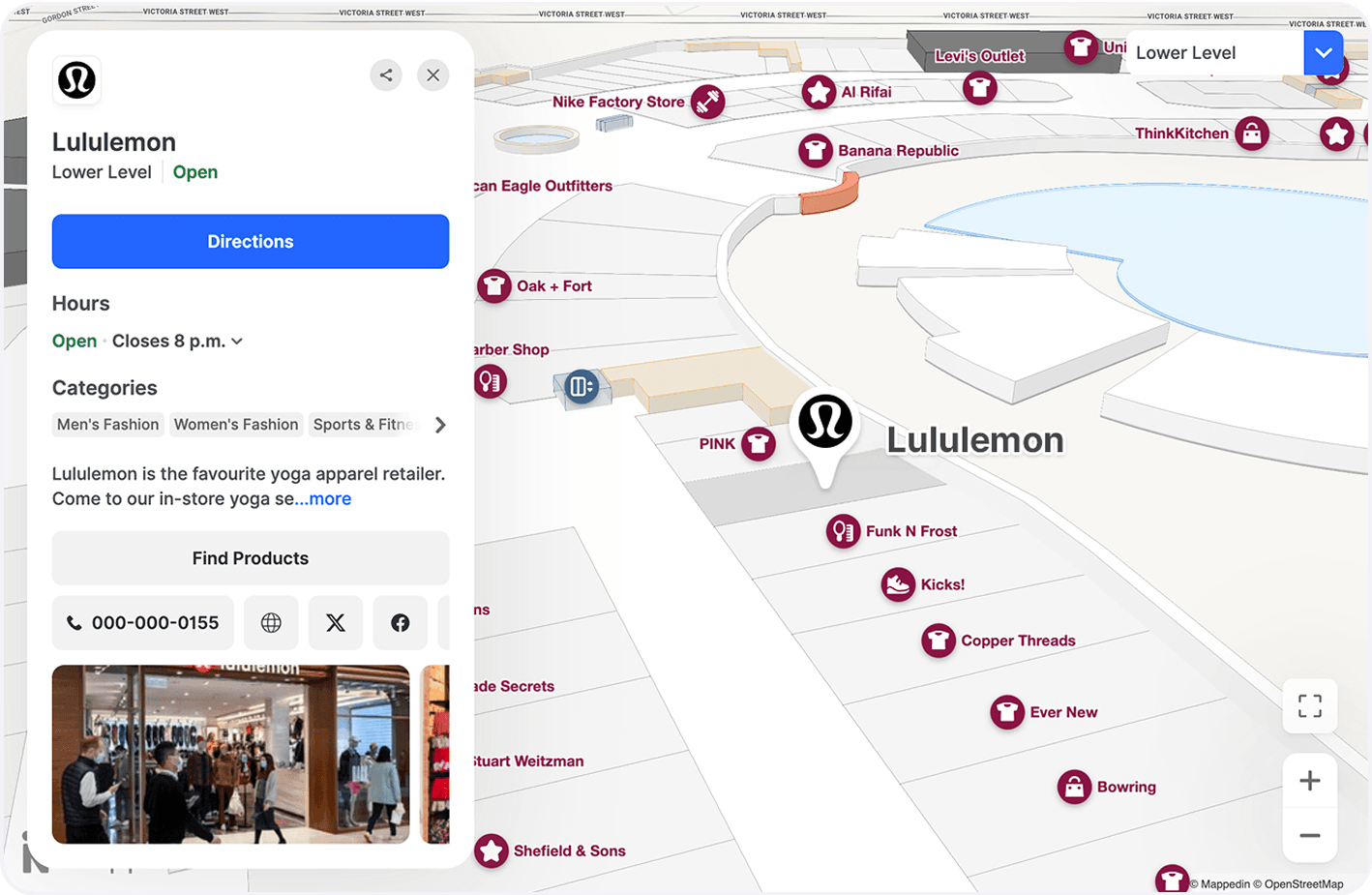
The implication for mall operators is significant: the visitor who finds her way easily doesn't just complete her original task; she spends longer, discovers more, and converts across more tenants.
Poor CX does the opposite. Disorientation leads to truncated visits, abandoned purchases, and negative word of mouth.
How to improve customer experience in retail
1. Fix navigation and wayfinding first
Navigation is the foundation of retail CX. A visitor who can't find what they're looking for cannot spend money, discover tenants, or have any of the experiential moments operators invest in. Yet wayfinding is frequently treated as a secondary concern — something addressed by static signage designed years before the current tenant mix.
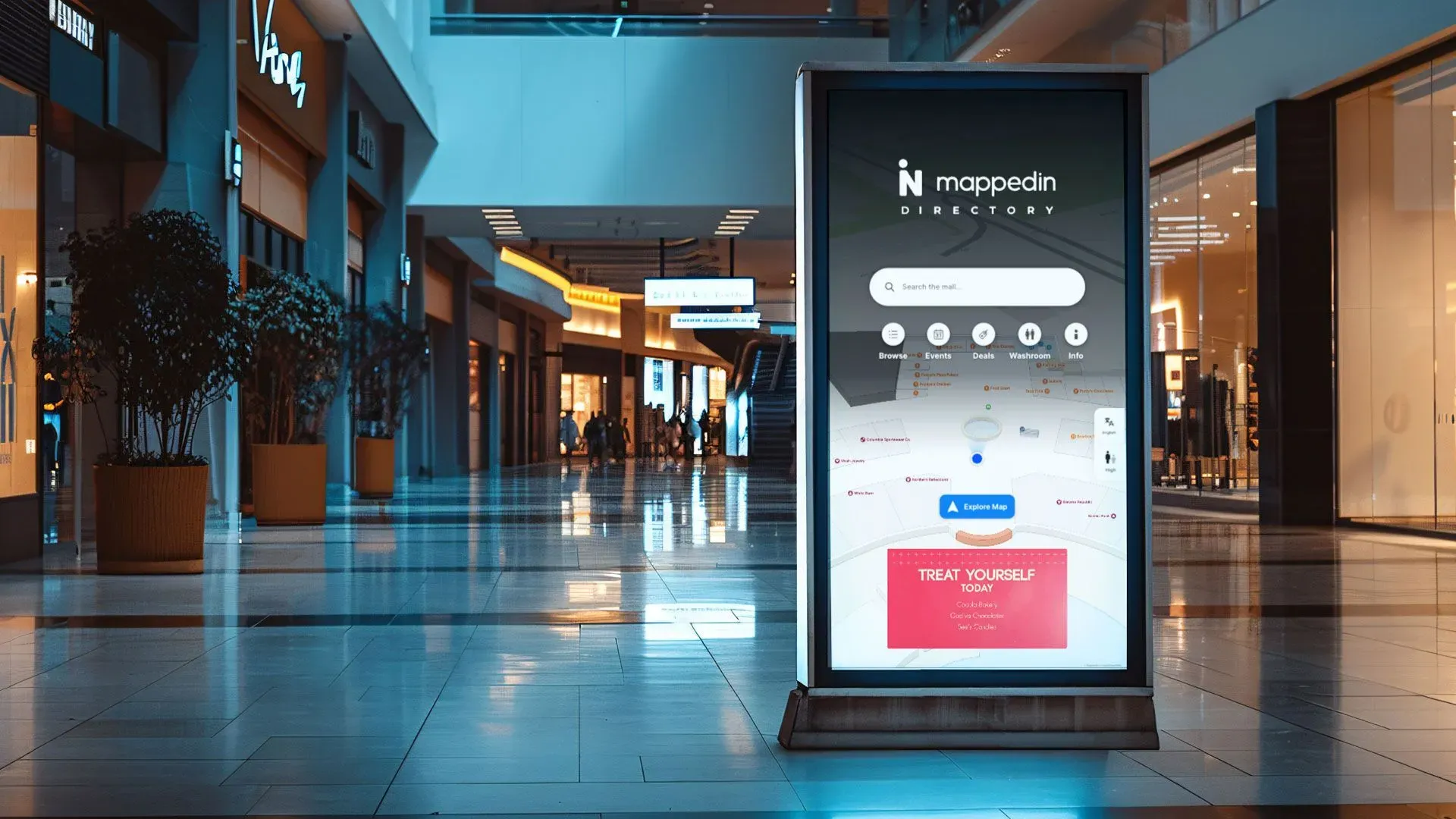
Effective retail wayfinding means giving visitors accurate, real-time information about where stores are located, how to get from one point to another, and where key amenities (restrooms, food courts, parking, accessibility routes) can be found. For large properties like multi-level malls, mixed-use complexes, and outlet centres, this typically requires a digital layer: an interactive map available on the venue's website, a mobile app, or on-site kiosks.
The bar for what "good" looks like has risen. Visitors increasingly expect search functionality (type a store name and get a route), not just a static directory. Properties that meet this expectation reduce the friction that cuts visits short.
Unlike physical assets, digital ecosystems compound. The more customers engage, the more the system learns, and the more personalised and valuable the experience becomes.
— David-James Nyguyen, Retail Leasing Expert & Shopping Centre Strategist
2. Design for discovery, not just destination
Most retail visitors arrive with a plan but leave with more purchases than they intended — when the environment supports it. Discovery-oriented visitors represent roughly half of all foot traffic, according to Mappedin's State of Venue Experience research. The question is whether the physical and digital environment makes discovery easy or hard.
Wayfinding tools that surface contextually relevant suggestions—nearby restaurants, current promotions, stores in the same category—turn navigation into a discovery engine. Properties that layer promotional content into their digital maps and directories create a channel for tenants to reach visitors at the moment of intent: when they're already in the building and actively looking.
This also has implications for layout and signage. Reviewing traffic data to understand where visitors linger and where they pass through quickly allows operators to make informed decisions about anchor placement, retail mix, and in-centre programming.
3. Reduce friction at every physical touchpoint
Navigation is the most common friction source, but it's not the only one. Long waits, unclear signage, inaccessible routes, and poor accessibility for visitors with mobility or language needs all degrade CX.
So does inconsistency. When a visitor checks the venue website before arriving and finds an outdated store listing, trust erodes before they've walked through the door.
The most durable improvements tend to be systemic. Maintaining accurate tenant data across all channels (website, kiosks, app) requires a content management process, not just a one-time update. Properties that invest in a single source of truth for their venue data, updated whenever a tenant opens, closes, or relocates, deliver a consistently accurate experience that compounds over time.
Accessibility deserves specific attention. Providing step-free routing, wayfinding in multiple languages, and support for visitors with visual impairments both "checks the box" on compliance as well as expands the addressable audience, improving NPS across the board.
4. Retail digital transformation: Leverage digital to extend the in-store experience
The distinction between the digital and physical experience has largely dissolved for today's retail visitor. They search before they arrive, check maps on their phones while navigating, and share experiences (positive and negative) online after they leave.
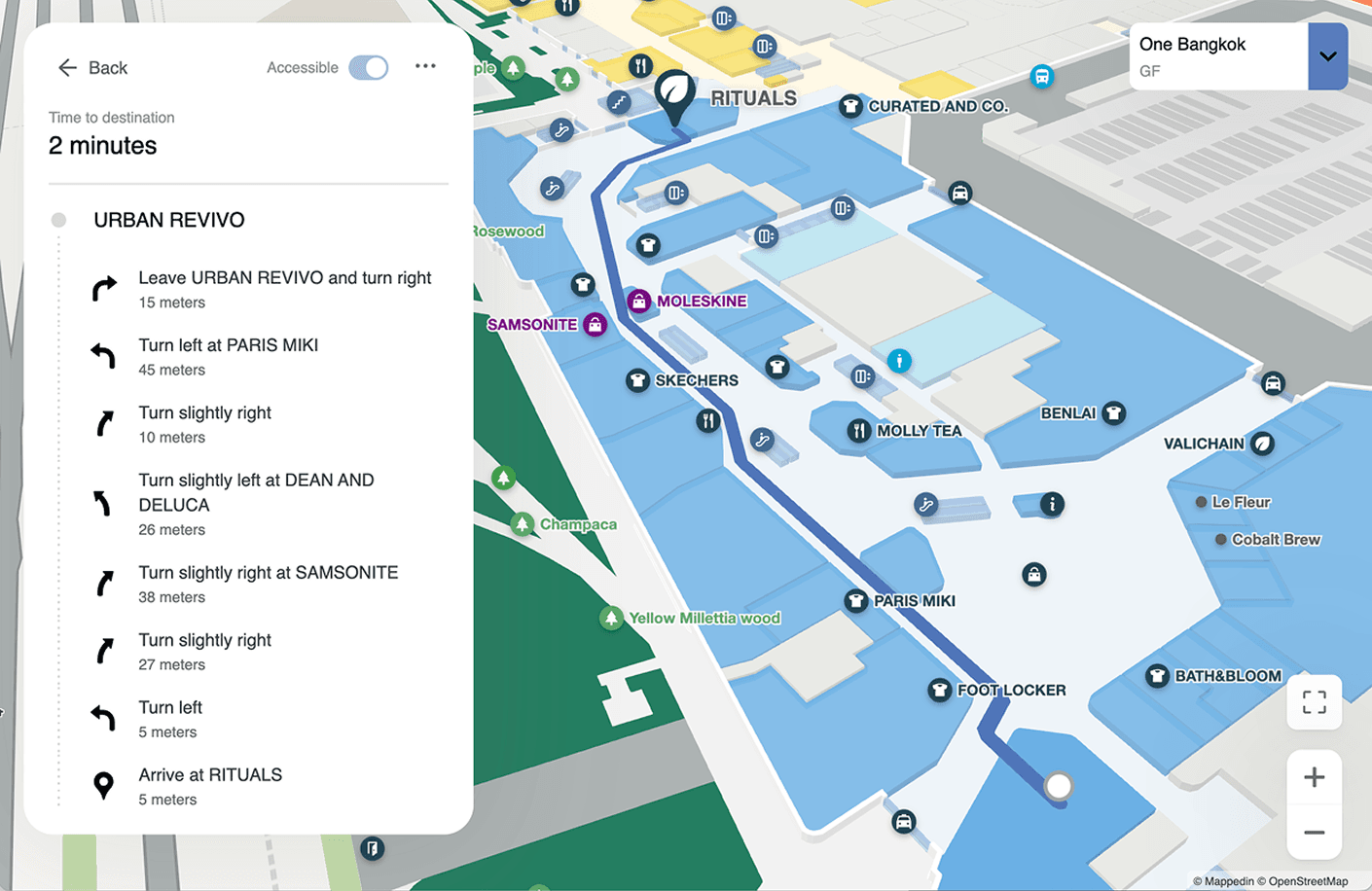
Properties that treat digital as an extension of the physical experience rather than a separate channel capture more of this behavior. A well-maintained venue website with an embedded interactive map allows visitors to plan their visit before arriving, reducing first-time visitor anxiety and increasing the likelihood they stay longer.
QR codes linking to digital wayfinding, available at entrances and high-traffic areas, serve visitors who prefer their own devices to on-site kiosks.
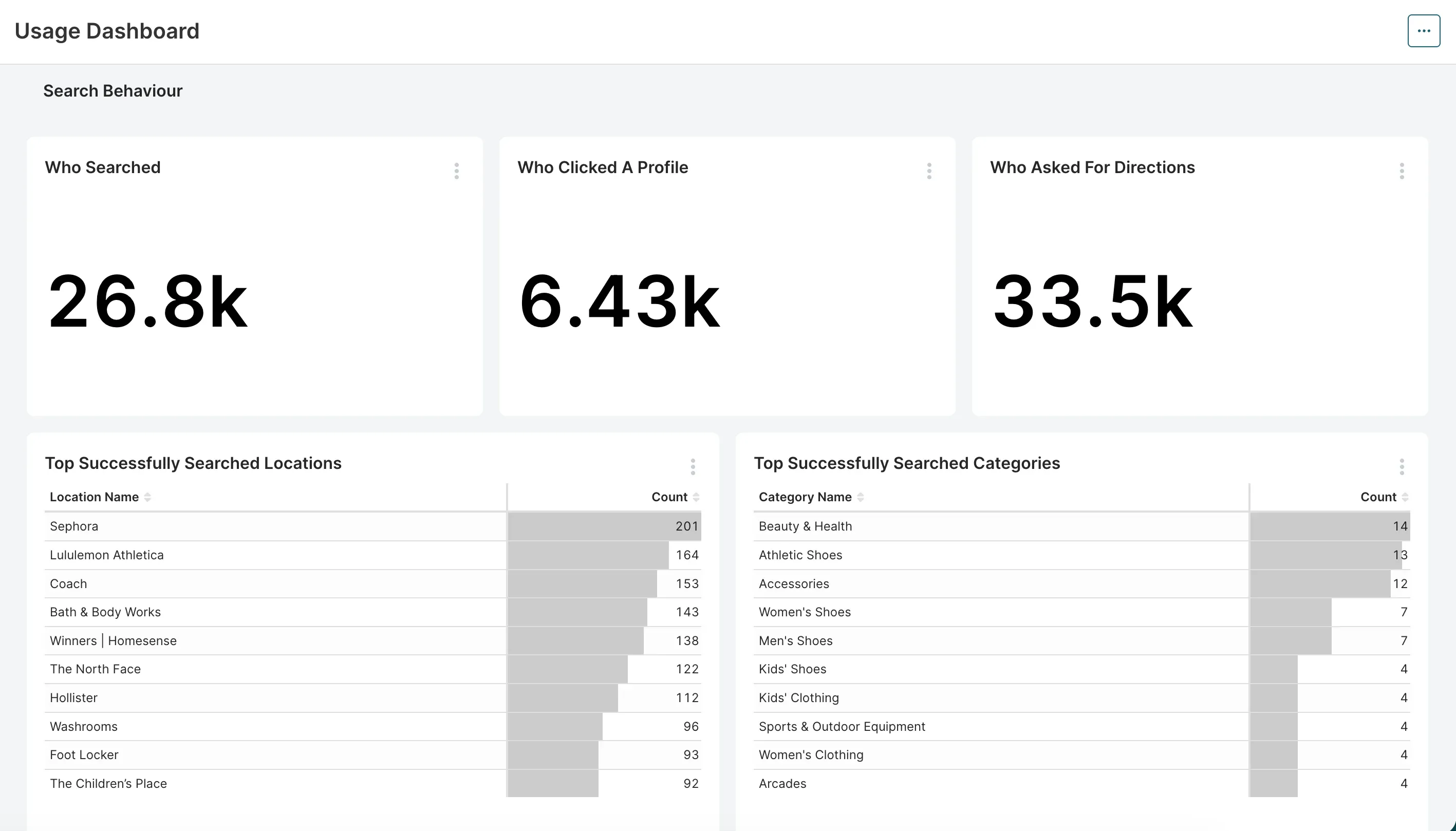
The data generated by digital retail wayfinding tools is also valuable. Understanding which destinations visitors search for most, where navigation queries originate, and which routes are used most frequently gives operators actionable insight into visitor behavior that static observation methods cannot provide.
5. Retail analytics: Measure what matters
Improving retail CX requires knowing where the experience is falling short. The most useful indicators are often the ones closest to visitor behavior:
- Foot traffic patterns
- Dwell time by zone
- Tenant or category search queries
- Navigation bottlenecks
Visitor satisfaction surveys (CSAT, NPS) provide an additional layer. Properties that run regular pulse surveys, particularly after changes to tenant mix, signage, or wayfinding systems, can attribute changes in satisfaction scores to specific interventions rather than seasonal variation.
Setting a baseline before implementing changes makes it possible to demonstrate ROI to stakeholders. The case for CX investment is strongest when it's tied to measurable outcomes: increased average transaction value, improved tenant satisfaction, higher repeat visit rates, or improved accessibility scores.
How leading venues are addressing customer experience in retail
A growing number of mall portfolios and large retail properties are investing in integrated digital wayfinding platforms that address several of these strategies simultaneously.
Mappedin is one example. The platform provides interactive indoor mapping for shopping centres, with tools for visitor-facing wayfinding (via web, app, or kiosk) and a content management system that keeps venue data accurate across all channels.
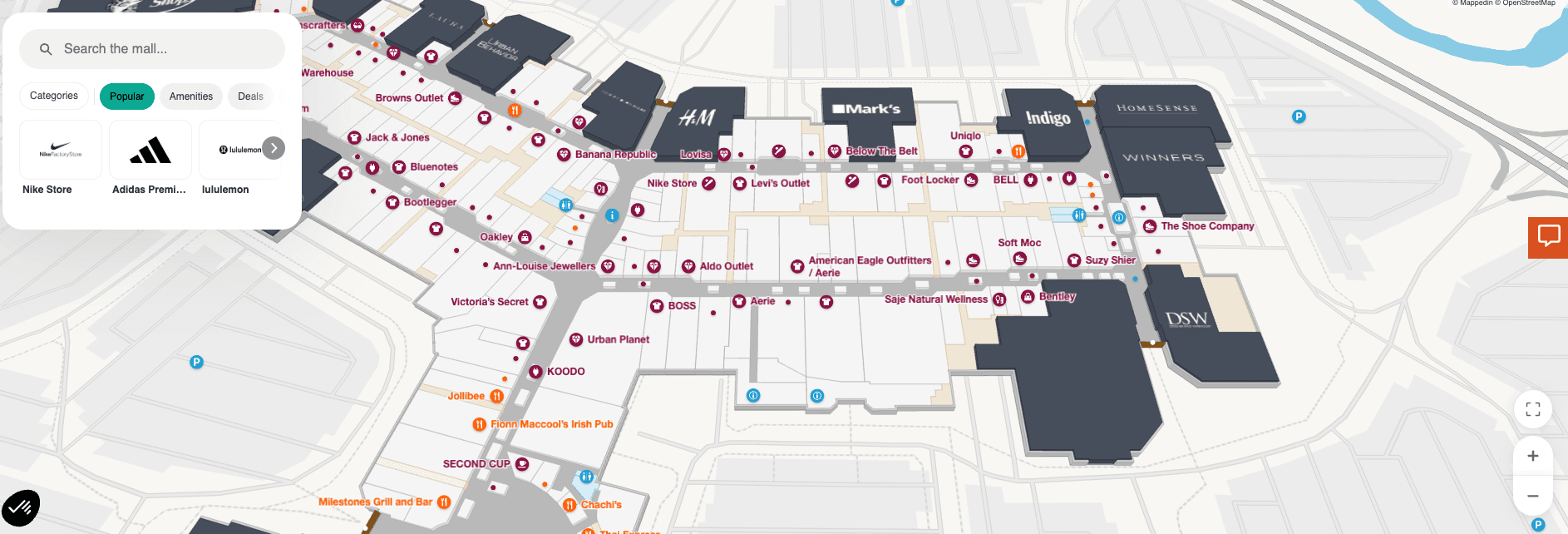
Mappedin powers some of the world's premier venues like Simon Property Group, Cadillac Fairview, One Bangkok, and Cenomi Centres. The platform supports WCAG 2.1 AA accessibility compliance, step-free routing, and 40 languages—addressing both the discovery and accessibility dimensions of retail CX improvement.
— Marina Mall Abu Dhabi Management, Marina Mall
Alternative retail wayfinding software and indoor mapping platforms in this space include:
- Pointr
- MapsPeople
- Visioglobe
- Abuzz
- Mapxus
Each software vendor offers different strengths depending on venue type, technical environment, and budget. The right fit depends on the specific combination of wayfinding, analytics, and CMS capabilities a property needs.
Frequently asked questions
What is the most important factor in retail customer experience?
Navigation and ease of finding what visitors are looking for consistently rank as the highest-impact factors in retail CX. When visitors can't locate a store or amenity, the rest of the experience becomes irrelevant. Solving wayfinding is the highest-leverage starting point for most properties.
How does wayfinding affect retail sales?
Visitors who can navigate efficiently spend more time in the venue and discover more stores. Research shows that a 1% increase in dwell time results in a 1.3% increase in sales (Pathintelligence). Wayfinding tools that make discovery easier through search, suggestions, and contextual content amplify this effect.
What digital tools help improve retail customer experience?
Interactive indoor maps (available on venue websites, apps, and kiosks), tenant directories with real-time accuracy, and digital signage integrated with promotional content are the most commonly deployed tools. Platforms like Mappedin, Pointr, and MapsPeople offer various combinations of these capabilities.
How do you measure retail customer experience improvement?
Key metrics include dwell time, foot traffic by zone, CSAT and NPS scores, average transaction value, and repeat visit rates. Properties that run baseline measurements before implementing changes can attribute improvements to specific interventions and build a clearer ROI case for continued investment.
Why do retail customers leave without purchasing?
Navigation failure, inability to find a desired product or store, and long queues are the most common reasons for truncated visits. Digital wayfinding addresses the first two directly. According to Mappedin's State of Venue Experience report, 24% of visitors say they have wasted time searching for stores or amenities in the past six months—a figure that represents both a problem and an opportunity.
What is the difference between customer service and customer experience in retail?
Customer service refers to interactions between staff and visitors, such as handling a complaint, answering a question, completing a transaction. Customer experience is broader: it encompasses every touchpoint from pre-visit planning to post-visit follow-up, including the physical environment, digital tools, navigation, and overall atmosphere. You can have excellent customer service within a poor customer experience.
How does accessibility affect retail customer experience?
Accessibility directly affects the quality of experience for a significant portion of visitors, like those with mobility limitations, visual impairments, or language barriers. Properties that provide step-free routing, multi-language wayfinding, and screen-reader-compatible digital tools expand their accessible audience and consistently improve NPS scores across all visitor segments. Accessibility is a CX investment, not just a compliance obligation.
Optimize the customer experience in retail
Improving retail customer experience isn't a single initiative; it's an ongoing commitment to reducing friction, enabling discovery, and giving every visitor the tools they need to get more from a visit.
The properties that do this best treat navigation, digital integration, and accessibility as infrastructure, not afterthoughts.
The commercial case is clear. Experience-led retail generates measurable revenue lift, higher tenant satisfaction, and stronger visitor loyalty. The competitive case is equally clear: visitors have more options than ever, and the venues that earn their return visits are the ones that make each visit feel effortless.
Related resources:


Share