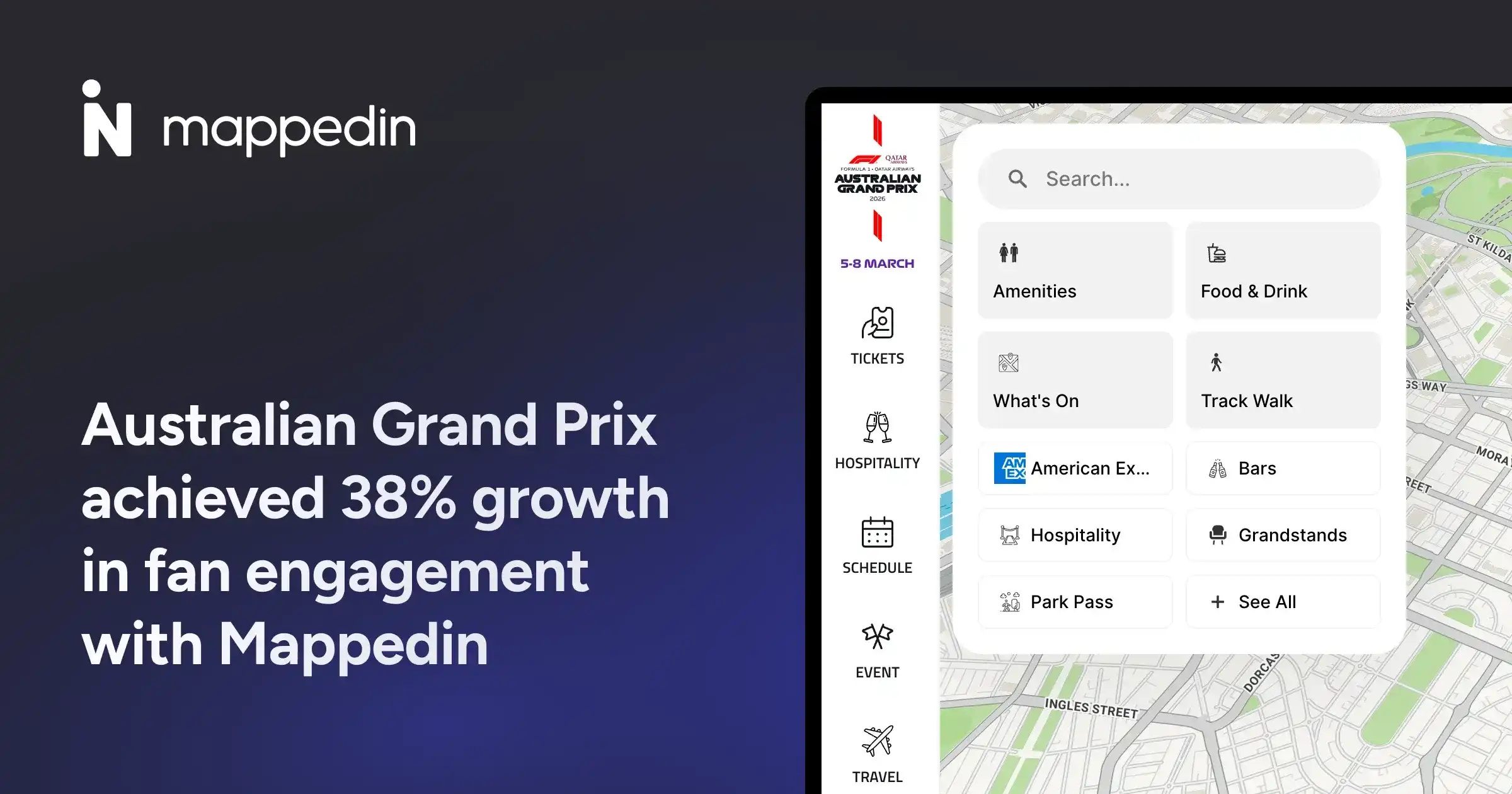
When evaluating mapping software for sports stadiums, arenas, events and entertainment complexes, finding a platform that handles both sprawling outdoor perimeters and complex indoor concourses is critical. PAM (People and Movement) and Mappedin are two leading solutions in this space, but they approach spatial management from fundamentally different architectural foundations.
This guide breaks down the core differences between Mappedin and PAM to help you choose the right mapping solution for your fan experience and stadium operations.
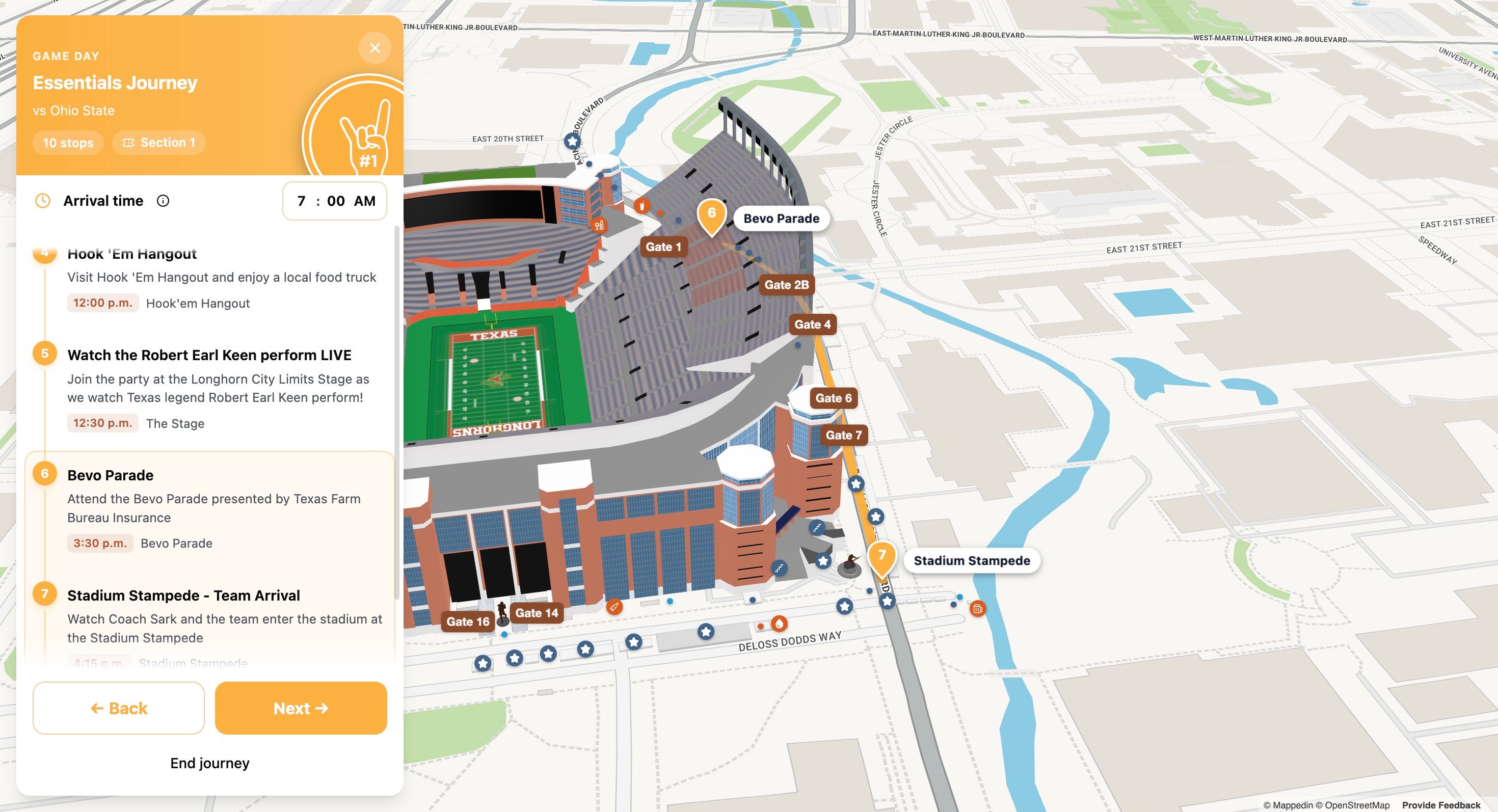
Explore how Mappedin can facilitate self-guided stadium tours during event days and/or off days. Try the interactive map →
Mappedin vs. PAM at a glance
Mappedin: Purpose-built for 365-day native indoor operations and complete turn-by-turn venue navigation
Mappedin provides the native indoor operating system engineered specifically for complex, multi-floor buildings. Rather than overlaying flat indoor data onto an outdoor map, Mappedin turns static CAD or PDF floor plans into a digitized, structured map. For stadiums, this means delivering complete omnichannel wayfinding – guiding fans from parking to their exact seat across web, mobile, digital directories, and AI chat.
With Mappedin, stadium operations teams get commercial data structures that serve leasing, marketing, facilities, and security teams 365 days a year:
- Turn-by-turn navigation from parking to seat
- Shuttle transportation and rideshare pickup/dropoff
- Multi-layout stadiums for different events
- Commercial district leasing
— Drew Martin, Deputy Athletics Director, Texas Athletics
PAM: Focused on open outdoor areas and temporary event setups
Founded in Sydney, Australia in 2016, PAM is a digital map platform built mainly for the sports and entertainment world. PAM runs on Mapbox, making it a natural fit for temporary outdoor event spaces that don't have strict walls or permanent structures.
Key differences between Mappedin and PAM
1. Complex space management
The most significant architectural difference between the two platforms is how they handle complex indoor-outdoor venues.
Mappedin: Native venue operating system
Mappedin is an indoor operating platform designed natively for the indoors. While other mapping tools leave fans at the entrance gate, Mappedin guides their journey inside. Fans get precise, multi-floor navigation through concourses and multi-level decks—guiding them step-by-step throughout the entire stadium.
PAM: Designed for getting fans to the outer building perimeter
PAM relies on standard outdoor map tiles via Mapbox to manage traffic, parking lots, and outer perimeter gates. While it can display basic concourse maps, its outdoor-first architecture isn't built to natively process complex multi-story CAD floor plans – meaning indoor routing often relies on high-level directional lines rather than step-by-step, multi-level navigation across multiple floors.
2. Inclusive routing and navigation
Stadiums demand complex routing logic to cater to diverse fan needs, premium ticket holders, and varying physical access requirements.
Mappedin: Intelligent stadium wayfinding and accessibility
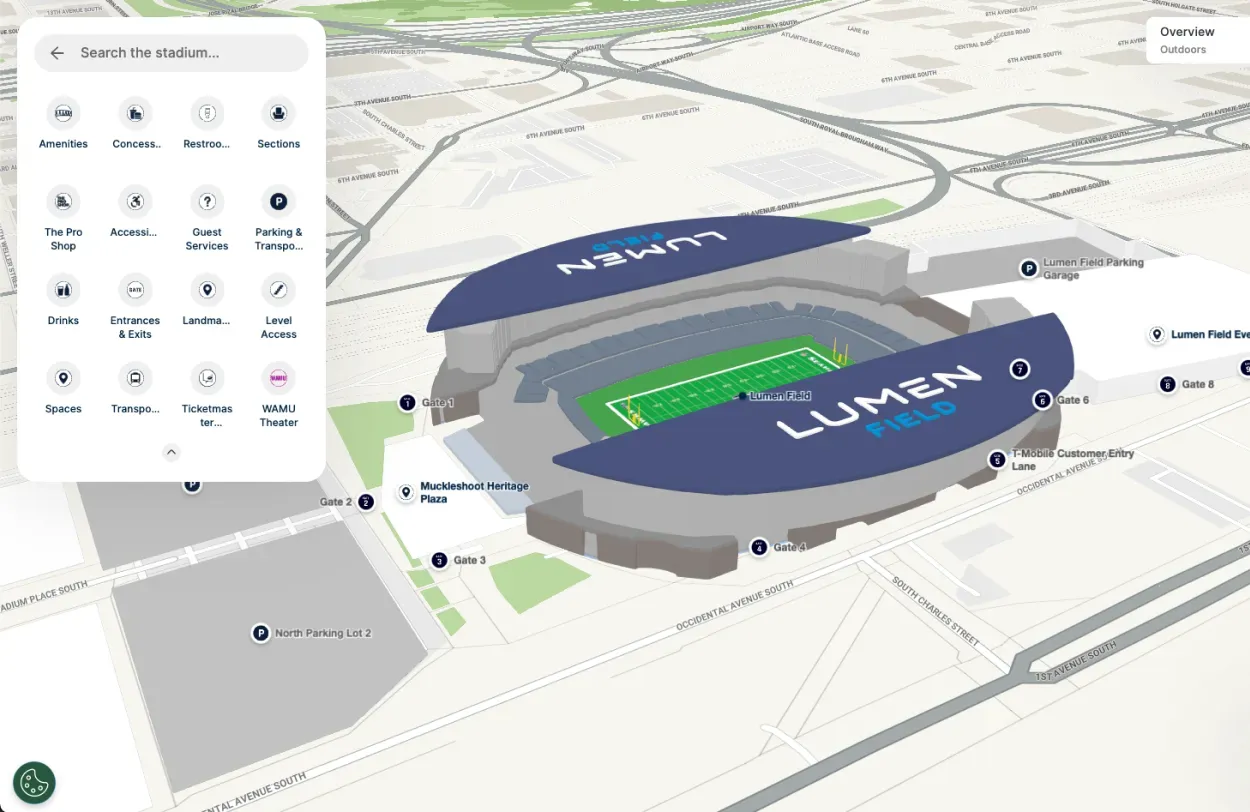
Mappedin offers ticket-level wayfinding that can restrict general fans while routing VIP and Club seat holders exclusively through private entrances and partner-sponsored lounges. It excels in accessibility by generating step-free turn-by-turn paths for wheelchairs and strollers.
Mappedin also maximizes per-cap revenue by allowing fans to search for specific concessions (e.g., gluten-free options or local breweries) and routing them to shorter queues.
— Kenton Olson, VP of Digital & Emerging Media, Lumen Field
PAM: Basic stadium wayfinding
In PAM's live venues, navigation is typically simplified to macro-level routing, frequently dropping a pin at an entrance gate or providing high-level concourse routing rather than offering continuous indoor routing.
While PAM offers step-free routing options, its map layer lacks the multi-floor spatial detail needed for granular accessibility guidance or navigation down to specific rows and sections.
3. Map editing and layout changes
Venues are dynamic; vendor layouts shift, concourses close, and escalators break unexpectedly. How software handles these updates impacts operational agility.
Mappedin: Flexible map maintenance with full-service support
Mappedin gives venue teams complete control over their maps without locking them into a single way of working. Teams that want hands-on agility can use a live, intuitive Editor to make real-time updates in seconds – like closing an out-of-service escalator, adding a pop-up merchandise booth, or rerouting fans around a spill.
For major seasonal changes, new club lounges, or venues that simply prefer a hands-off approach, Mappedin pairs its intuitive software with dedicated Managed Services. Whether your team chooses to update the map directly or rely on our mapping experts to handle complex architectural changes, updates push live across all fan-facing apps instantly.
PAM: Vendor-dependent spatial updates
PAM includes a web editor for toggling event scenes, closing gates, and adjusting zone markers. However, without an indoor CAD vector engine, making structural changes to multi-level floor plans requires manual re-alignment and route re-configuration. For venues with frequent layout updates, maintaining complex indoor maps creates ongoing operational overhead.

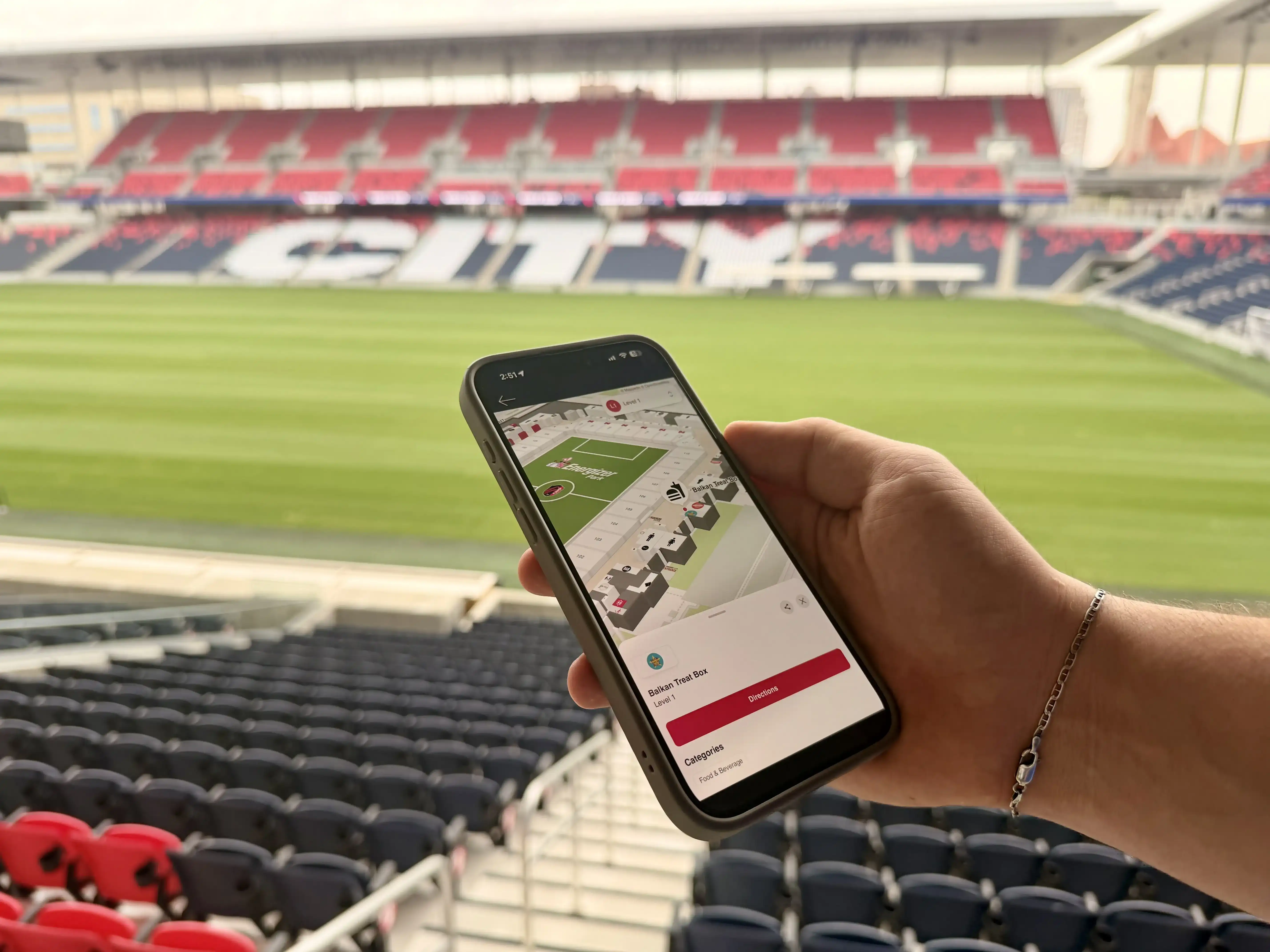
How St. Louis City SC drove 150% higher sales with interactive wayfinding
At Energizer Park, their interactive map is more than a floor plan. It's a dynamic, structured spatial layer embedded within the broader fan journey, supporting navigation, amplifying local food partners, and reinforcing app adoption.
4. Stadium software ROI & value
Stadiums host major events for only a fraction of the year, making everyday utility a critical factor in software ROI.
Mappedin: Year-round enterprise analytics & ROI
Mappedin acts as a 365-day indoor operating system. Using detailed location analytics, Mappedin tracks sessions, searches, engagement, and positioning. This allows leasing teams to use search intent data to land high-value sponsors, facilities teams to manage daily maintenance workflows, and digital/marketing teams to glean actionable visitor insights all year long.
PAM: Event-day utility
PAM is designed to peak during game-day hours. It gets fans to the door for a 4-hour game but sits dormant for the 300+ days a year when there are no major events, lacking utility for internal business teams during off-days.
Ready to see what stadium wayfinding looks like on a platform built for game day and beyond? Book a Mappedin demo →
Pricing comparison
Software pricing structure directly impacts long-term budget predictability, especially when managing dynamic venue spaces.
Mappedin pricing
Mappedin operates on a predictable SaaS model, charging a base platform fee priced per square foot per year. This cost scales down with higher volume and adjusts based on the specific applications needed, ensuring venues aren't hit with surprise service fees for basic map maintenance.
PAM pricing
PAM charges a flat, per-map rate combined with variable bundles of service hours. Because structural updates, floor plan re-alignments, and route re-configurations consume these paid service hours, the total cost of ownership quickly becomes unpredictable as venue layouts evolve over time.
Mappedin vs PAM: Which stadium wayfinding software to choose
For permanent stadiums, arenas, and multi-tier entertainment complexes, fans don't get lost outside — they get lost inside the venue. They struggle to locate their specific gate, find accessible elevators, discover premium club spaces, or navigate crowded concourses to buy food and merchandise.
Mappedin delivers a true purpose-built venue operating system that seamlessly guides visitors across all channels – from the parking lot directly to their exact seat or favorite concession.
By simultaneously empowering your digital, security, and facilities teams to manage the building in real-time, Mappedin proves to be a 365-day enterprise platform rather than just a game-day widget.


Share