

Picture this:
A guest texts your digital concierge at 9 PM asking where the spa is. They get a reply in seconds: "The spa is located on level 3 of the east tower. Open daily until 11 PM."
This would be helpful information, except for the fact the guest is standing in the middle of a sprawling casino floor with no clear sightlines, no signage they can see from their vantage point, and no idea which direction the they're even facing.
Interactions like these capture both the promise and the limitation of most digital concierge software on the market. The answer was fast and accurate, yet for a property of that size and complexity, it was completely insufficient.
A digital concierge is software that replaces or augments the traditional concierge desk, letting guests get information, make requests, and access property services through their phone or an in-room device.
Most products in this category focus on messaging, mobile check-in, and service requests. While it's a reasonable starting point, a virtual concierge that provides recommendations without the necessary directions or wayfinding to get there is only doing half the job.
The three layers of a complete digital concierge
Most digital concierge products operate at one or two layers. Rarely does digital concierge software cover all three. And if you manage a large resort, that gap is costing you.
1. Messaging and service requests
A guest texts for extra towels, checks in from the airport, or asks what time the pool closes. This is where the majority of digital concierge products live, and they do it well.
— Oracle Hospitality
For your front desk and guest services teams, that can be a welcome relief. It usually means fewer repetitive questions, and more time for interactions that actually need a human.
2. Recommendations and discovery
The concierge surfaces restaurants, spa packages, events, and promotions, ideally based on timing or guest preferences rather than buried in a static menu.
Think of this as the digital equivalent of a well-briefed concierge who knows:
- Which restaurant has availability
- Which bar is hosting live music
- Which guests are on their honeymoon
Some platforms handle this well, particularly when connected to a property's CRM or loyalty program.
3. Navigation and wayfinding
Once a guest decides where they want to go, they need to actually get there. In a thousand-room integrated resort with multiple towers, a gaming floor, convention space, a pool deck, and dozens of dining venues spread across several floors, providing a floor and room number isn't enough.
Here's where the experience breaks down without all three layers:
- A guest wants dinner.
- The concierge suggests three restaurants.
- The guest picks the Italian place on the 4th floor of the east tower.
Now they need to cross the casino floor, find the right elevator bank, navigate past the convention center, and arrive at the correct entrance... and the digital concierge has nothing left to offer them.
While the broken flow between a guest seeking a destination is clearly an experience bottleneck, it's also a missed revenue opportunity.


How Miracle Mile Shops helped guests navigate 1.2 miles of stores, hotels & entertainment
Miracle Mile Shops uses Mappedin to provide accessible wayfinding across 500k square feet. By integrating the maps with a conversational AI platform, it's easy for guests to search, discover, and navigate our venue directly from the website.
Why navigation matters most a large hotels and resorts
For a 50-room boutique hotel, messaging alone is likely enough. A property that size is small enough that guests orient themselves quickly.
But casinos, integrated resorts, and large convention properties are navigationally complex by design. Casino floors deliberately lack straight sightlines, towers connect through interior corridors that aren't intuitive, and guests move between indoor and outdoor spaces constantly.
Major integrated resorts like MGM Grand, Venetian, and Wynn Las Vegas each exceed 400,000 square feet of navigable guest space across multiple floors and towers.
According to Mappedin's State of Venue Experience Report, 53% of visitors experience at least one navigation problem per visit, like issues locating a venue, finding a restroom, or the best path to moving between floors.
This navigation friction compounds, and it leads to massive revenue leaks.
For example, a guest who can't find the new cocktail lounge doesn't spend there. A couple who gets turned around looking for the spa might give up and head back to the room. Every navigation failure is a discovery that didn't happen, and our research shows that visitors who use indoor maps discover new places 62% more easily than those who don't.
— Oracle Hospitality
The demand is there. The problem is that the majority of digital concierge software simply doesn't address it.
Five questions to ask when evaluating a digital concierge for your resort
If you're assessing solutions for a complex property, these five questions will quickly separate the right fit from the wrong one.
1. Does it handle the basics?
Features like messaging, service requests, and mobile check-in are table stakes. Any product you evaluate should do them well and reliably.
2. Does it surface property content?
Restaurants, events, amenities, and promotions shouldn't be buried inside a menu, but actively presented to guests based on context or timing. Can the digital concierge integrate with your existing loyalty program or CRM?
3. Does it include or integrate with indoor navigation?
For a complex property, this is the question that filters out most vendors. Can the tool show a guest how to get from their room to a specific restaurant, across buildings and floors? If the answer is no, it's likely not the best fit.
4. Can it update in real time?
Resorts change constantly. New restaurants open, amenities relocate, event-day configurations shift entire sections of the property. A concierge tool that requires manual content updates every time something moves will fall behind within weeks.
5. Does it work across the full guest journey?
The digital experience should account for all stages of the guest experience including pre-arrival, on-property, and during events. A concierge that only activates at check-in misses the moments guests need it most.


How indoor mapping closes the gap
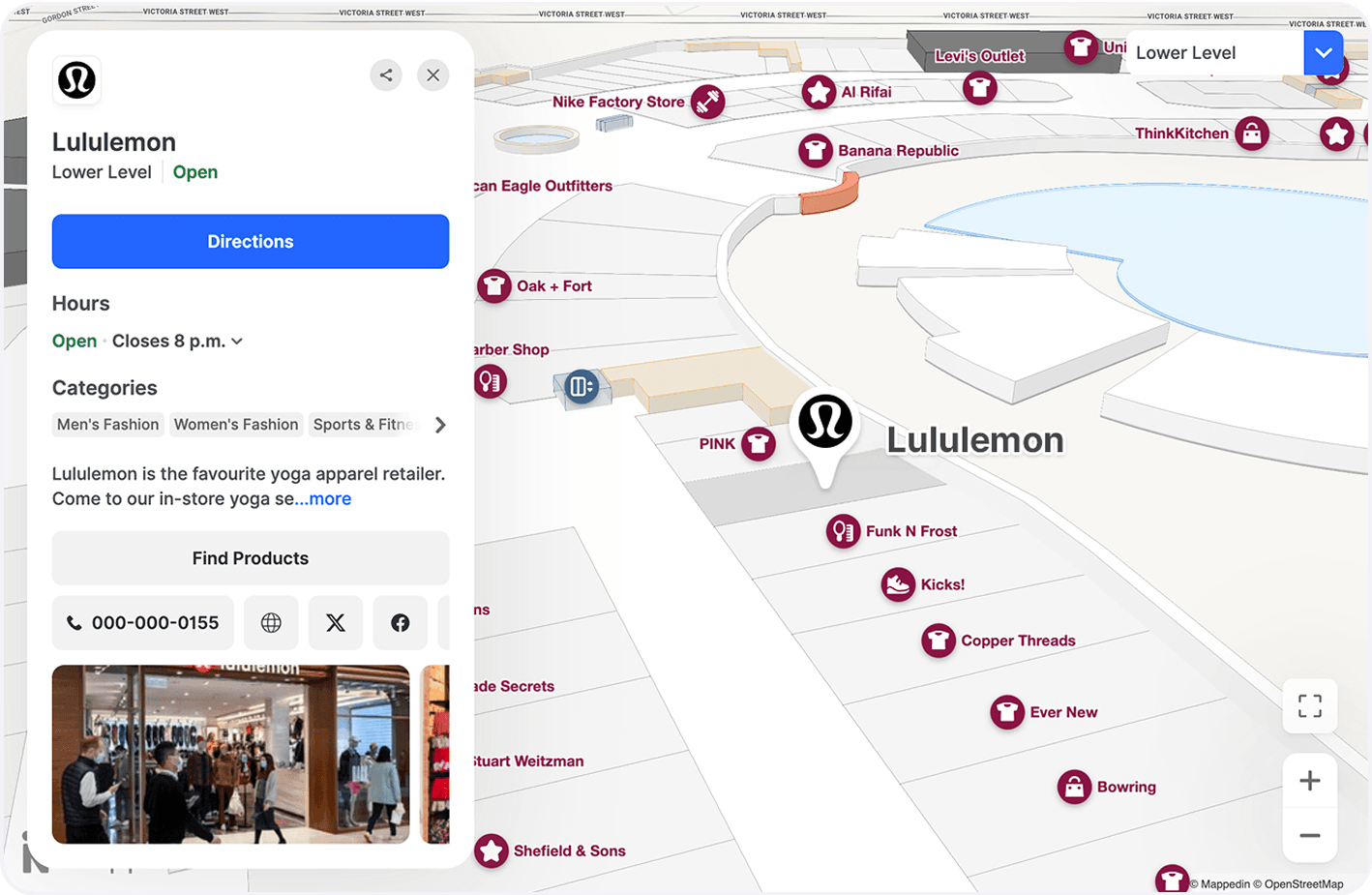
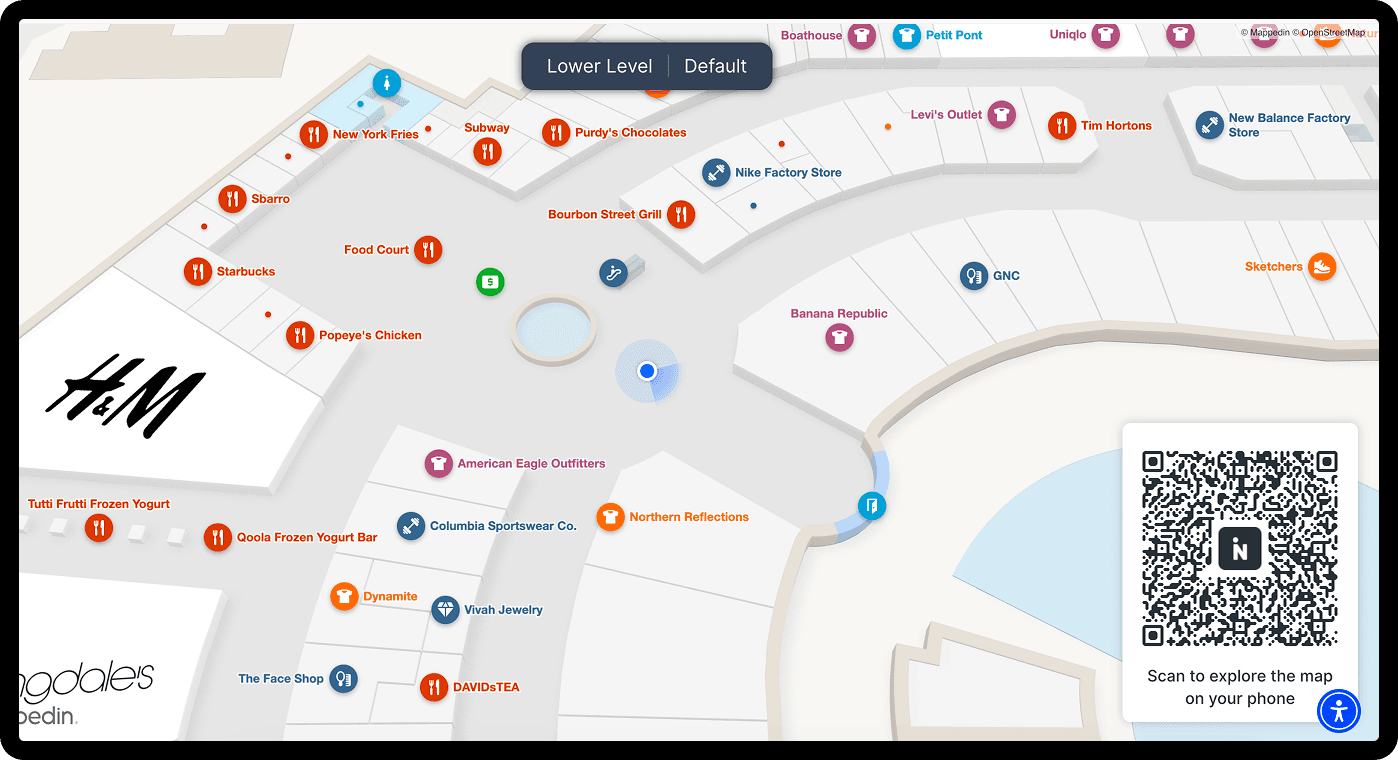
Indoor mapping platforms like Mappedin provide the navigation layer that most digital concierge products are missing. The goal isn't to replace your existing messaging and check-in tools — it's to complete them. To turn a text-based answer into a guided experience your guests can actually follow.
The capabilities that matter for resort properties:
- Interactive 3D maps guests can explore on their phone
- Turn-by-turn wayfinding that routes across floors and buildings
- Searchable directories covering every restaurant and amenity
- In-map monetization for location-based marketing and promotions
- Real-time content updates as the property evolves
Mappedin has mapped 10+ billion square feet and helped guide more than 450 million visitors through complex venues including casinos and resorts, convention centers, airports, malls, and stadiums.
— Rachel Bell, VP of Client Development at Intersection, Hudson Yards
For resort operators, the payoff is straightforward: your existing concierge handles what guests need. Indoor mapping handles how they get there.
Frequently asked questions about digital concierges
What is a digital concierge?
A digital concierge is software that lets guests access property information, make service requests, and get recommendations through their phone or an in-room device, either replacing or supplementing the traditional concierge desk.
How is a digital concierge different from a hotel app?
A hotel app is the delivery mechanism. A digital concierge is the functionality—the messaging, recommendations, navigation, and service request capabilities that run inside an app, a web browser, or a kiosk.
Do digital concierges work for large casino resorts?
They work well for the messaging and service request layers. But most fall short on navigation for properties over 100,000 square feet with multiple floors, towers, or buildings. Pairing concierge software with an indoor wayfinding solution closes that gap.
What features should a digital concierge include for a complex property?
At minimum: messaging, service requests, property content and recommendations, indoor navigation, and real-time content updates. Navigation is consistently the capability most vendors miss — and the one guests are most likely to notice the absence of.
Can a digital concierge reduce front desk and staff workload?
Yes. Properties that implement digital self-service tools consistently report reductions in routine directional and informational questions at the front desk, freeing staff for higher-value guest interactions.
How does indoor mapping fit into a digital concierge strategy?
It acts as the foundational digital layer to the other applications. Indoor mapping is the layer upon which the others can plug into for a full digital guest experience. The map-enabled wayfinding turns a concierge answer into a guided route the guest can follow on their phone, step by step.
What's the difference between a digital concierge and a virtual concierge?
Nothing; they're used interchangeably across the industry. Both refer to software that delivers concierge services digitally rather than through a staffed desk.
The digital layer guests are missing
Most resort operators evaluating digital concierge software are comparing messaging features, integration capabilities, and check-in workflows. And those capabilities are critical. But for a complex, multi-building property, once a guest knows where they want to go, can your concierge actually show them how to get there?
If the answer is no, the gap is something your guests are already experiencing on every visit. The good news is it's fixable, and it doesn't require replacing the tools you already have.


Share