

A conference attendee walks out of the main ballroom at a 500,000-square-foot casino resort, looking for a breakout session in a meeting room she's never heard of. The property has 14 restaurants, a spa, a pool complex, three hotel towers, and a gaming floor the size of four football fields.
There are screens everywhere, promoting the steakhouse, the weekend headliner, the loyalty program. Yet none of them tell her how to get where she's going.
This is the gap most hotel digital signage investments create. Properties spend heavily on displays but rarely connect what's on those screens to the metrics that matter: guest satisfaction, on-property spend, and the front desk interactions that consume staff time without generating revenue.
According to a recent study:
That's not a signage problem. It's an information architecture problem, and screens alone don't solve it. Signage improves guest experience only when it addresses specific friction points guests actually encounter.
How hotel digital signage improves guest experience metrics
The properties getting measurable returns from digital signage share a common trait: they started with the guest friction, not the hardware. Four use cases consistently connect signage to KPIs that leadership tracks.
Lobby and common-area wayfinding
The front desk at a large resort handles hundreds of directional questions per day:
- Where's the pool?
- Which elevator goes to the conference level?
- How do I get to the Italian restaurant?
Each interaction takes roughly a minute, and pulls staff away from check-ins, service recovery, and the high-touch moments that actually move satisfaction scores. Interactive wayfinding displays in lobbies and elevator banks can reduce these directional inquiries by 30–40%, according to industry benchmarks. That's staff capacity returned to work that drives NPS.
Event and conference scheduling
Conference hotels operate off of event logistics. Static event boards require manual updates, and when a session moves rooms at the last minute, the board at the entrance still says Room 3 until someone physically changes it.
Digital displays connected to event management systems update in real time, eliminating a category of guest frustration that directly affects event planner satisfaction and rebooking rates.
F&B and amenity discovery
The average large resort has 10 to 15 food and beverage outlets. Most guests know where a couple of them are. Signage that surfaces dining options contextually drives on-property F&B spend by making options visible at the moment of decision:
- Showing the rooftop bar to guests passing through the lobby in the evening
- Promoting the grab-and-go café near the conference level during morning break
- Displaying pop-up event ads upon arrival of a group of guests
A study found that 30% of navigation complaints described layouts as confusing or disorienting before guests ever made a spending decision. Guests who can't find options don't spend on them.
Queue and wait time visibility
Displaying estimated wait times at the spa, valet, or restaurant host stand does something counterintuitive: it makes waits feel shorter.
When guests know what to expect, perceived wait time drops. When they don't, 34% of complaints at large properties involve frustration about getting lost or the property not providing sufficient signage or wayfinding markers. Visibility is the fix.

What does useful hotel digital signage look like?
Most digital signage deployments at hotels follow the same pattern: a property invests in hardware, loads a content loop, and moves on.
Six months later, the screens show an outdated brunch special and a pool schedule from last season.
The issue isn't the screens. It's that signage was treated as a hardware purchase rather than an information layer that requires ongoing architecture.
Three factors determine whether signage truly helps guest experience:
1. Interactivity
Interactivity is the first dividing line. A screen with search, touch navigation, and the ability to answer a guest's specific question is an operational, impactful self-service tool.
The difference in utility is enormous. Hotels that have already invested heavily in apps and digital infrastructure often discover that navigation is still a PDF or a static directory, which means the technology investment never completed the experience layer.
2. Content freshness
This factor determines digital signage shelf life. Signage connected to a property management system or event platform stays current automatically. Signage that depends on a marketing coordinator manually uploading new slides becomes outdated within days. Properties with high event turnover feel this gap most acutely.
3. Context aware
This one is what most deployments miss entirely. A screen in the lobby should show different information than a screen on the conference level or by the pool.
When every display runs the same loop regardless of location, signage becomes background noise. When content adapts to where the guest is standing and what they likely need at that moment, it becomes a wayfinding tool.


Best digital signage companies improving wayfinding in 2026
Digital signage is revolutionizing how venues guide and engage visitors. This guide explores the top digital signage companies that deliver dynamic navigation, boost customer satisfaction, and empower venues across industries to manage spaces more efficiently.
The layer most digital signage companies miss
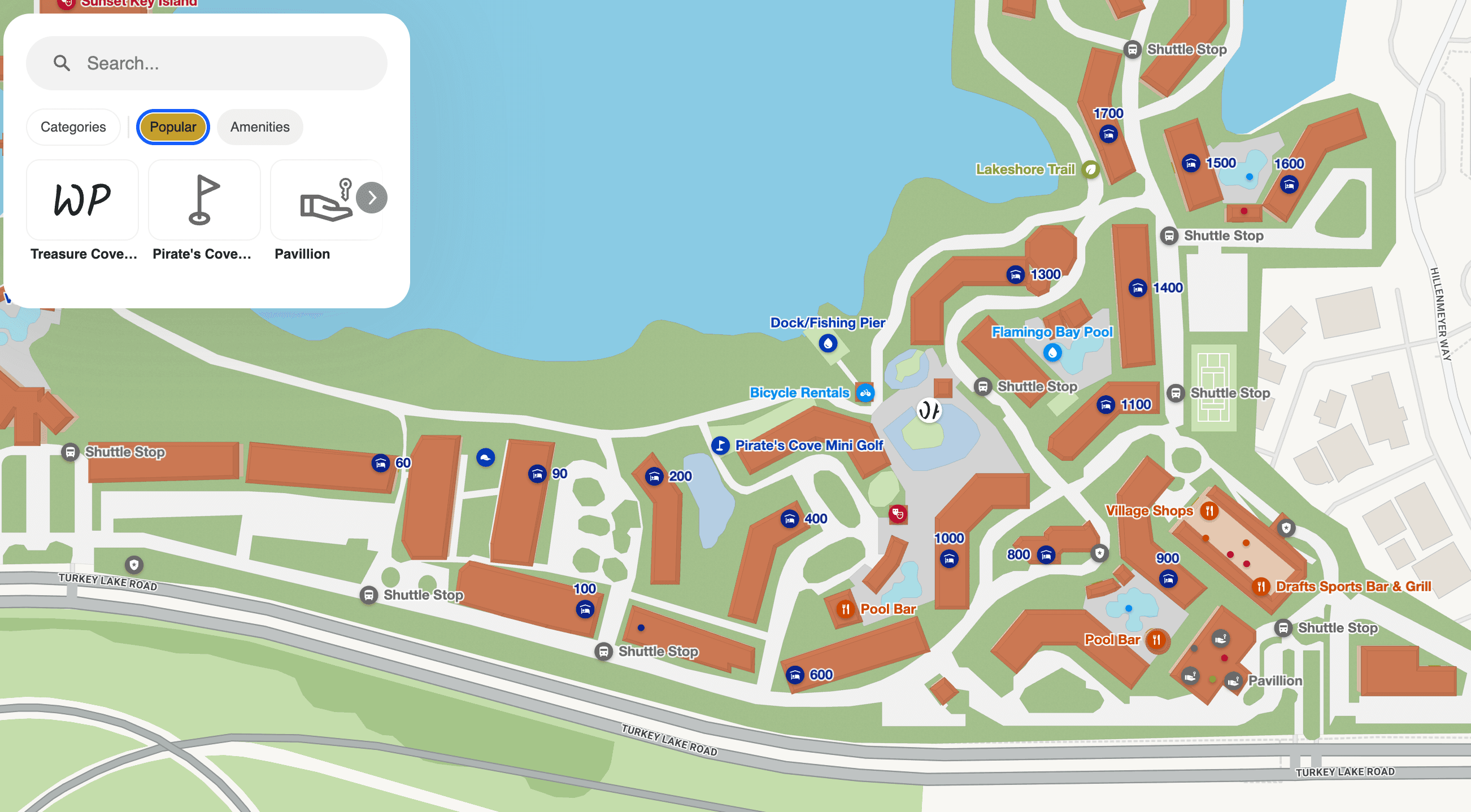
Here's what connects all three factors above: the most effective content a hotel can run on its signage network is an interactive indoor map.
A screen showing a searchable, interactive map with turn-by-turn directions across a multi-building resort solves the problem hotels have been living with for decades. It's the same shift airports and shopping centers made half a decade ago, turning passive signage into self-service navigation that actually reduces operational burden.
Research from Cornell University shows that a 1-point increase on a hotel's 100-point Global Review Index translates to a 1.42% increase in Revenue Per Available Room (RevPAR), proving that fixing navigation friction has a measurable financial return.


The hidden revenue casinos are leaving on the table
Casinos are investing billions in restaurants, entertainment, retail, and event space. But if guests can't find those amenities, that investment doesn't pay off. This guide shows Ops and Marketing teams how indoor mapping closes the gap, and what it's worth when it does.
Frequently asked questions
What is hotel digital signage?
Hotel digital signage refers to networked displays throughout a property that show dynamic content including wayfinding, event schedules, promotions, and operational information. Unlike static signs, digital signage can update in real time and adapt content based on time of day, location, or property events. For a deeper overview, see our guide on digital signage.
How does digital signage improve hotel guest satisfaction?
Digital signage reduces navigational friction, promotes on-property amenities guests might not discover on their own, and provides real-time event and schedule information without requiring staff interaction.
Properties that connect signage to wayfinding and PMS data see measurable improvements in NPS and front-desk efficiency.
What's the difference between static and interactive hotel signage?
Static signage runs pre-set content loops that require manual updates. Interactive signage responds to guest input:
- Touch-based search
- Turn-by-turn directions
- Real-time event filtering
Interactive displays function as self-service tools rather than digital posters.
How much does hotel digital signage cost?
Hardware costs range from $1,000 to $5,000 per display depending on size and placement. The more significant investment is the software and content layer: CMS licensing, integration with property systems, and ongoing content management. Properties that treat signage as only a hardware purchase typically see the lowest returns.
Can digital signage integrate with hotel property management systems?
Yes. Modern signage platforms can pull data from PMS, event management, and POS systems to display real-time room availability, event schedules, and F&B wait times. Integration is what separates signage that stays current from signage that goes stale.
What are the best locations for digital signage in a hotel?
Lobbies, elevator banks, convention level corridors, F&B areas, and near pool or spa entrances see the highest engagement. The key is matching content to context.
How do interactive maps enhance hotel digital signage?
Interactive maps turn signage from a broadcast channel into a self-service navigation tool. Guests can search for specific destinations, get turn-by-turn directions across floors and buildings, and discover amenities they didn't know existed, all without asking staff for help. Mappedin's platform is designed for exactly this use case at scale.


Share