Start Here
By the numbers
- 11.8 million interactions with the digital map
- +20 points in wayfinding net promoter score (NPS) in less than 2 years
- 27% year over year growth of map sessions
- 26 interactive directory screens across the venue
- 3 channels (web, directory screens, and mobile app) on one shared map
About Lumen Field
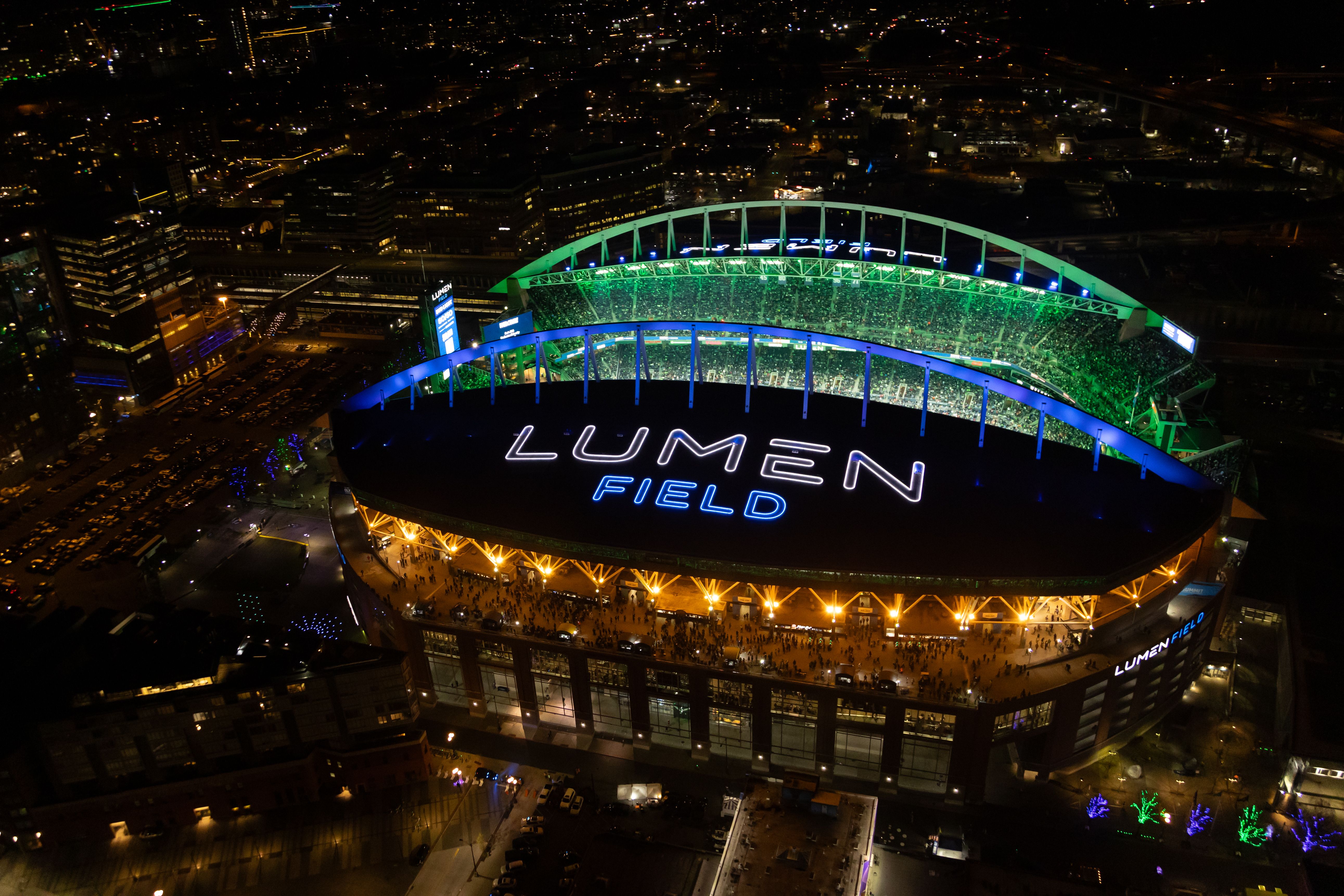
Lumen Field is one of North America's most recognizable multi-purpose venues, a relentless calendar of major events like NFL, NWSL, MLS, and Seattle host venue for the 2026 World Cup alongside the attached Lumen Field Event Center and WAMU Theater. The stadium complex hosts a wide variety and volume of events each year, making it one of the busiest venues in the region.
The challenges
With tens of thousands of fans moving through dozens of concourses, levels, and zones on a single day, the margin for confusion is razor-thin. Every moment a guest spends lost is a moment they're not enjoying the event.
The problem was foundational.
— Matt Haberkamp, Director of Digital Products
Static maps and printed signage shared a fatal flaw: they couldn't keep up with a living venue. Entrances shift, activations launch, concessions rotate, and the event center and theater reconfigure their layouts weekly. A printed directory is out of date the moment it's installed.
Fans were left navigating a venue that was actively changing around them, armed with information that couldn't change with it.
The solution
Lumen Field needed wayfinding that behaved like the iconic and innovative venue itself: dynamic, connected, and always current. Mappedin delivered a single source of truth, one map powering an omnichannel fan experience on game day, across multiple tenants.
That same map now drives the venue's web experience, its 26 directory screens, and its mobile app, where iOS Blue Dot indoor positioning turns a phone into a live turn-by-turn compass for guests. One update, made once in the platform, propagates everywhere instantly. It's a dramatic departure from coordinating static assets across print and imagery.
The experience was built to feel like Lumen Field, not a generic map. Within the 3D rendering of the stadium each custom neighborhood zone is color-coded to match the stadium's visual identity, give guests an intuitive sense of place and reinforce the venue's brand from the first interaction.
The directory screens also became more than wayfinding; they double as a real-time content channel, surfacing dynamic messaging and promotional graphics directly to fans.
For the team running it, the platform removed the bottleneck.
— Spencer Furgerson, Digital Product Coordinator
The results
The shift from static to dynamic has been measurable across every signal Lumen Field cares about, and the numbers are exceptional.
Wayfinding NPS climbed 20 points.
— Kenton Olson, VP of Digital & Emerging Media
Fans are using it at scale, 11.8 million interactions and counting.
— Kenton Olson
Most tellingly, the complaints that once defined the fan experience have gone quiet.
— Kenton Olson
What's next
For Lumen Field, the map is no longer just a fan-facing tool. It has become foundational infrastructure, and the team is now looking beyond the fan experience to what the same data can power across the organization.
— Kenton Olson
That question marks the natural next chapter of this partnership: one map that began as wayfinding, scaled to three channels and millions of interactions, and now stands ready to become the spatial layer for an entire venue's operations.
Share