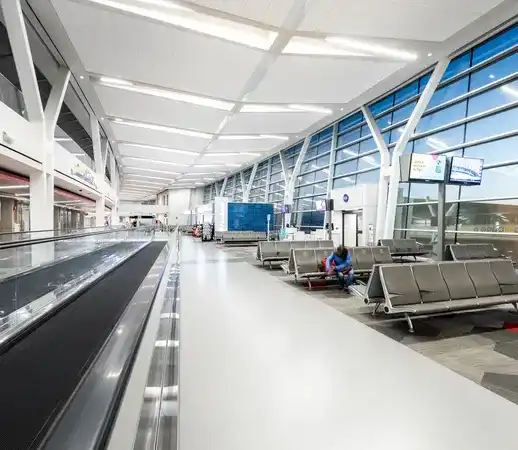
Some projects take a meeting to scope and a few weeks from build to deployment. Others take two years, multiple partners, new infrastructure, and a lot of trust.
The MIA Virtual Assistant is the second kind.
Last week, I had the pleasure of being in Miami Beach for eMerge Americas, a premier technology conference, to watch Miami International Airport (MIA) officially unveil what they've been building. At the Miami Beach Convention Center, Mayor Daniella Levine Cava proudly introduced the world's first airport to deploy large-scale, geo-aware, agentic AI across its digital infrastructure.
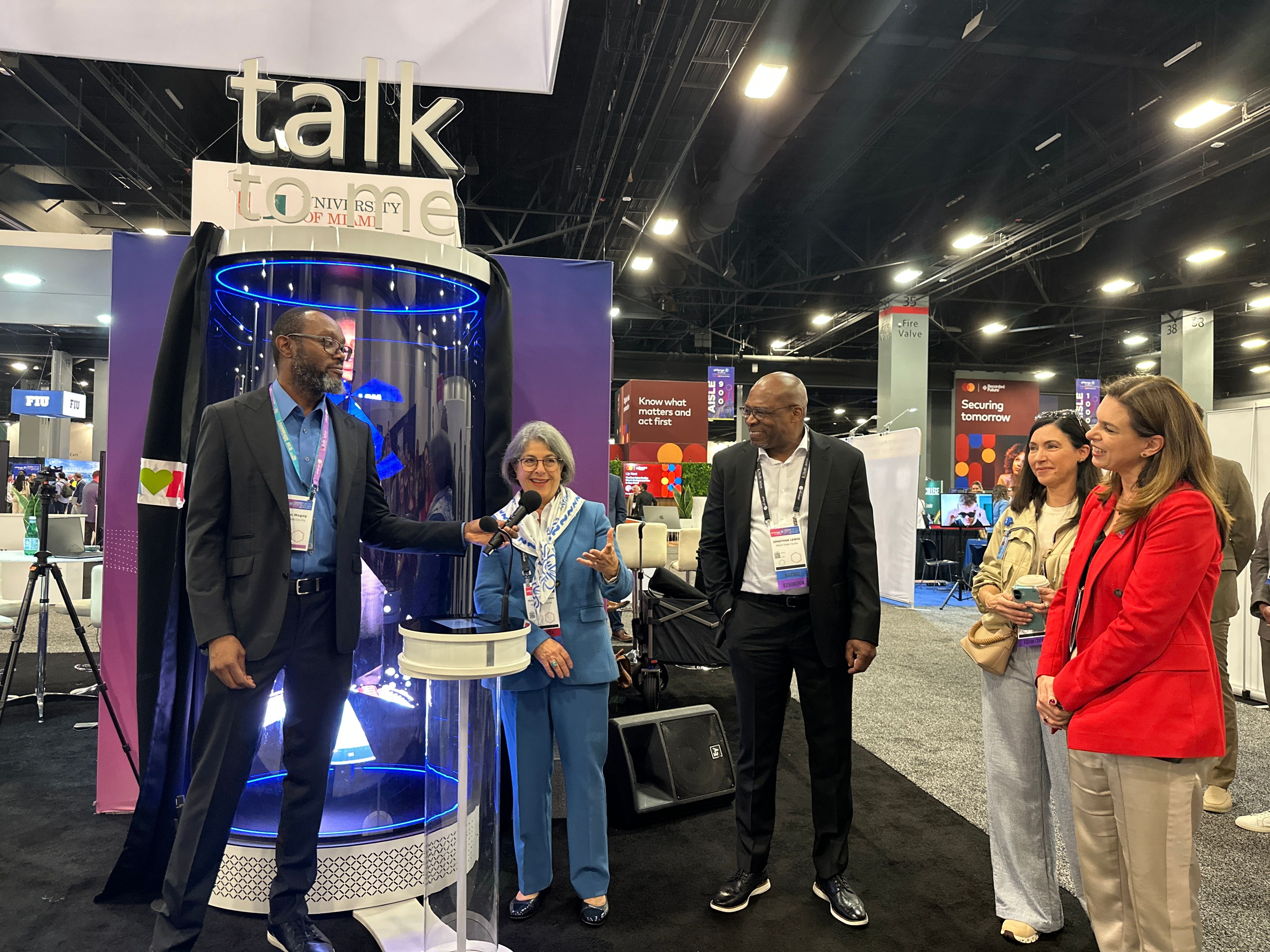
I've been working with the MIA team for about two years on this project. Watching that moment land in front of a large audience and with that level of recognition meant something.
What MIA set out to do
Miami International Airport is America's busiest airport for international freight and the second busiest for international passengers. It serves more than 55 million passengers annually and sits at the center of a $9 billion capital improvement and modernization program that's reshaping the entire facility.
When we started working with the MIA team, they weren't looking for a directory or a chatbot.
They were already thinking bigger: an omnichannel experience that could meet a passenger wherever they were, whether:
- On WhatsApp before they left home
- On a web browser in the rideshare
- On a kiosk in the terminal
- Standing in front of a hologram near a TSA checkpoint
It would be the same assistant, with the same accurate, location-aware answer. Across every channel. That's a different kind of problem to solve than most airports are even asking for yet.
What's live today at MIA
The MIA Virtual Assistant is now live across four channels:
- Web chat
- Phone dial-in
- Four holographic AI assistants installed at key locations throughout the terminal
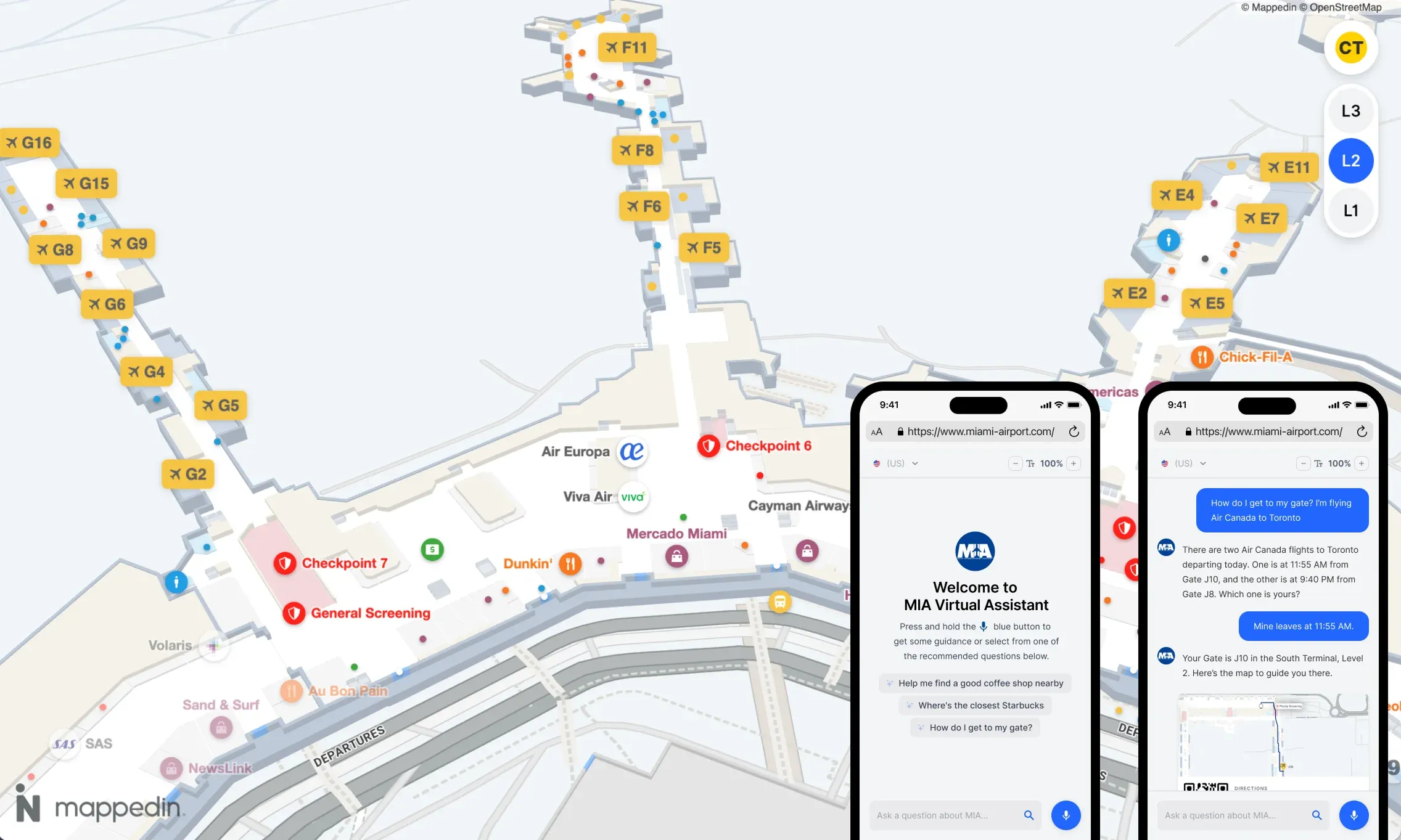
This changes the game for international air travel; MIA is the first major airport to deploy geo-aware, agentic AI across multiple channels. The system is revolutionary in that it knows precisely where a passenger is, and it routes them accordingly—from curb to gate, in any language, across any device.
While Mappedin provided the foundational indoor mapping platform and spatial intelligence layer, it connected the solution together with a strong partner ecosystem:
- Satisfi Labs powered the conversational AI for web and WhatsApp
- HYPERVSN brought the holographic avatar technology to life
- Radiant Technology built the data backbone, normalizing real-time operational data so the assistant always has accurate, current information to draw from
The entire system runs within MIA's Microsoft Azure environment, giving the airport full control over governance, compliance, and security. For a public airport authority operating at this scale, AI can't mean handing data to a third party and hoping for the best. The architecture was designed to give MIA complete ownership.
What it took to get here
When we started this two years ago, some of the AI technology required to deliver this kind of experience didn't exist in production-ready form. The architecture to unify geospatial intelligence with conversational AI across multiple channels (and do it in a way that could handle the complexity and compliance requirements of a major international airport) had to be designed and built from scratch.
That meant pulling together stakeholders across IT, passenger experience, operations, and government, and keeping everyone aligned through a long, evolving build.
What made it work was the same thing that makes any long-term project work: trust, consistency, and people who stayed engaged through the difficult parts. Being an airport partner isn't about showing up at go-live, but rather, about being useful through every step.
Only the beginning
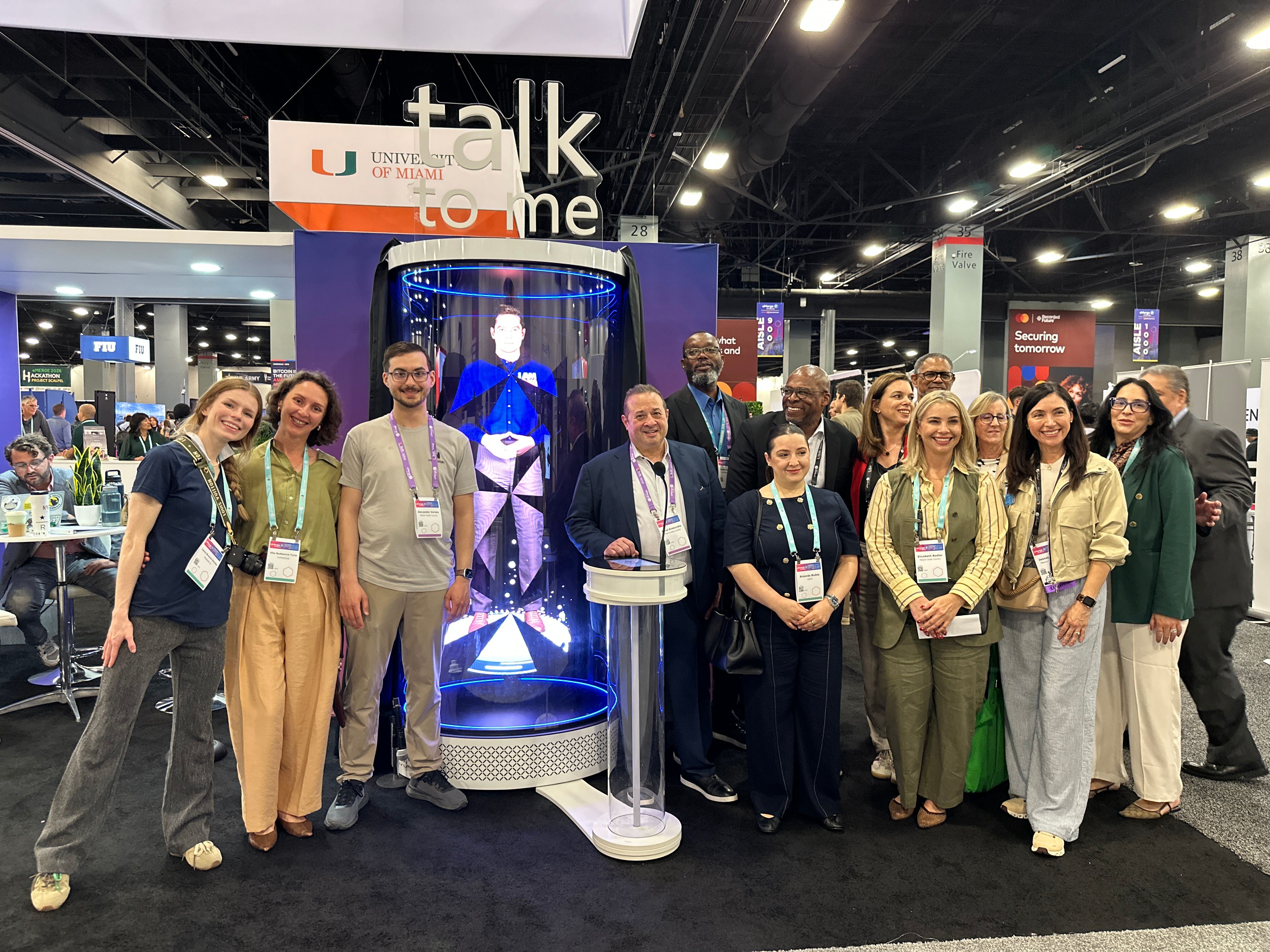
To see and celebrate the launch of this achievement live was very exciting, especially at eMerge Americas because it's where technology and public innovation intersect in a way you don't find at most industry conferences.
Seeing Mayor Levine Cava frame the MIA Virtual Assistant as part of Miami-Dade County's broader "Future Ready" vision put our work into a context I found genuinely energizing.
— Miami-Dade County Mayor Daniella Levine Cava
The airports watching this announcement are asking the right question: what does it take to do something like this? The honest answer is that it takes time, a clear vision, and partners willing to work through the complexity with you.
I'm proud of what the MIA team built. And I'm glad I was there to see it go live.
If you're thinking about what the next chapter of your airport's passenger experience could look like, I'd be glad to start that conversation. Connect with me on LinkedIn.
Share