

Start Here
New research reveals that 53% of venue visitors experience navigation problems, costing operators revenue and loyalty. Digital wayfinding has become essential infrastructure—77% of visitors now use it—and proves transformative for discovery: users find new stores and amenities 62% more easily than those relying on physical signage alone. Venues that address navigation friction through digital tools capture engagement opportunities competitors miss, with measurable impacts on dwell time, safety perceptions, and visitor advocacy.
Venue operators invest millions in physical infrastructure: expansive terminals, multi-level retail centers, state-of-the-art stadiums.
But here's what the latest retail foot traffic statistics reveal: over half of your visitors still can't find what they're looking for.
The gap between what venues build and what visitors actually experience is costing operators revenue, loyalty, and competitive advantage.
New research surveying nearly 500 venue visitors across North America reveals patterns that challenge conventional thinking about digital wayfinding and visitor behavior. Navigation is directly tied to dwell time, safety perceptions, discovery behavior, and visitor loyalty. The data shows that venues addressing navigation friction are capturing opportunities their competitors miss.
Want the full report? Download the State of Venue Experience →
1. 53% of visitors experience navigation problems
More than half of all venue visitors encountered at least one common navigation problem in the past six months.
- 24% couldn't locate restrooms or exits quickly
- 24% wasted time searching for stores, gates, or amenities
- 20% felt anxious about not knowing where to go
- 16% felt completely lost trying to find a specific location
For venue operators, this represents a systemic operational issue. When navigation fails, visitors spend time frustrated instead of engaged with your offerings. Every minute your visitors spend backtracking through your airport or searching for a specific store in your mall is a minute they're not browsing, dining, or making purchases.
Scale this to your daily operations. If your venue sees 8,000 visitors per day, you're looking at 4,240 people experiencing navigation friction every single day. That's a fundamental experience problem affecting the majority of your traffic.
2. Nearly 8 in 10 visitors use digital wayfinding tools to navigate venues
Digital wayfinding has crossed a critical threshold. It's no longer a "nice-to-have" feature for visitors—it's baseline infrastructure that 77% of all venue visitors now actively use.
The mall traffic statistics reveal adoption spans every demographic. It isn’t just Millennials and Gen Z using digital wayfinding tools to navigate venues: Visitors from age 18 to 60+ are using digital tools. Only 23% rely exclusively on physical signage or staff assistance.
So when venues combine human staff with digital maps, customers get the support they need on their terms, when and where they need it. And venues are able to promote their offerings around the clock—regardless of staff schedules.”
— Claudio Sa, VP of Product, Mappedin
For venue operators, this shift has immediate competitive implications. Venues without digital navigation tools are failing to meet visitor expectations across all age groups. Your visitors are already looking for digital wayfinding—through third-party apps, venue websites, mobile apps, or QR codes. The question isn't whether to invest in digital navigation, but whether you're providing the tools your visitors are already trying to use.
77% of your visitors are adopting digital tools to navigate and explore. Leaning into digital wayfinding will separate the forward-thinking venues from the rest.
Venues that deploy robust mall wayfinding or airport wayfinding solutions are meeting visitors where they are. Venues that don't are creating friction their competitors have already solved.
3. Half of your visitors are discovery-oriented (not task-oriented)
Here's where the data reveals a major revenue opportunity: 50% of visits are discovery-oriented. These visitors aren't arriving with a specific purchase in mind, but rather, they come to browse, attend events, dine, socialize, and explore what's available in the venue.
Traditional wayfinding systems optimize for efficiency, i.e., getting visitors from Point A to Point B as quickly as possible. That works for the 50% who know exactly what they want. But it completely misses the revenue potential of the other half of your traffic who are ready to explore if you make discovery easy.
— Michael Pasket, VP of Sales
The research shows 68% of visitors spend at least one hour at venues, with:
- 34% staying one to two hours
- 25% staying two to four hours
- 8% spending four hours or more
When dwell time is combined with discovery intent, venues open the door to a significant engagement opportunity.
These discovery-oriented visitors have time and intent – what they need is navigation that supports exploration rather than just efficiency. Venues that guide discovery behavior drive foot traffic to underperforming tenants, increase spontaneous purchases, and extend time spent engaged with offerings.
4. People discover new places in your venue 62% easier when they use indoor map tools
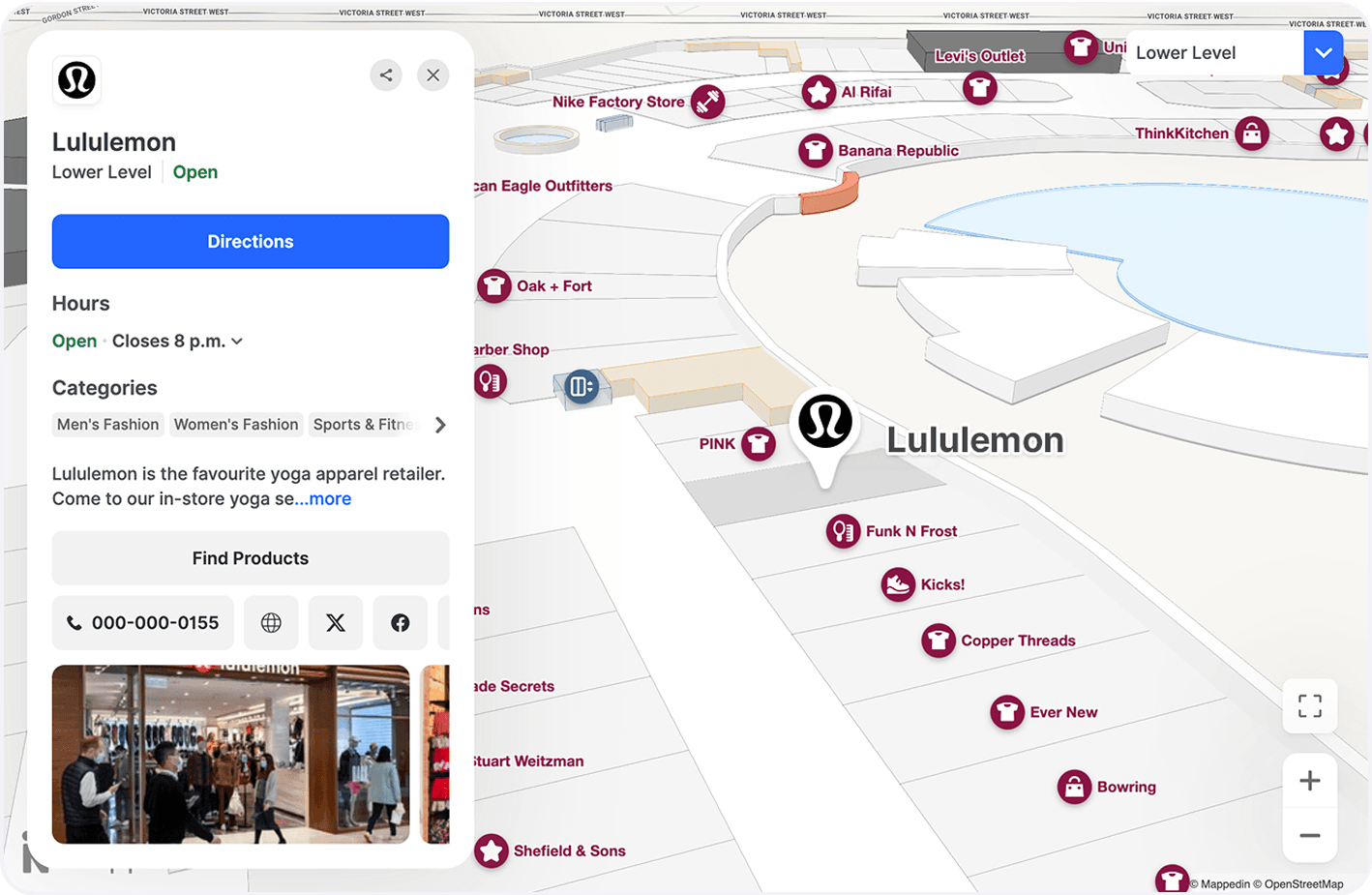
The direct correlation between digital wayfinding and discovery behavior is measurable. Visitors who used indoor map tools like venue website maps, mobile apps, or QR code maps found it 62% easier to discover stores, restaurants, or services they weren't previously aware of compared to the general visitor population.
86% of indoor map users reported easy discovery, compared to just 53% of general visitors.
This 62% increase in discoverability proves digital navigation fundamentally changes how visitors navigate and engage with your venue.
For venue operators, this has immediate revenue implications. Better discovery means:
- Foot traffic reaches tenants who might otherwise be overlooked.
- Visitors stumble upon restaurants they didn't know existed.
- Browsers convert to purchasers because they found something unexpected.
Digital maps not only help visitors find what they're looking for; they also surface what visitors didn't know to look for. That's the difference between a transactional visit and an exploratory experience. And according to established retail research, longer dwell time directly correlates with increased per-visitor spend.
— PathIntelligence
5. 36% of visitors say clear wayfinding influences their feelings of safety
Safety perception isn't just about security cameras and visible staff. For more than one-third of visitors, clear wayfinding and signage directly influences whether they feel safe at your venue.
When visitors ranked factors that most influence their sense of safety, wayfinding scored higher than emergency exits visibility.
The ranking of importance for safety factors came in at:
- Security presence (62%)
- Cleanliness (58%)
- Lighting (55%)
- Clear wayfinding and signage (36%)
- Emergency exits (34%)
When visitors know where they are, where they're going, and how to navigate your venue, they feel more secure. When they're disoriented or confused, anxiety increases even in objectively safe environments. A concerning 24% of visitors even said they couldn't locate exits quickly – a notable gap in visitor safety.
— Yuval Kossovsky, Managing Director of Transportation
For venue operators, this insight reframes navigation investments. One-third of your visitors explicitly tie wayfinding and signage to feeling safe in your venue. Safety perception has downstream effects on return intent, time spent at your venue, and whether visitors recommend your venue to others.
6. Digital maps create 28% more venue advocates
Visitors who reported that indoor map tools made them feel safer were significantly more likely to recommend the venue: 82% said they'd recommend the venue compared to 64% of the general visitor population.
That's a 28% increase in word-of-mouth advocacy directly tied to digital navigation.
This finding reveals that digital wayfinding delivers measurable loyalty value beyond operational efficiency. When navigation enhances safety perception, it creates advocates who actively recommend your venue to friends, family, and colleagues.
Word-of-mouth remains one of the most valuable forms of marketing, especially for multi-property retail venues, airports, stadiums, hospitals and other large and complex indoor venues. Visitors trust recommendations from people they know more than any advertising. When your digital navigation tools contribute to feeling safe and confident, you're turning routine visitors into active promoters.
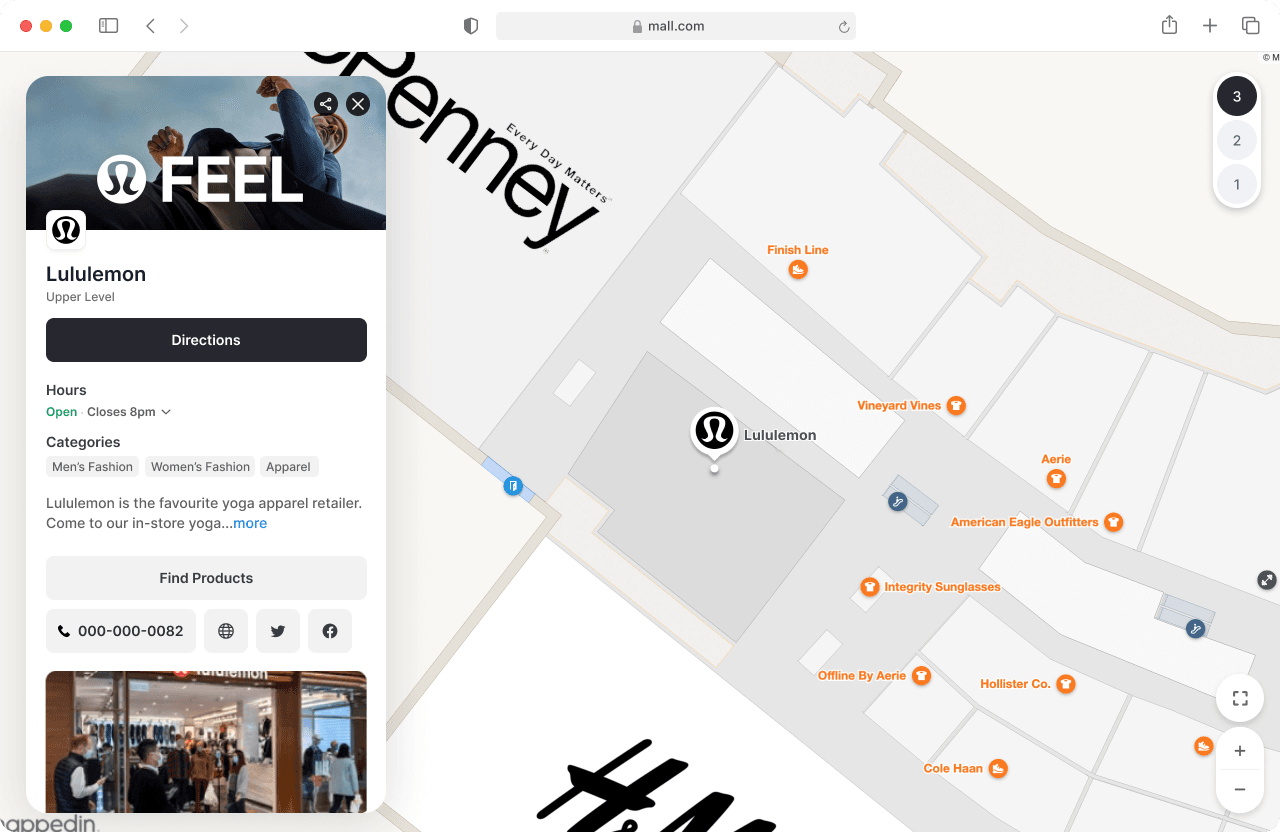
For venue operators evaluating ROI on digital navigation investments, the loyalty lift is quantifiable. Navigation improvements can help venue leadership create differentiated, personalized experiences that visitors remember and recommend.
7. One in four visitors waste time searching for amenities
24% of visitors reported wasting time searching for stores, gates, or amenities within the past six months. This is a current—and largely universal—experience affecting a quarter of your traffic.
For venue teams managing daily operations, scale this to your footfall. With 8,000 daily visitors, that's 1,920 people every single day who have recently experienced time-wasting search behavior at venues like yours. Every minute they spend searching is a minute they're not engaging with revenue-generating offerings.
This statistic underscores that navigation friction isn't a one-time problem visitors encounter and then overcome. It's ongoing operational friction affecting your visitor experience repeatedly. Visitors who waste time searching once are likely to waste time searching again unless you change the navigation infrastructure.
The business case for addressing this is straightforward: reduce search friction to increase engagement time with your offerings. When visitors can find what they need quickly, they spend more time browsing, dining, and exploring—the high-value behaviors that drive revenue.
What the data means for venue leadership
Three patterns emerge clearly from the mall traffic statistics and digital wayfinding data:
- Navigation is a systemic operational issue affecting 53% of your visitors, not an edge case affecting a small minority. When more than half your traffic experiences navigation problems, you're looking at fundamental infrastructure gaps that undermine visitor experience and revenue capture.
- Digital experience is now table stakes. With 77% of visitors actively using digital tools to navigate venues, the question isn't whether visitors want digital navigation—they're already using it. The question is whether you're providing robust tools or forcing them to rely on third-party alternatives that don't surface your offerings effectively.
- Discovery drives revenue, and digital navigation enables discovery. Half your visitors are discovery-oriented, 68% spend over an hour at your venue, and indoor map users discover new places 62% more easily. Venues that make exploration intuitive capture revenue opportunities that efficient-only navigation leaves on the table.
The opportunity is clear: venues that address navigation friction, deploy digital wayfinding infrastructure, and design for discovery will capture engagement and revenue their competitors miss. Start by auditing your current wayfinding effectiveness, measuring discovery behavior, and understanding where your visitors experience navigation friction.


Share