

Paper maps are still common in large venues. PDF maps on phones are functionally unusable—pinch, zoom, lose your place, repeat. Static signage can't adapt when a store closes, a gate changes, or a new tenant opens.
And the result is bad news when it comes to visitor loyalty.
According to Mappedin's State of Venue Experience report, 53% of visitors experience at least one navigation problem per visit. They can't locate a store, find a restroom, or figure out how to move between floors.
The cost is more than just visitor frustration. It's:
- Lost dwell time
- Missed purchases
- Staff asked to give directions
Digital wayfinding solves this, but the best implementations do something most operators don't expect. They generate revenue.


What is digital wayfinding?
Digital wayfinding is interactive, software-driven navigation that replaces static signage and paper maps with searchable, real-time, device-accessible maps. It's not just a digital sign, nor just a kiosk or a mobile app.
It's a system that combines spatial data, content, and user interaction to help people move through complex spaces.
When done well, the map becomes an intelligent surface. It knows what's nearby, what's relevant, and what the venue wants to promote. A visitor searching for coffee near their airport gate can see what's closest, what's open, and what's running a promotion right now. It's a fundamentally different tool than a PDF map with a "You Are Here" dot.
How digital wayfinding works
Four core components make a digital wayfinding system function.
Digital mapping
Every system starts with an accurate digital representation of the venue. The harder problem is keeping it current. Tenants change, layouts shift, and construction creates temporary detours. If the map can't keep up with the building, it loses trust fast.
Positioning
How the system knows where a visitor is. Options range from infrastructure-free (using device sensors and Wi-Fi signals) to beacon-based hardware to GPS hybrids for venues with outdoor components. The right approach depends on accuracy requirements and how much hardware a venue is willing to install and maintain.
Routing/Directions
Pathfinding algorithms that account for floor changes, accessibility needs, restricted areas, and preferred paths. Good routing doesn't necessarily just find the shortest path; it finds the right one, whether that means avoiding stairs for a wheelchair user or routing general admission guests around premium club entrances.
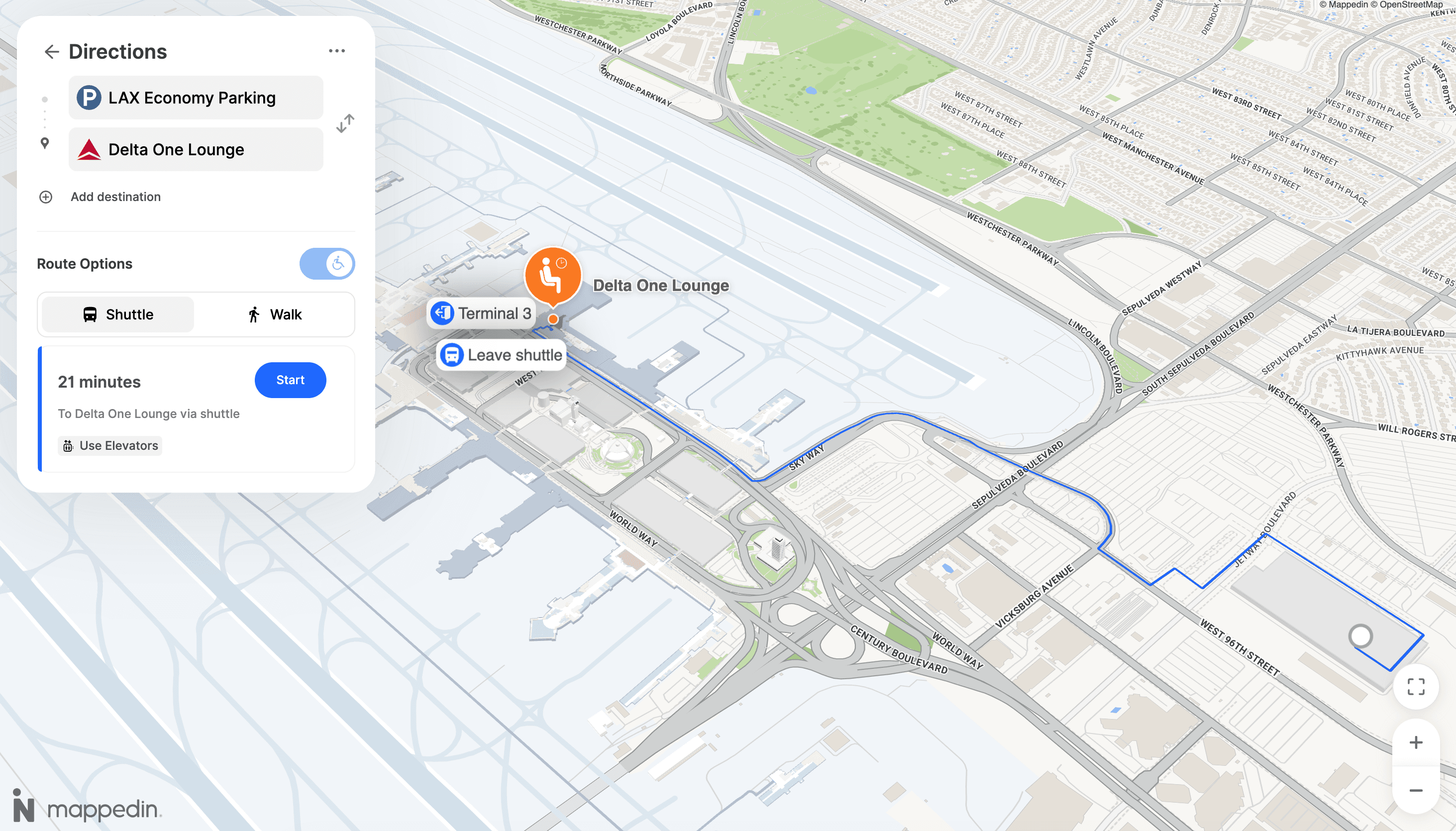
Content management
This is the component most buyers underestimate, and it's the connective tissue between navigation and revenue. A CMS that keeps store hours, deals, events, and promotions synced to the map in real time transforms a static map into a dynamic content surface.
What types of venues need digital wayfinding?
Different venues have different pain points, but the underlying problem is the same: complex spaces with visitors who don't know their way around.
Malls & retail
These properties struggle most with tenant discoverability. Shoppers don't know what's on the second floor, don't realize a new store opened last month, and often leave without visiting places they would have enjoyed. Digital wayfinding systems for malls surface what's relevant.
For operators, it replaces the inertia of doing nothing with a measurable improvement in how visitors engage with tenants. Explore the best wayfinding solutions for retail spaces.
Airports
Airports face constant change, like gate reassignments, terminal construction, shifting security queues. Passengers who flew through two years ago are navigating a facility they no longer recognize. Self-service airport wayfinding with multilingual support reduces the load on staff and improves the passenger experience at every touchpoint.
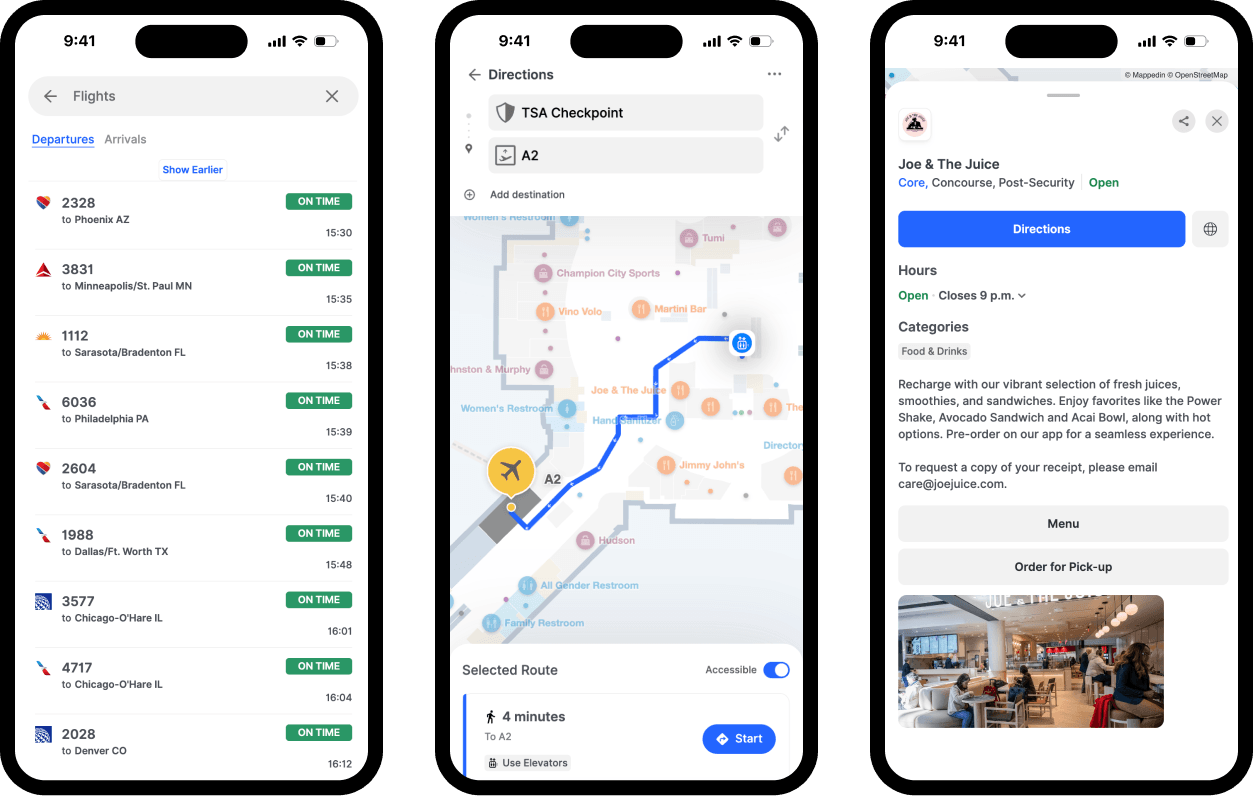
Stadiums, arenas & other sporting venues
Sports venues pack tens of thousands of people into a complex venue for a few high-intensity hours. Fans need to find their section, locate the nearest concession stand, and get to their seats before kickoff, all while navigating concourses they visit a handful of times a year.
Stadium digital wayfinding reduces congestion by distributing foot traffic more evenly across entrances and concessions, and it gives venue operators a direct channel to surface sponsored content and promotions to fans who are already looking at the map.
Hospitals & healthcare campuses
Hospitals serve visitors who are already anxious. Confusing navigation compounds that anxiety. Step-free routing, accessibility compliance, and clear turn-by-turn directions reduce no-shows and late arrivals while freeing front-desk staff from giving directions.
Colleges & universities
Universities with multiple buildings need wayfinding that handles new student onboarding, event navigation, and daily staff and faculty navigation. University wayfinding also serves day-to-day needs: helping students find classrooms in unfamiliar buildings, guiding parents during move-in weekend, and directing attendees across campus for commencement or athletic events.
How the best digital wayfinding systems also generate revenue
Most operators evaluate wayfinding as a cost center. They budget for it the way they budget for signage: a fixed expense that improves the visitor experience but doesn't pay for itself. That framing is outdated.
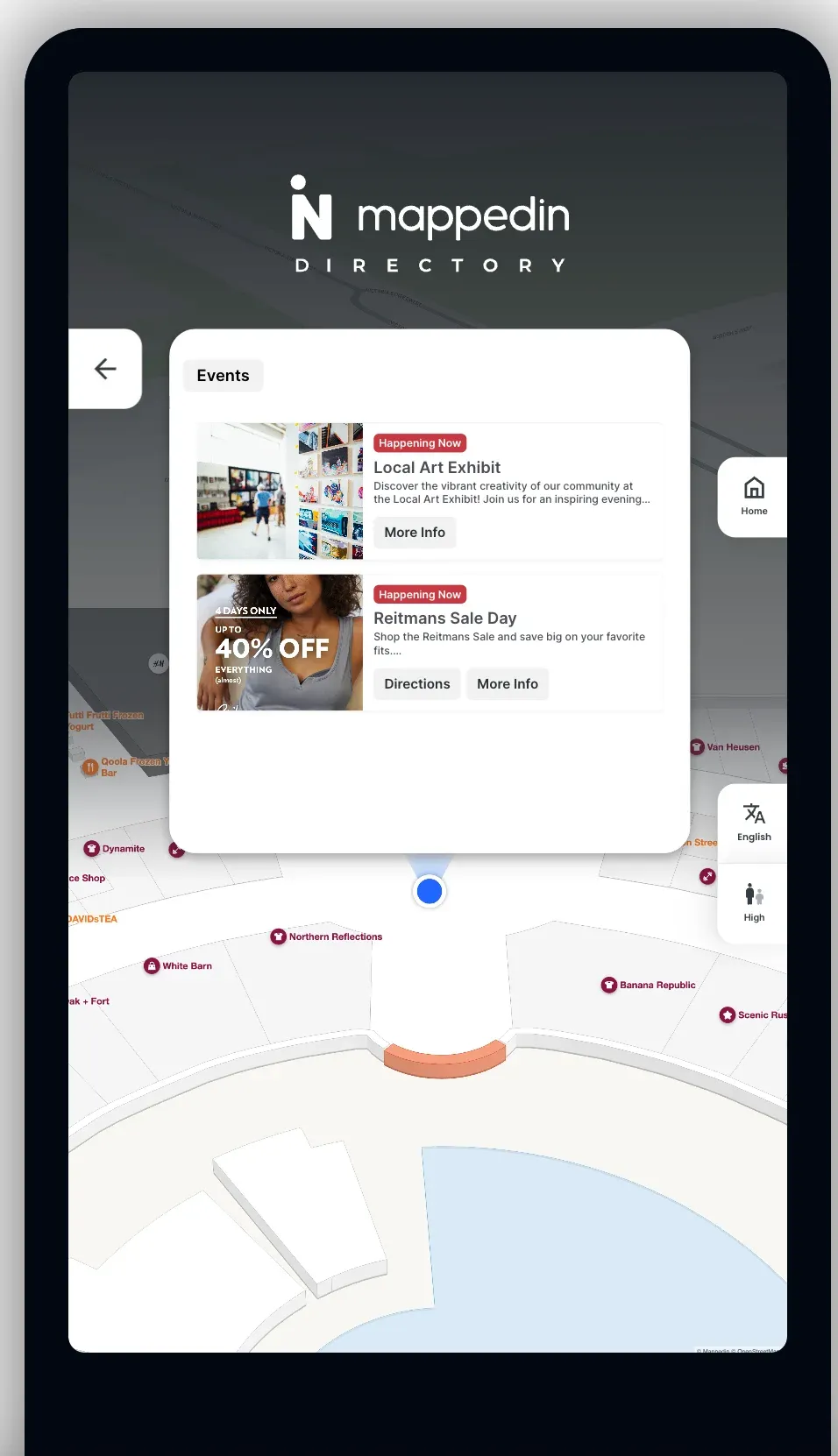
When a digital wayfinding system includes a content layer (deals, events, sponsored listings, banner ads), it stops being a cost line and starts generating measurable ROI. Geo-intelligent recommendations surface the right content to the right visitor based on where they are in the venue and what they're looking for.
- A visitor searching for "food" near a concourse sees the closest options, including the sponsored restaurant that paid for a promoted listing.
- A shopper browsing the directory sees a banner ad for a seasonal sale at a store they haven't visited.
- A traveler checking their gate sees a deal for a lounge 200 feet away.
Venues with advertising-enabled directories and deal screens are monetizing foot traffic in ways static signage never could. The map becomes a media channel with precise context about location, intent, and timing that would be hard to match with any other channel.


5 questions to answer before choosing a digital wayfinding solution
Can your team update the map without developer support?
Tenant turnover, seasonal promotions, and construction happen constantly. If every change requires a support ticket or a developer, the map falls behind the building. Look for a self-service CMS that lets your operations team make real-time updates.
Does it work on visitors' own devices, or only on hardware you install?
Web-based wayfinding that runs in a mobile browser reaches the widest audience with the lowest friction. Kiosk-only or app-dependent systems limit adoption and add hardware costs.
How does it handle accessibility?
WCAG compliance, step-free routing, screen reader support, and multilingual capability aren't optional features. They're baseline requirements for any venue serving the public. Ask specifically what standards the vendor meets.
Can the map surface content beyond directions?
Deals, events, promotions, and advertising placements turn the map from a navigation tool into a revenue surface. If the system can only show directions, you're leaving value on the table.
What does the vendor's update and maintenance model look like?
Accuracy degrades fast if the system can't keep up with tenant changes, construction, and layout shifts. The moment a map is inaccurate, it's pointless — visitors stop trusting it, and adoption drops.
How venues are implementing digital wayfinding today
Using Mappedin, venues like Pittsburgh International Airport and Simon Property Group power scalable, always-accurate digital wayfinding.
Mappedin makes it easy for marketing, digital, CX, and security teams to manage digital wayfinding experiences—no coding or complicated backend experience necessary.
Mappedin provides:
- A self-service CMS for real-time updates without developer involvement
- Web-based delivery that works on any device without an app download
- WCAG 2.1 AA compliance with 40+ languages and step-free routing
- A content layer that supports deals, events, banner ads, and sponsored listings
— Patrick Flanagan, SVP, Digital Development, Operations & Strategy and Data Protection Officer, Simon Property Group
A map isn't just a map
A digital wayfinding system can be so much more than a navigation tool. The venues getting the most value from it are the ones treating the map as a content surface and a revenue channel, not just a way to get from A to B. The gap between what visitors expect and what most venues deliver is wide. Closing it starts with rethinking what the map is for.


Share