A patient who gets lost before reaching the exam room has already decided how the visit went. The verdict forms before a clinician ever introduces themselves, and it is nearly impossible to undo.
Patient experience doesn't begin at the bedside. It begins the moment a person leaves their house and starts trying to figure out where to park, which entrance to use, and which floor holds the clinic they were told to visit.
Why navigation friction is a patient experience problem
Hospital campuses are notoriously disorienting. They sprawl across multiple buildings linked by corridors and bridges, with parking decks that don't align to the entrances patients actually need. Department names are functional but often confusing to a first-time visitor.
The stakes are also higher than in almost any other environment. Patients and their families arrive anxious and sometimes in pain. Their headspace is occupied by worry, not by the map on the wall. When wayfinding fails in that state, the friction compounds the anxiety instead of just slowing them down.
Why patient experience leaders should care
Trust is built or spent in those first minutes. A patient who arrives lost, late, and flustered carries that feeling into check-in, into the waiting room, and into the conversation with their care team. The clinical encounter may be excellent, but the patient's memory of the day has already been shaped by everything that happened before it.


Unlock better patient experience with interactive wayfinding
For most patients, the care experience begins in the parking garage, at a lobby directory, or on a phone screen. This guide gives Patient Experience leaders a practical framework for turning wayfinding from a persistent pain point into a coordinated, measurable program.
Common hospital navigation pain points
The failure points are concrete and repeated daily, but they rarely show up in a satisfaction survey because patients experience them as their own confusion, not as a problem the hospital could have solved.
The most common struggles include:
- Finding parking and then identifying the correct entrance from the deck, often while carrying a sick child or an elderly parent.
- Locating a specific clinic by floor when the appointment letter references a department name that doesn't match any signage.
- Matching the room number on the appointment to an actual room, since many campuses number rooms in ways that don't read intuitively to visitors.
- Re-navigating after a detour, such as a closed corridor or a lab visit, when the original route no longer makes sense and no one is nearby to ask.
Together, these points of friction dictate whether a patient feels cared for or forgotten in the patient experience journey.
How digital teams can help
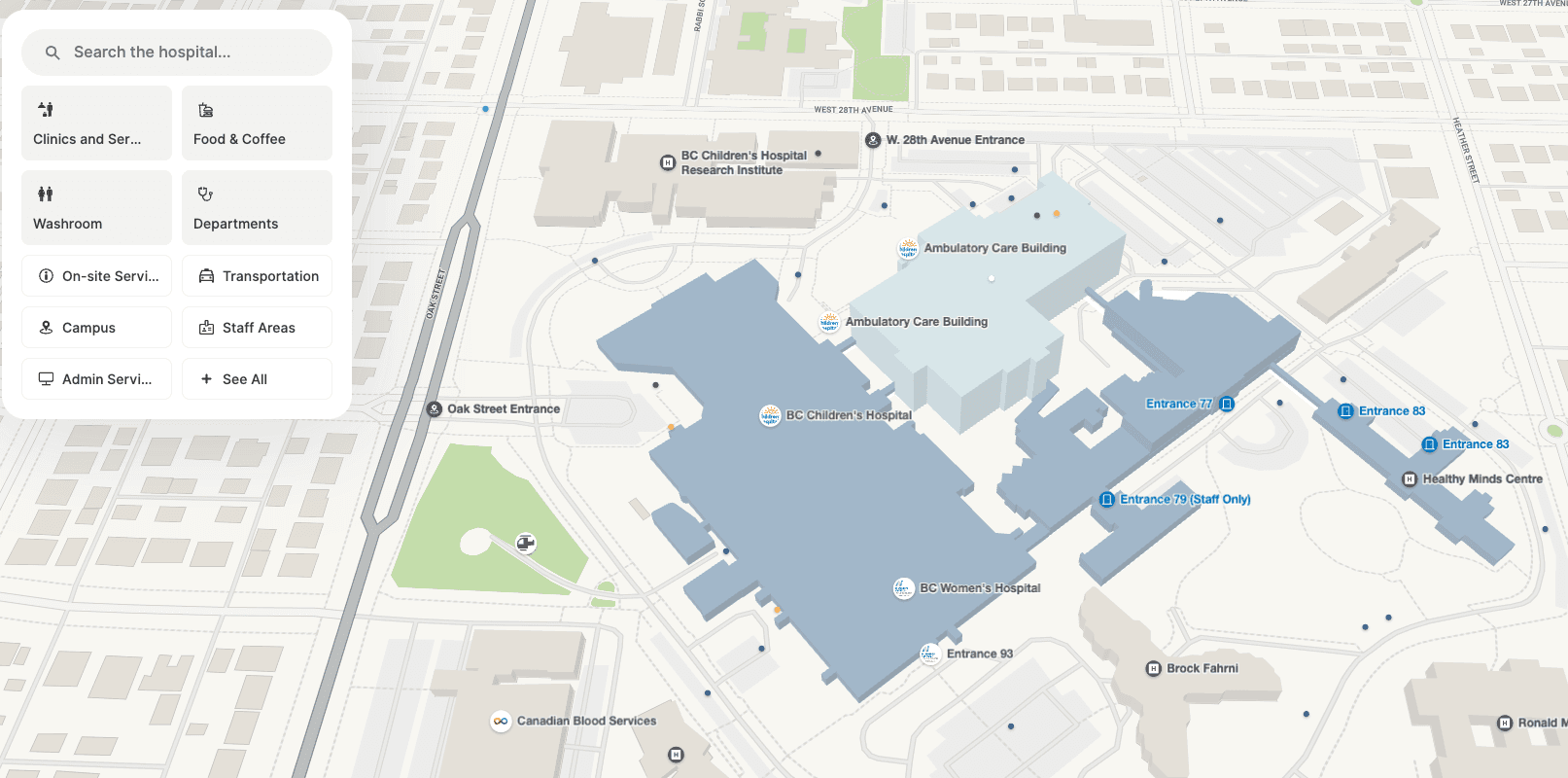
Improving the patient experience here doesn't require a facilities overhaul. It requires giving patients a way to navigate that matches how they already live: on a phone, with current information, in plain language. Four concrete levers make the difference.
1. Mobile-first wayfinding that patients carry with them
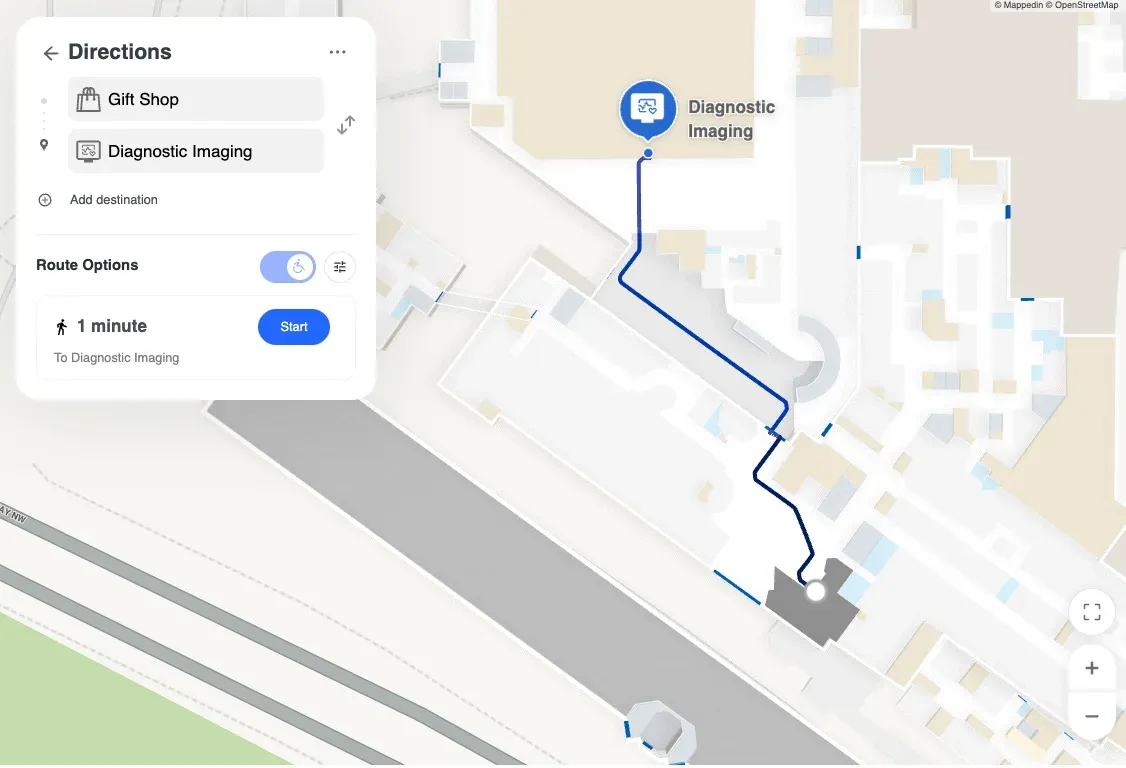
The map has to live in the patient's pocket, not on a wall they may never pass. When a patient can pull up directions at the parking garage and follow them to the clinic door, the navigation follows the entire journey instead of appearing once and vanishing.
2. Accurate, real-time campus maps
A map is only useful while it's accurate. Departments move, entrances close for renovation, and temporary routes spring up. The moment a map shows a path that no longer exists, the patient loses confidence in everything else on it, and the tool becomes part of the problem.
3. Arrival-time messaging that guides patients step by step
The hospital already sends appointment reminders. Adding a link that drops the patient directly onto a route, with their specific destination already loaded, converts that message from a confirmation into a guide.
4. Searchable directories for department and amenity names
Patients search for the words they were given, not the words the hospital uses internally. A directory that understands both, and points to the right floor, removes the single most common reason anyone stops at a front desk to ask.


4 patient navigation mistakes to avoid
The instinct is often to solve navigation with static objects, and those instincts come from a good place. But several approaches fail in the patient's actual journey, not because the tool is broken but because it stops being useful at the exact moment the patient needs it most.
Static PDF floorplans
This navigation modality fails because a static map can't follow the patient. A patient may download one, but they still have to match a flat, labeled drawing to the three-dimensional space in front of them, and the PDF doesn't update when the campus does.
Printed maps
These fail the same way, only faster. A paper map on a counter is stale the day a clinic relocates, and it offers no help to someone who is already lost halfway across campus.
Signage-only approach
This navigation strategy doesn't consider the phone in every patient's hand. Signage is necessary, but it works best as a confirmation, not as the only guide. A patient who can't find the first sign is no better off than one who never finds any.
Single-point kiosks
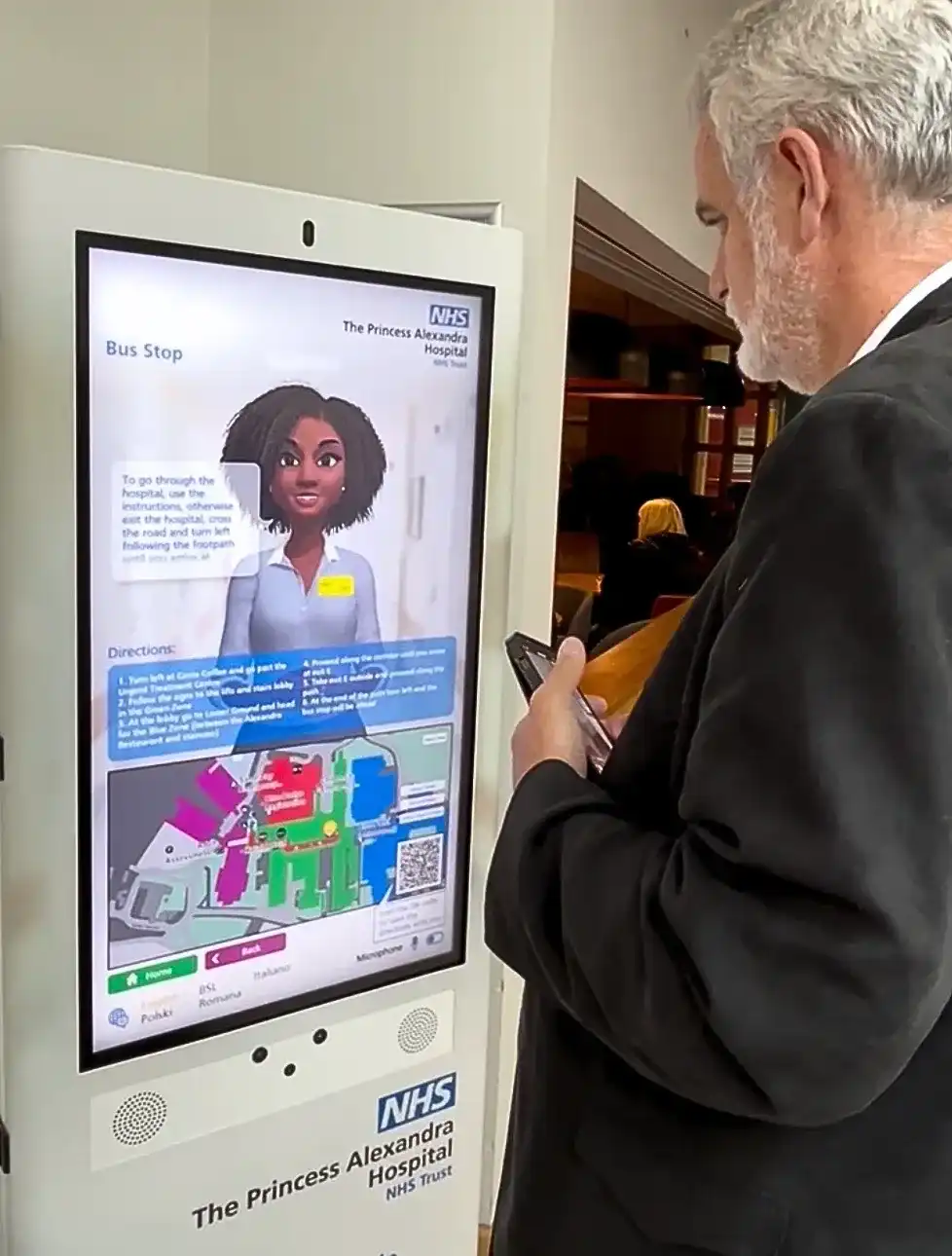
The kiosks that don't follow the patient leave people stranded anywhere past the lobby. A directory in the atrium helps for one decision and one floor, then the patient is on their own again.
How to know your patient navigation program is working
The best signals are behaviors a team can observe without inventing a metric. When navigation improves, fewer people stop at the front desk to ask where something is, and volunteers spend less time redirecting. Late and missed appointments tick down because patients are no longer losing ten minutes to a wrong turn. Check-in conversations shift from directions to questions about the visit itself. And patients who can self-navigate do, which frees staff for the conversations that need a human touch.
How Mappedin improves patient experience in hospitals
Mappedin is an indoor mapping and digital wayfinding platform purpose-built for large, complex venues including hospitals, airports, malls, stadiums, and campuses. Mappedin is designed to serve both visitor-facing navigation and operational use cases from a single map layer.

Frequently asked question
What is patient experience in a hospital?
Patient experience is the sum of every interaction a person has with a health system, from appointment booking and parking to the clinical encounter and follow-up. It includes what happens before the patient reaches the exam room, not just the care they receive there.
How does wayfinding affect patient satisfaction?
Wayfinding shapes the emotional state patients carry into their visit. A patient who gets lost is late, anxious, and less receptive to care. A patient who arrives calmly is more likely to rate the visit positively, even before the clinical care happens.
What's the biggest cause of navigation stress at hospitals?
The mismatch between what the patient was told and what they see. Appointment letters, department names, and room numbers often don't match the signage or maps the patient encounters, and anxious visitors struggle to bridge that gap on their own.
Should hospitals rely on signage or digital maps?
Both, but they serve different moments. Signage confirms and reinforces, while a mobile map follows the patient through the full journey, from the parking deck to the clinic door, and stays current as the campus changes.
How do hospitals measure wayfinding success?
Through observable behaviors rather than a single number: fewer front-desk redirections, less time volunteers spend giving directions, fewer late and missed appointments, and a rise in self-service navigation.
Related resources:


Share