

A visitor walks into a shopping center, searches for a store on their phone, and gets nothing useful: no hours, no map, no sense of where to go. They visit the one store they came for and leave. While that visit counted as foot traffic, it underperformed by every measure that matters: dwell time, tenant exposure, loyalty and spend per trip.
This scenario plays out constantly. According to our State of Venue Experience report:
Each of those friction points suppresses the visit's value and makes a return trip less likely.
Foot traffic is not just about getting people through the door. It is about visit quality: how many tenants benefit, how long visitors stay, and whether they come back. What follows are seven specific levers that move those numbers, prioritized for venue operators and retail marketers who need results.

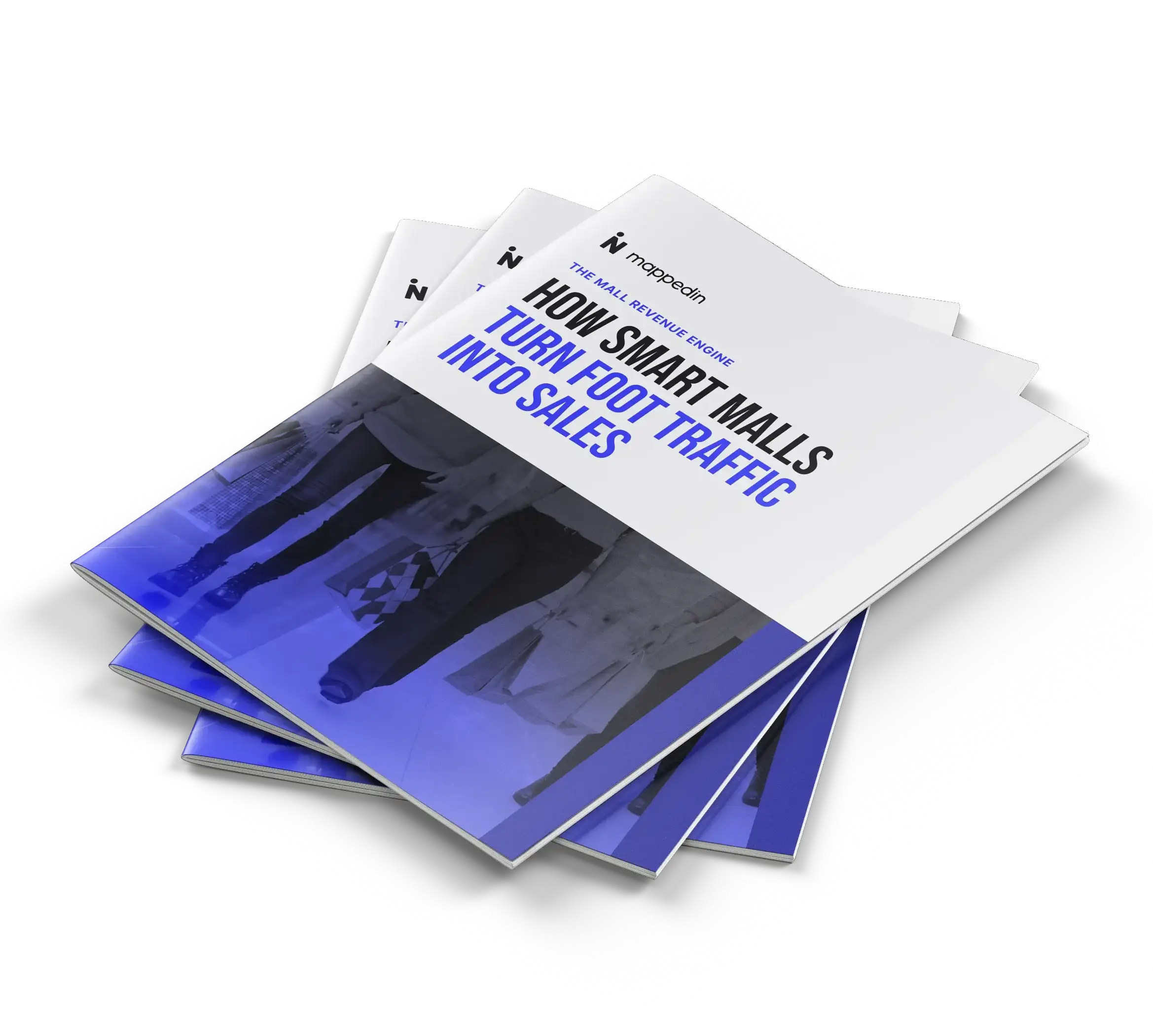
How smart malls turn foot traffic into sales
Malls aren't dead. But the strategies behind driving mall revenue? They're critically out of date. This guide makes the case for the one tool most operators have systematically underestimated, and shows how to use it to drive revenue at every stage of the visit.
1. Make every store findable before the visit starts
The majority of mall visits now begin with a search. A shopper checks whether a specific store is open, looks up hours, or browses what is available before deciding to go. If individual tenants are not findable online with their own location, hours, and current deals, visits that would have happened do not.
There is a meaningful gap between a website and a discovery engine when it comes to visitor intent:
- Google Business Profile optimization at the store level
- Tenant-specific pages on the venue's site
- Interactive online maps that let shoppers browse before they arrive
Omnichannel means far more than just eCommerce. It includes making the physical venue browsable from a phone before a visitor decides to make the trip.
— Phil McArthur, Founder and Chairman, Phil McArthur & Partners Retail Development Specialists
2. Turn deals and events into foot traffic triggers
Most malls and retail centers already run promotions. The problem is visibility. Tenant deals get buried in individual Instagram accounts, PDFs attached to email blasts, or sections of a website no one visits. When promotions are fragmented across channels, they fail to create cumulative pull.
Centralizing deal visibility changes this. When a visitor can see that three stores they like are running promotions and a food event is happening this Saturday all in one place, the trip becomes more motivated.
Bundling multiple tenant offers into a single, browsable destination experience turns a potential visit into an actual visit. Events and deals only drive traffic when they are visible at the moment someone is deciding whether to go.

3. Reduce the navigation friction
Navigation anxiety is a real barrier to foot traffic, and it starts before the visitor leaves home. A shopper who can't picture where to park, which entrance to use, or how to get from one floor to another is less likely to make the trip, especially to a venue they have not visited recently or one that has been renovated.
Clear parking guidance, entrance-to-store routing, and multi-floor navigation all reduce this friction. Digital wayfinding converts intent into visits by giving shoppers confidence that they can get where they need to go without wandering. The majority of visitors who experience navigation problems are not just frustrated in the moment. They are less likely to return, which makes navigation a foot traffic problem, not just a convenience issue.
4. Help visitors discover stores they didn't come for
Most visitors arrive at a mall with one or two destinations in mind, wanting to visit those stores and leave. The venues that increase foot traffic across their tenant base are the ones that surface adjacent, relevant stores during the visit through category browsing, "nearby" suggestions, and searchable directories that make the full tenant mix visible.
This is where the in-venue digital experience becomes a differentiator. A searchable digital directory that surfaces related tenants, current deals, and category listings increases the average number of stores visited per trip. That directly improves dwell time and revenue per visit — the metrics that matter most to venue operators and tenants alike.
5. Make the venue accessible to every visitor
Accessibility and inclusivity are more than compliance checkboxes. They are true market expansion levers. The World Health Organization currently estimates that 16% of the global population (roughly 1.3 billion people) experiences a significant disability. Visitors who cannot confidently navigate a venue avoid it entirely, and that lost foot traffic never shows up in any report.
WCAG 2.1 AA is the standard to aim for. Venues that provide step-free routing, multilingual interfaces, and screen reader support remove a real barrier for a significant visitor population. Every person who skips your venue because they cannot navigate it is foot traffic you never measure.
6. Use analytics to understand what drives visits
Most venues operate on intuition about foot traffic patterns.
- Which stores do visitors search for most?
- Which promotions actually convert to visits?
- Which areas of the venue are underutilized?
Without data, these questions get answered by guesswork.
Retail analytics from digital touchpoints such as search queries on maps, most-viewed store profiles, navigation patterns can close this gap. When a venue knows that a specific tenant category is searched three times more than its physical placement would suggest, that is actionable intelligence for tenant mix decisions, event placement, and promotional strategy.
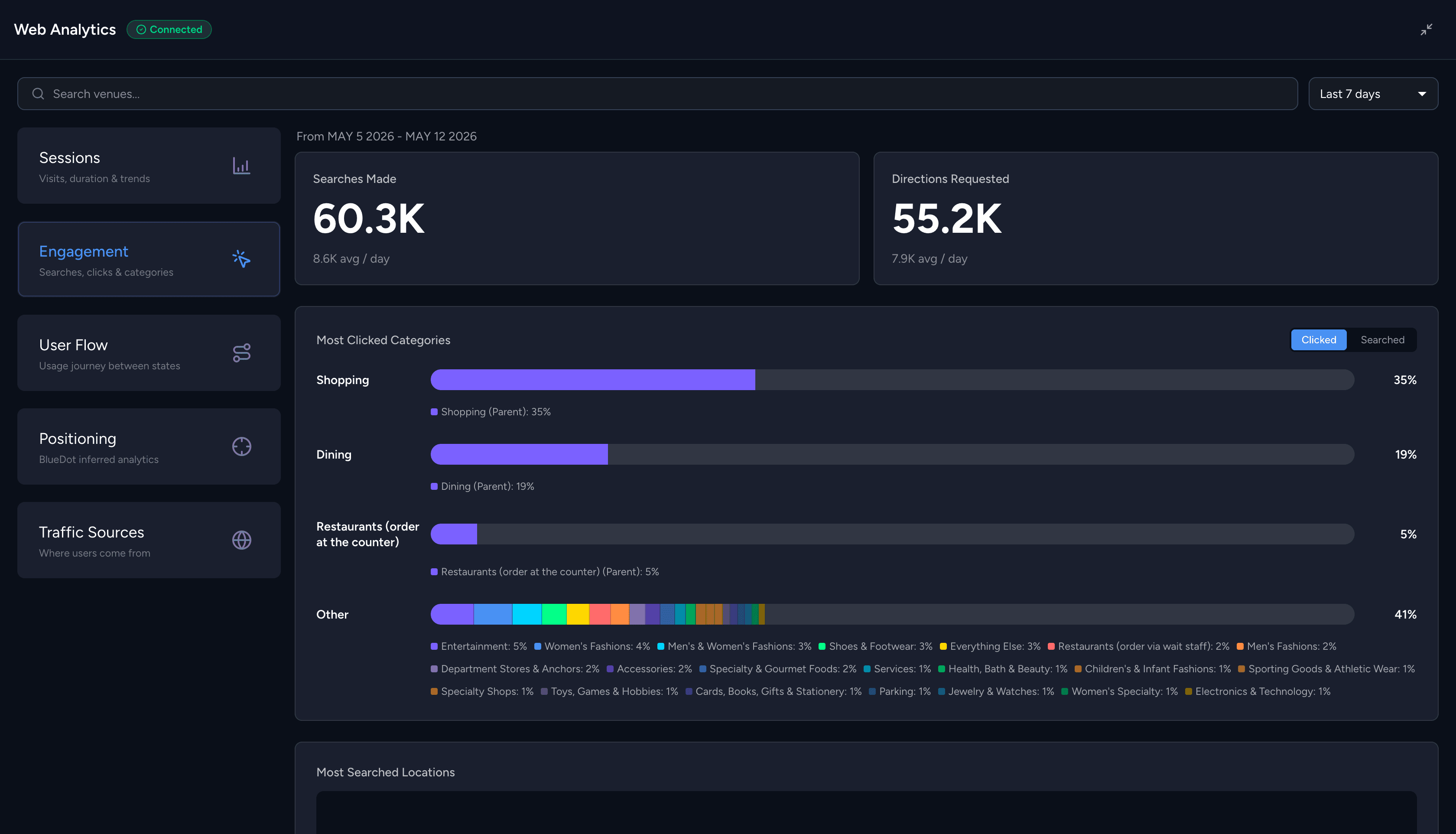
Physical venue analytics still lag far behind e-commerce, but venues that instrument their digital surfaces are closing the gap fast.


7. Create a digital experience visitors want to return to
Foot traffic is not just an acquisition problem. Repeat visits from existing visitors represent the highest-ROI lever for any retail venue. The question is whether visitors have a reason to re-engage with the venue digitally between trips.
Features like saved parking locations, personalized store recommendations, saved favorites, and a digital venue experience that improves with use give visitors a reason to return.
— Quad/Graphics, Inc.
The venues winning on foot traffic are investing in digital venue experiences that visitors actually use versus marketing campaigns that drive a single visit.
How Mappedin helps retail venues drive foot traffic
Mappedin delivers foot traffic, loyalty and revenue-enhancing capabilities across billions of square feet, with 450 million visitors guided through its platform.
Pre-visit discoverability and deal visibility
Mappedin's Digital Directory powers over 700 screens across 250 properties worldwide, averaging 1.6 million tenant searches per month. Tenant profile cards surface hours, descriptions, deals, and gallery images in a single browsable interface, with banner ads and promotional overlays that give every deal a place to be seen.
Navigation
Mappedin provides turn-by-turn wayfinding with multi-floor navigation, QR code sharing to mobile, and the kind of accuracy that keeps tenants and operators aligned. An inaccurate or unhelpful directory creates friction between the operator and tenants who feel their store is not being surfaced properly. That is a tenant retention issue, and it maps directly back to revenue.
In-venue discovery
Category browsing, search, and "top locations" algorithms surface stores visitors did not come for.
Accessibility
The platform is WCAG 2.1 AA compliant with 40+ languages and step-free routing.
Retail analytics
Search data and location insights show which stores and categories draw the most interest.
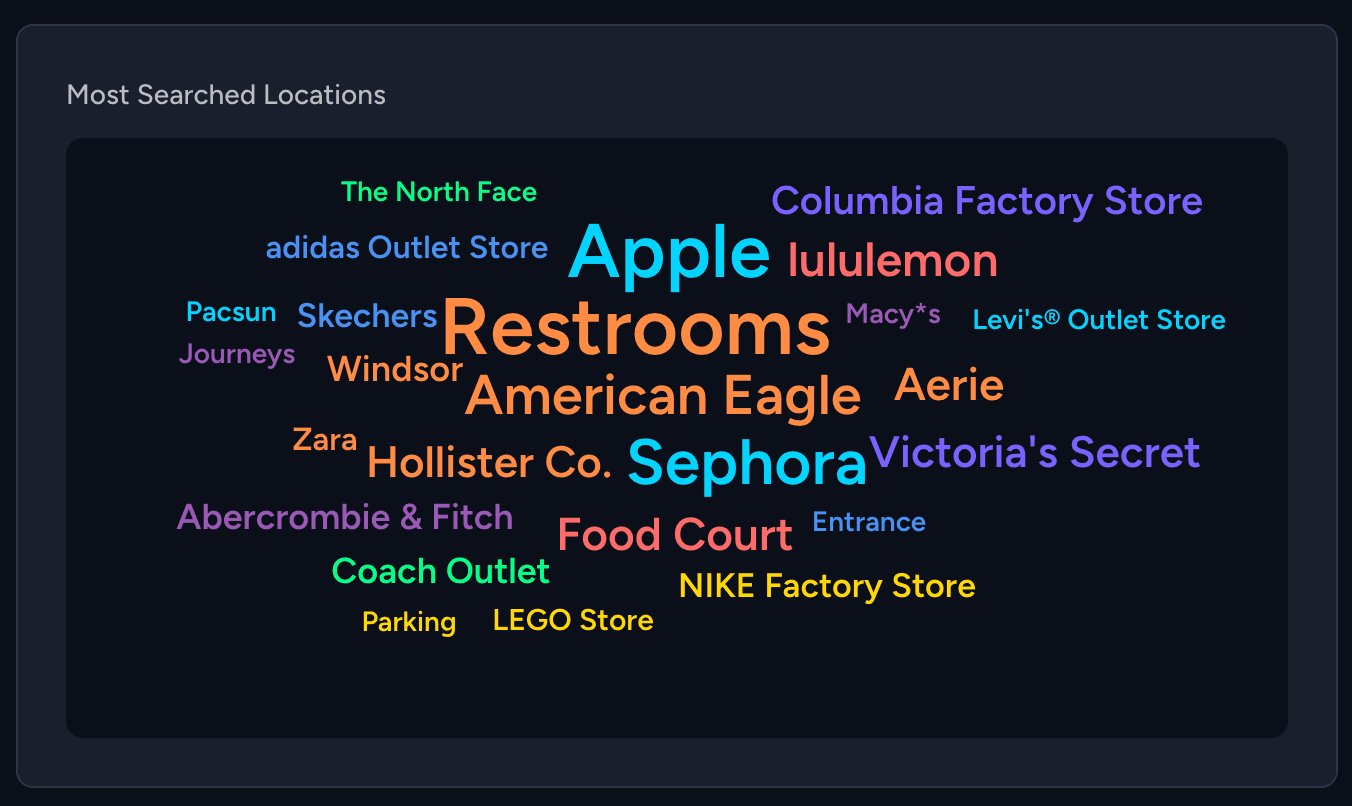
Shopper loyalty and retention
Save-my-location, QR sharing, and personalized profiles give visitors a reason to come back.
Proven impact for global retail venues
Simon Property Group, the largest mall operator in the US, with 212 properties, uses Mappedin across its portfolio. Hudson Yards relies on Mappedin to help 125,000 daily visitors navigate 28 acres.
— Patrick Flanagan, SVP, Digital Development, Operations & Strategy and Data Protection Officer, Simon Property Group
Next steps for improving foot traffic in retail stores
Foot traffic is not one thing. It is the result of visibility, discovery, navigation, accessibility, analytics, and retention working together. The venues that treat their digital experience as a foot traffic driver outperform those relying on marketing campaigns alone.
If your venue is ready to close the gap between visitor intent and tenant performance, start with the platform built for it.


Share