

A frustrated shopper searching for a parking spot or a specific store isn't going to stick around for dinner. Lost time kills dwell time, and in retail, dwell time is revenue.
Marketing and guest experience teams use Mappedin to move guests from the parking lot to the storefront, and turn the minutes they save into tenant sales and food court revenue. Wayfinding was just the beginning. Today, operators use Mappedin to power digital directories, run ad networks, and keep building data accurate across every screen.
Key takeaways at a glance
- The map is a media channel. Idle digital kiosks and map apps are passive expense centers. Transforming them into a media channel allows operators to run full-screen ad units and sell sponsored search placements, directly driving net operating income.
- Saved time is dwell time. Reducing the frustration of finding stores, parking, or amenities ensures shoppers spend more time browsing and buying, and less time searching.
- One map, every touchpoint. Keep a single source of truth for dynamic tenant directories across kiosks, web, and mobile apps.
Explore how Mappedin can power exceptional guest experiences and unify digital venue data. Try the interactive map →
7 ways retail marketing and guest experience teams use Mappedin
1. Turn pre-arrival anxiety into shopping confidence
Shoppers expect a fast transition from digital environments to the physical world. Not knowing where to park or enter causes friction before they even arrive.
Mappedin lets shoppers plan before they leave the house. Deep links and embeds put map previews on the property website, making them easy to find. RealView previews of the venue and parking by category allow shoppers to get a look inside and plan their route.
The outcome is better use of parking, less pre-arrival frustration, and protected dwell time.
2. Get every shopper from the parking lot to the store
Shopping centers are complex spaces. Multi-level buildings with fragmented signage lead to dead zones and frustrated guests.
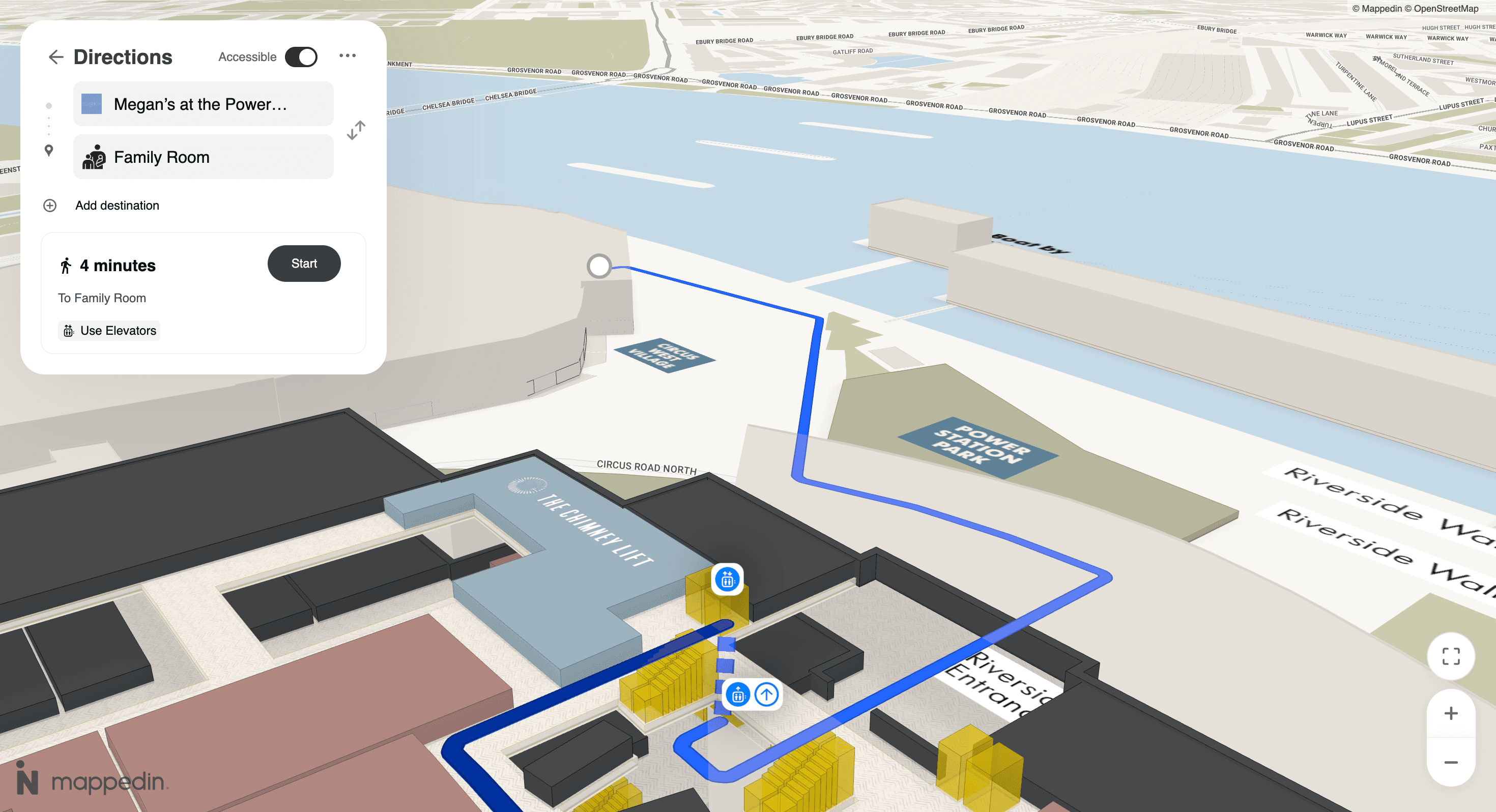
Outdoor-to-indoor routing handles the gap most maps ignore. Guests find their parking spot, get routed from the lot, and follow continuous blue dot positioning through concourses and elevators all the way to the store. One map spans the outside world and the indoors.
The result is even footfall across all concourses, preventing dead zones and increasing tenant sales per square foot.
— Patrick Flanagan, SVP, Digital Development, Operations & Strategy and Data Protection Officer, Simon Property Group
3. Keep one accurate directory across every channel
Outdated tenant signage is a constant problem. Short-term leases, pop-up shops, and seasonal kiosks change constantly, and paper maps can't keep up.
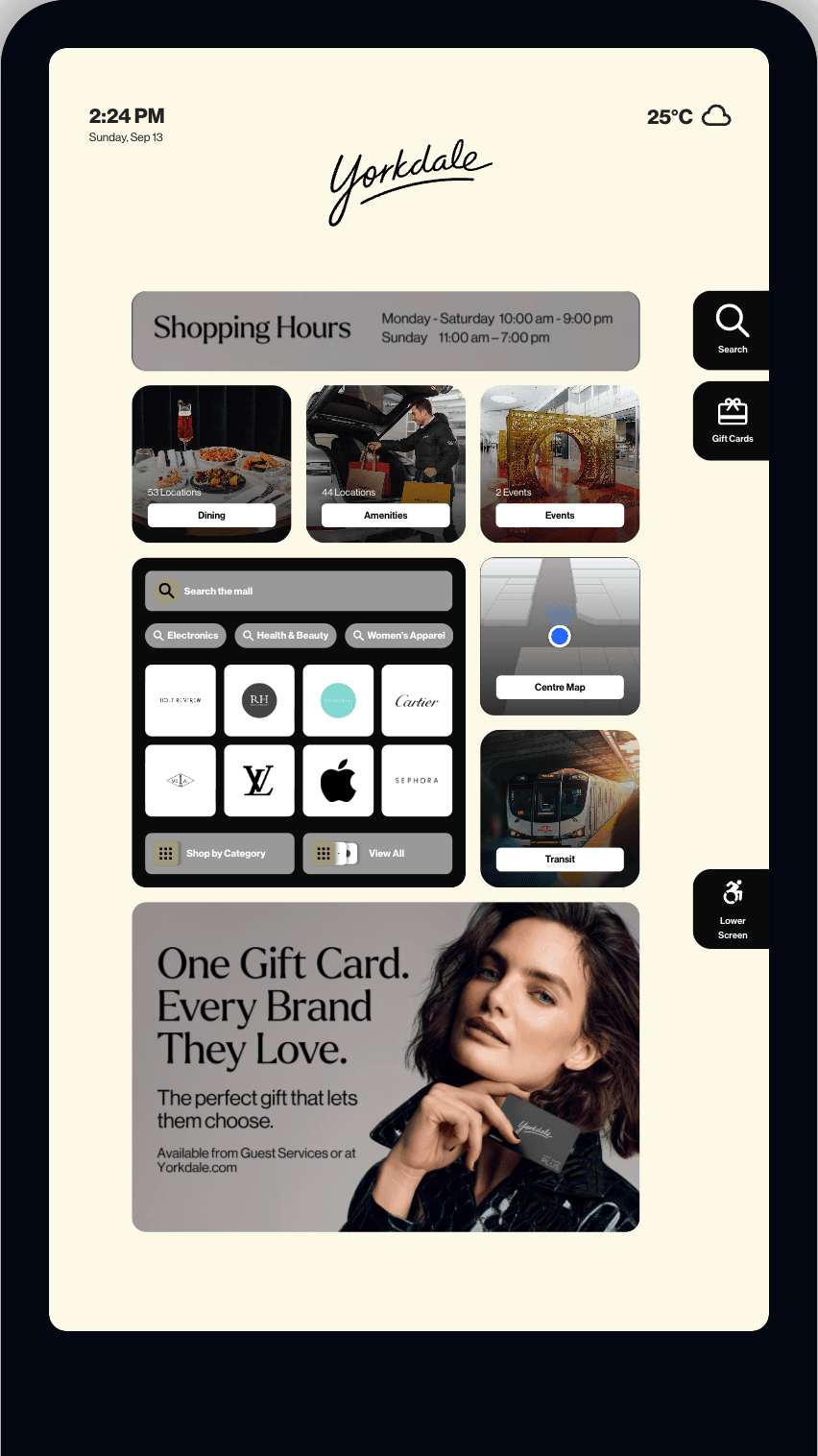
Mappedin acts as the ground truth for your directory. A centralized CMS updates store details, tenant changes, and new openings in real time. The same map publishes to the web, mobile app, and digital kiosks. Your own team makes the edits, so data stays current without vendor calls.
The win is 100% directory accuracy, lower maintenance overhead, and a reliable guest experience.
4. Route shoppers to food and pop-ups in real time
A shopper with tired feet has a decision to make: find somewhere to sit and eat, or leave the venue.
Interactive search and routing answer the question. Shoppers search by specific category or dietary need, find featured pop-ups, and get turn-by-turn directions to food courts and rest areas.
Shoppers find what they want faster, reducing walk-outs and increasing per-cap spending for food and beverage tenants.
5. Drive revenue through the digital directory ad network
Kiosks cost money to run. For most operators, they’re just a line item on the budget.
Mappedin turns the map into a revenue channel. Operators integrate directory ads, full-screen pop-ups, and sponsored search results directly into the navigation experience. A brand can pay to be pinned at the top of a search result, capturing high-intent shoppers when they are deciding where to go.
This transforms guest navigation into a media channel, boosting auxiliary income and net operating income.
6. Personalize the mall visit for every shopper
A senior shopper, a parent with a stroller, and a teenager enter the building with the same generic map. A flat experience causes confusion and limits discovery.
Mappedin lets teams build multi-stop routes by preference. Persona-based wayfinding and category suggestions cater to specific demographics.
The outcome is a tailored shopping journey that keeps guests in the building longer and encourages them to explore more of the property.
7. Make every route work for every guest
Stairs and escalators create hard barriers for guests with mobility devices or strollers. A guest who can't get to the second floor easily isn't going to spend money there.
Mappedin builds accessibility in from the start. Step-free routes avoid stairs and escalators, sending guests to elevators and ramps. Accessible zones are clearly marked on the map. Independently audited against WCAG 2.2 Level A and AA standards, the software delivers inclusive, real-world venue navigation.
The payoff is a welcoming environment that supports global compliance and empowers all guests to move around with confidence.
Why marketing and guest experience teams choose Mappedin
Where other tools map the anatomy of a space, we build its nervous system. Many venues run separate vendors for parking, directories, and web maps. The data drifts out of sync, so the app, the directory, and the sign say different things.
With Mappedin, routing, tenant directories, ad networks, and accessibility all live on one indoor operating platform. It gives operators the ground truth they need to run their venue, and the tools to build better experiences on top of it.
Implementing Mappedin before the next peak season
Treat launch as a routine, not a massive IT project. We build the map in weeks, not years.
- Decide who owns map edits. Choose who approves changes for pop-ups and short-term leases.
- Choose where the map goes live. Push it to your website, mobile app via the SDK, and digital kiosks.
- Load the details. Add the dynamic tenant directory, food menus, accessible routes, and parking zones.
- Activate the media network. Set up directory ads and decide which brands receive sponsored search placements.
- Set baselines. Track dwell time, footfall trends, and ad revenue so you can measure the lift later.
A better shopping trip and stronger revenue
A fast guest journey and retail revenue are parts of the same whole, and one location-aware map connects them. Increased revenue and improved guest satisfaction happen when discovery, routing, and targeted advertising live on a single map instead of drifting across vendors.
A venue is a living system. The operators who treat it that way command their spaces, measure the impact, and keep the advantage.


Share