

Making the right choice when it comes to venue management software isn’t often clear cut. The assessment process requires taking a closer look at what each vendor provides, who it’s designed for and if it’s built to scale as your needs change.
Two platforms in this space you may be considering are Concept3D and Mappedin.
Concept3D was built around university admissions and event promotion. It’s primarily designed for a marketing or enrollment team that needs a polished, public-facing campus experience page with a map, a virtual tour, and a calendar.
Mappedin, on the other hand, was built for the teams running the building such as facilities managers, operations leads, security directors, and digital experience teams accountable for uptime, compliance, and the coordination of people across complex indoor spaces. Mappedin’s platform offers a unique benefit to typical wayfinding and guest experience use cases because the always-accurate digital map is backed by real-time operational and security data.
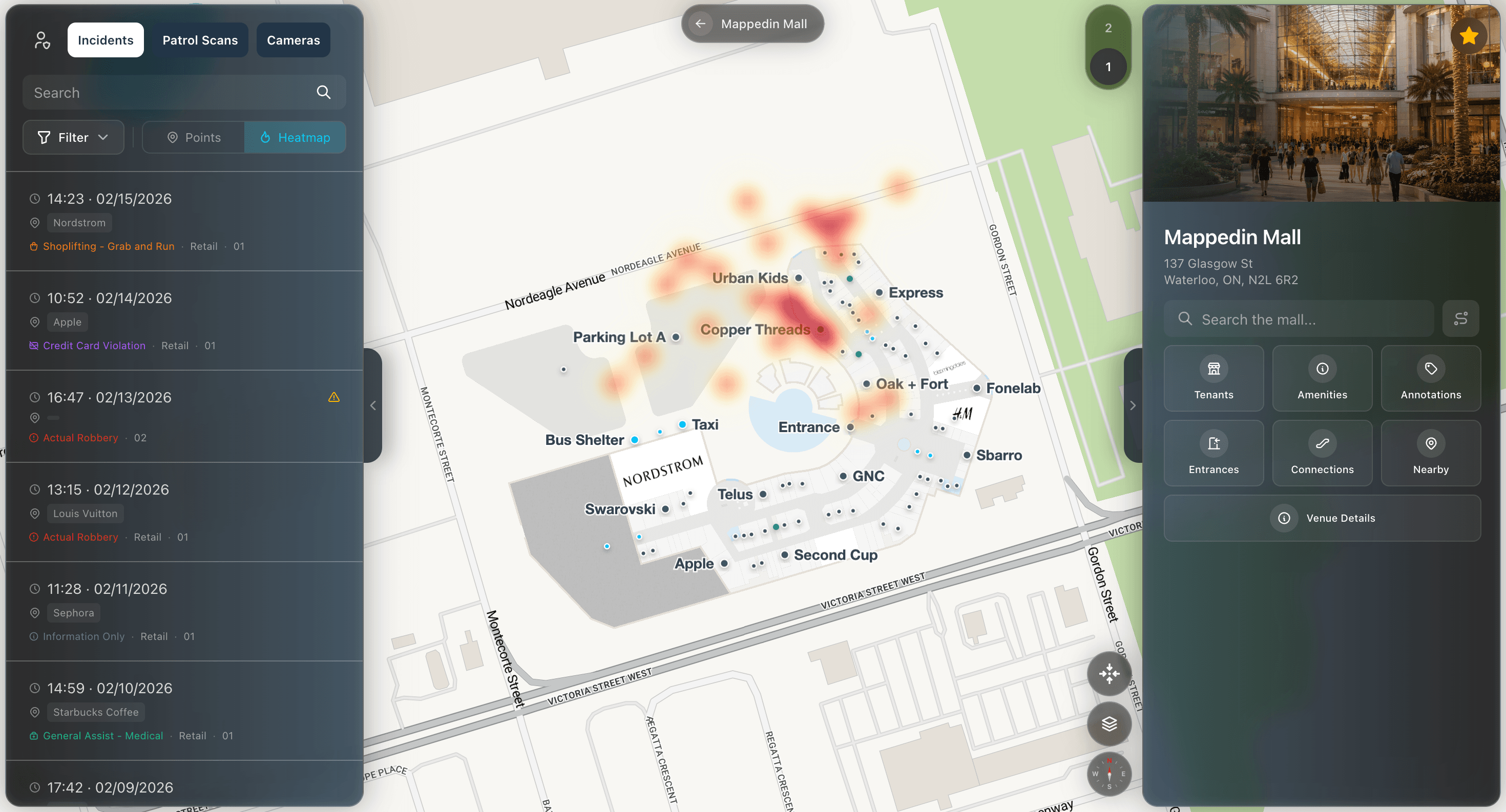
Both provide innovative tools for indoor mapping, wayfinding and event management. But the choice between these two vendors actually represents distinct approaches to dynamic maps, positioning, data syncs, and venue operations. This comparison evaluates Mappedin and Concept3D for large, complex venues whose venue management and ops teams are tasked with balancing customer satisfaction, operational efficiency, tenant relationships, and digital transformation initiatives.
Looking for an indoor mapping solution to power visitor navigation, simplify operations, and improve venue analytics? Book a custom demo of Mappedin →
What this comparison covers
This comparison is written for facilities managers, venue operations leads, security directors, and digital experience teams at enterprise venues who might be evaluating wayfinding software, venue operations software, or the broader category of venue management software for a real deployment decision.
The comparison is grounded in published platform capabilities, documented integrations, and known customer deployments. Where a capability is unclear or undocumented, it's noted as such rather than assumed.
Who uses each platform
At a high level, both platforms solve the visitor orientation problem, but only one of them was designed to serve the operations teams who live in the building.
Who is Mappedin designed for?
Mappedin is built for owners, operators, visitors and custodians of complex spaces. World-renowned mall portfolio operators like Simon Property Group and Cadillac Fairview use it to manage tenant directories and wayfinding at scale. International transportation hubs like Miami International Airport and Keflavík Airport rely on it for FIDS-connected maps and passenger navigation. Stadium operators including Lumen Field and St. Louis CITY SC/Energizer Park have deployed it for game-day fan experience.
— Aaron Brewer, Senior Product Manager, St. Louis CITY SC
Hospital systems, convention centers, and enterprise corporate campuses round out a customer base that shares one common characteristic: indoor space complexity with real operational consequences when the map is wrong or outdated.
Who is Concept3D designed for?
Concept3D's buyer profile is consistent across its various deployments: university marketing teams, admissions offices, events coordinators, and destination marketing organizations. The primary output is a public-facing experience page designed to orient prospective students, visitors, and community members. Penn State, Georgia Tech, UC Davis, and Ole Miss are representative customers. The platform is mature and well-optimized for that context.
How each platform handles indoor mapping
Mappedin
Mappedin supports multi-floor dynamic maps with turn-by-turn navigation, accessible and elevator-priority routing, Blue Dot positioning across GPS, on-demand, and continuous modes, and real-time route updates when closures or construction affect a space. The map reflects actual space conditions and feeds downstream systems, not just visitor-facing displays.
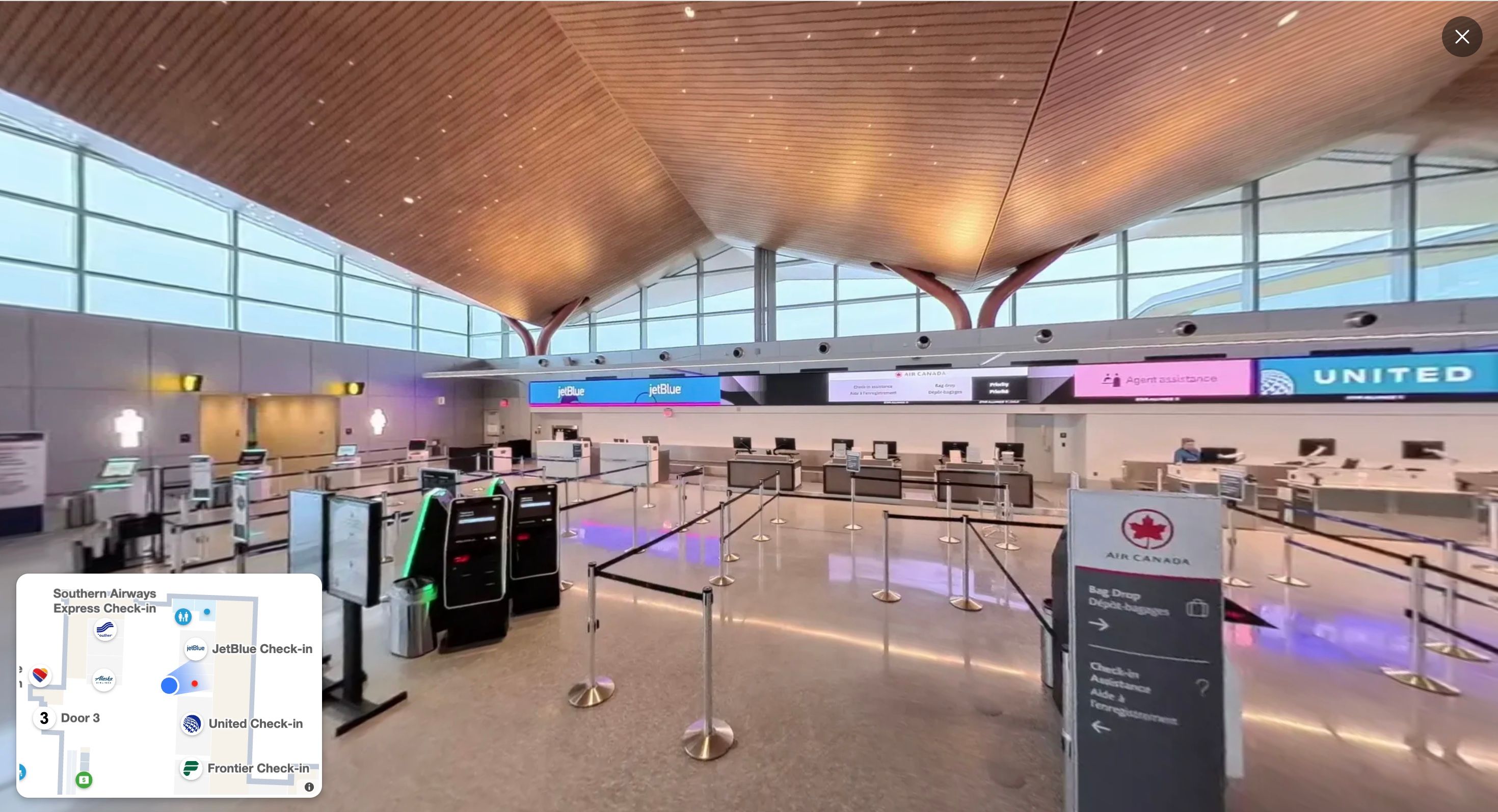
Plus, with Mappedin, users can access 360-degree indoor previews directly within the map for room-level situational awareness before arriving. The entire wayfinding experience is fully customizable to match institutional branding while reflecting actual, live space conditions.
Concept3D
Alternatively, Concept3D delivers branded, customizable indoor and outdoor maps with native 360° virtual tour integration. For campus discovery and prospective student walkthroughs, this combination is genuinely effective. The map is a visual experience designed to make a campus look and feel inviting.
For a university admissions team, Concept3D's approach is well-matched to the goal. For a complex, multi-building venue with both visitor experience, security and operations needs, Mappedin's live data surface is the better fit.


Mappedin vs. Concept3D: Capability comparison
Visitor engagement and experience
Mappedin
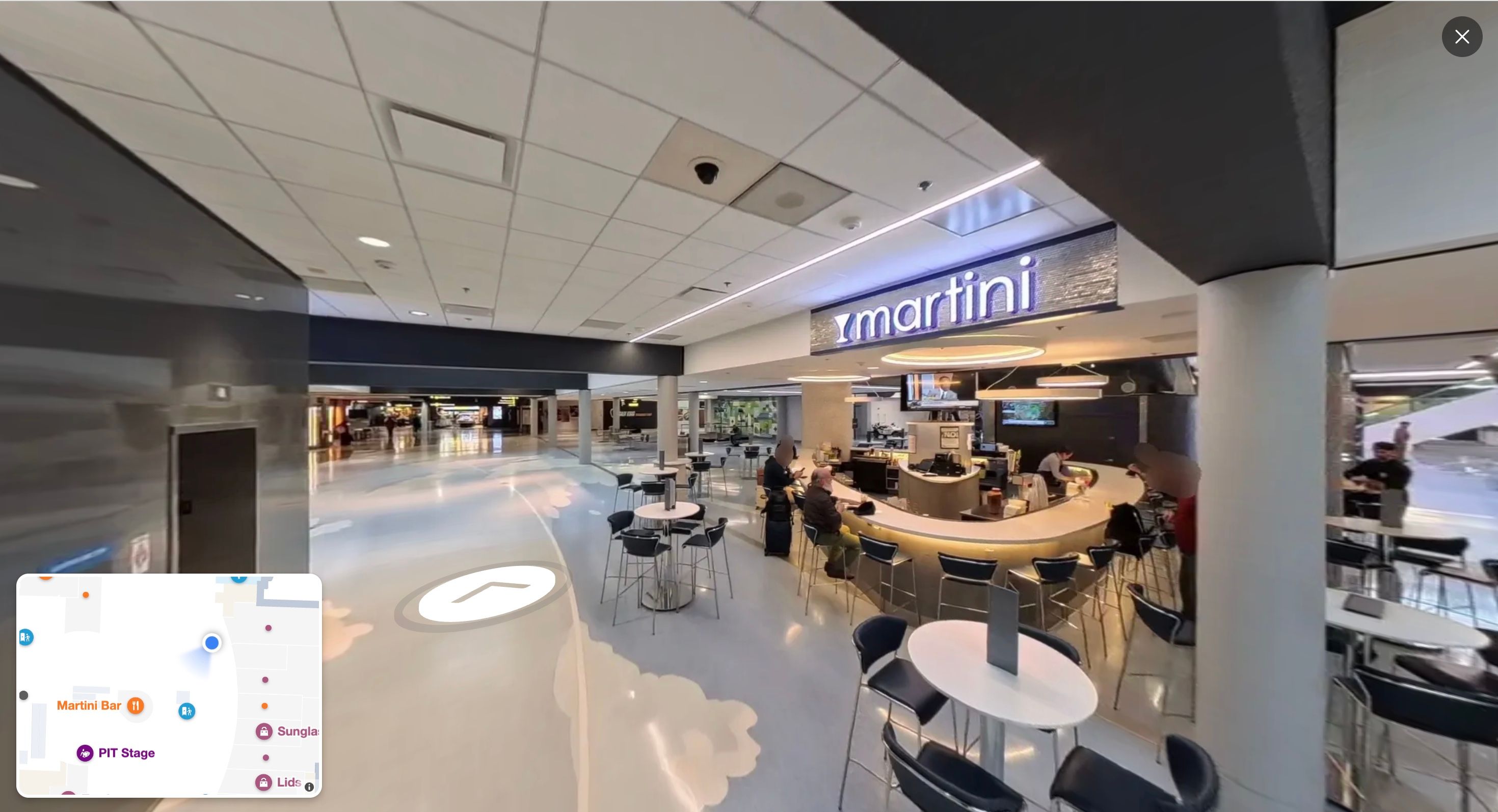
Mappedin RealView gives people a photorealistic, ground-level preview of any indoor location, directly from the map, before you step inside. RealView is an immersive, 360-degree panoramic imagery to indoor locations, similar to Google Street View but for the indoors.
— Sandra Alvarez, Director, Passenger Experience, Ottawa International Airport
It gives people a photorealistic, ground-level view of an environment, helping them orient themselves and navigate with confidence before they even arrive.
Concept3D
Concept3D offers 360º tours that allow teams to highlight and prioritize specific points along the customer’s journey to drive awareness, action, and conversion.
The verdict
For marking and admissions teams primarily looking for virtual tour and walkthrough capabilities, Concept3D might be a viable option with their 360º tours designed for walkthroughs. But for holistic venue operations teams across marketing, experience and operations, Mappedin is ideal, providing dynamic indoor context designed for real-world navigation to enhance safety and awareness.
Data integrations and live feed support
Mappedin
The Mappedin platform is built on a core philosophy: your data should never live in a silo. We believe any data source operating inside your venue (from IoT sensors to enterprise systems) should instantly connect to and enrich your maps.
Because open data integration is built into the foundation of Mappedin's platform, your map transforms from a static visual picture into a live, multi-department command center for your venue's entire tech stack.
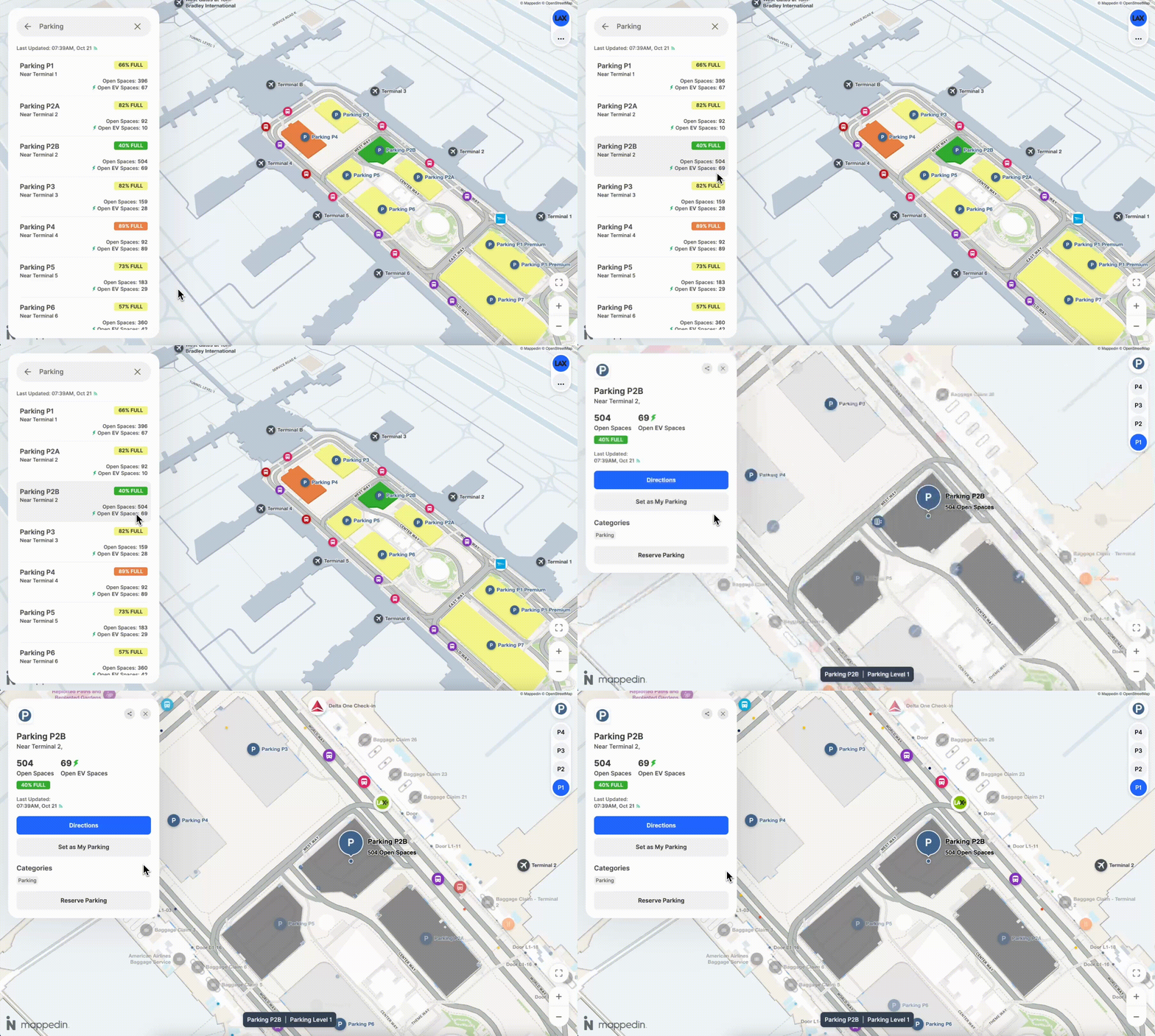
Mappedin's Data Sync enables no-code API connections to external data sources across a venue's existing stack:
- AODB and FIDS feeds at airports
- Real-time wait times and parking occupancy
- Transit schedules and shuttle integrations
- Building management systems
None of these connections require custom SDK development for each data source. For operations teams managing a tech stack that already includes multiple live data feeds, this distinction stands out.
Concept3D
Concept3D supports parking capacity feeds, bus and shuttle data, and visitor information feeds. For a campus environment where the primary goal is orientation and event awareness, that coverage is typically adequate.
The verdict
Mappedin is designed to serve as the visual data layer across existing systems, not a standalone map product that needs to be built around.
CMS, content management and SDK dependency
Mappedin
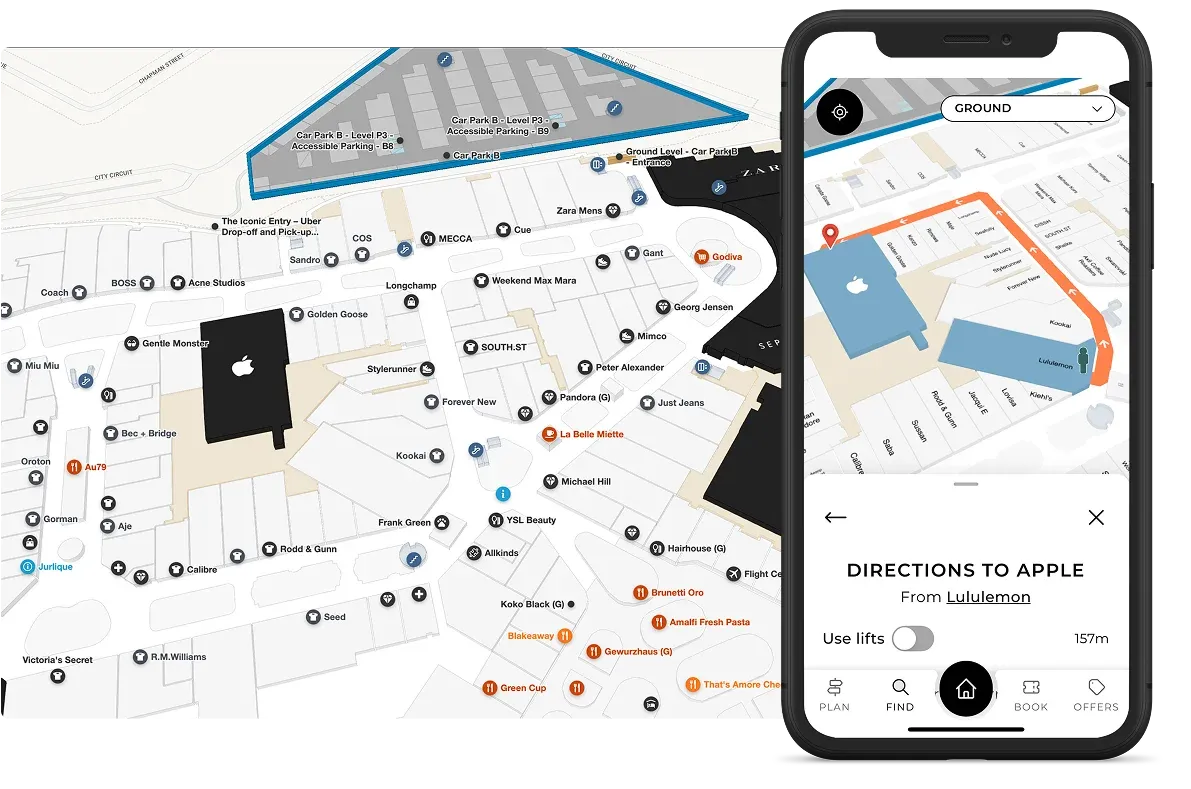
Mappedin ships a production CMS, a no-code Data Sync tool, and a full web experience that does not require developer involvement for day-to-day content updates, space changes, or data connections. The SDK is one distribution channel among several, not the only path to customization.
Concept3D
Concept3D provides a user-friendly CMS for day-to-day text, media, and location pin updates. However, because the map relies on pre-rendered graphic models, any physical changes like updating building geometry, modifying floor plans, or altering pathways require submitting architectural files to Concept3D’s design team and waiting weeks for a managed update.
Further, while out-of-the-box web embeds are easy to deploy, embedding interactive maps or custom wayfinding into native iOS/Android apps creates a direct developer dependency on their APIs and SDKs.
The verdict
For facilities and operations teams managing seasonal tenant changes, pop-up activations, or construction reroutes, the difference between submitting a ticket to a third-party dev team and updating it in-house in minutes has a significant operational cost. Mappedin is the better solution there.
Events, room reservations and campus mapping use cases
Mappedin
Mappedin supports event and reservation workflows through integrations with:
These integrations are appropriate for corporate campuses and mixed-use venues where events are one operational layer among many.
Concept3D
Concept3D offers a Localist Events platform – a centralized, branded, HIPAA-compliant events calendar purpose-built for high-traffic academic calendars and community event promotion. For universities where event coordination and student engagement are the core use case, it's an out of-the-box solution to consider.
The verdict
Venues where event promotion and student engagement is the primary product will find Concept3D's native event tooling better suited to that need. Venues where events are one function within a larger operational environment will find Mappedin's integration-based approach more flexible. Plus, Mappedin connects to whatever room-booking system and positioning method the campus or venue already trusts.
Venue operations, security and facilities management
Mappedin
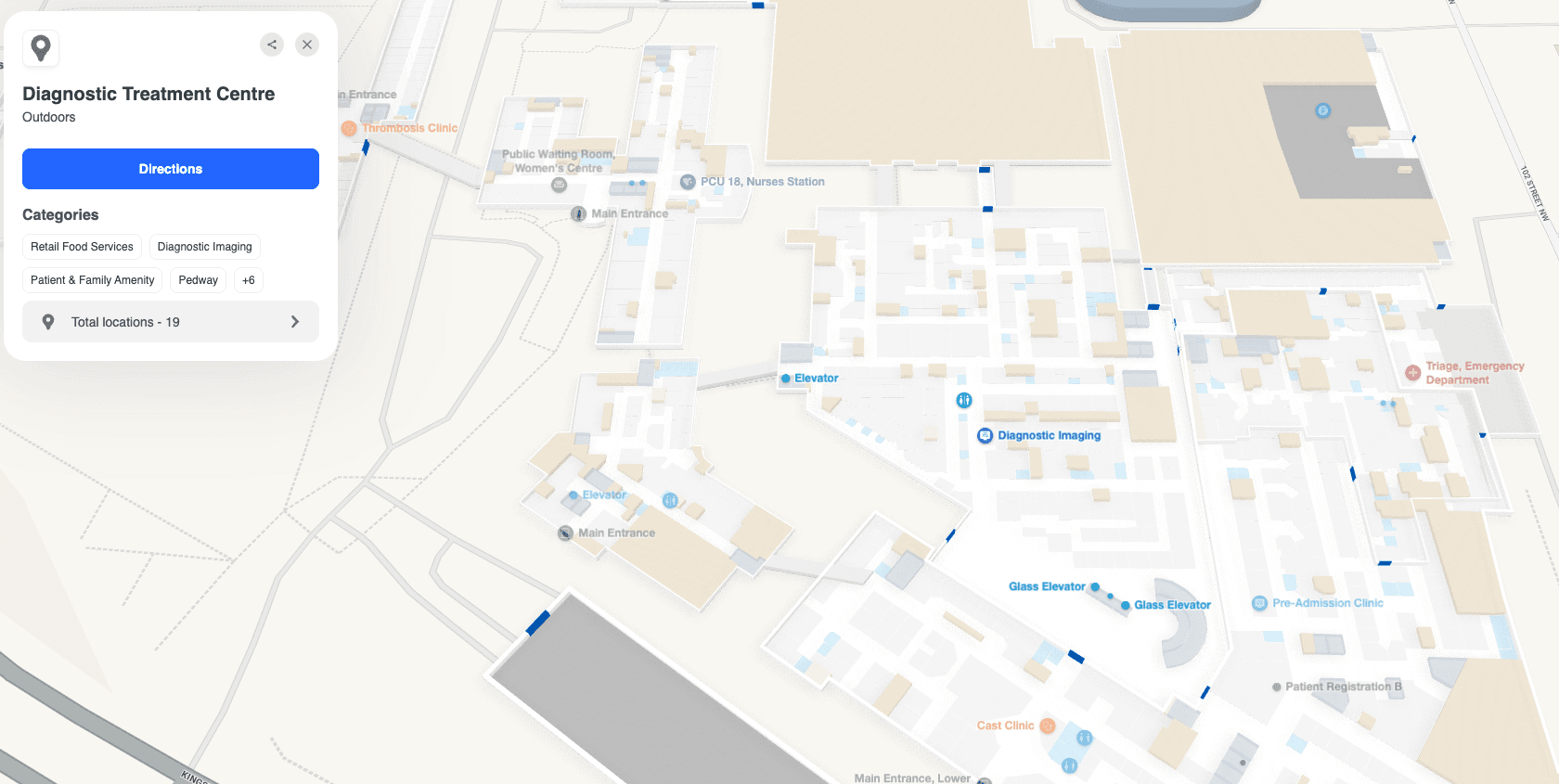
Mappedin brings wayfinding, directory, retail media, leasing, security, facilities, and analytics into a single indoor data environment. Operations teams can manage their full tech stack visually, including workplace applications, security tools, and building management systems.
Concept3D
Concept3D is not designed for security teams, facilities managers, or building operations workflows. The platform was built for visitor engagement and event promotion.
The verdict
For venues where indoor spatial data needs to flow to security dashboards, incident response systems, or facilities work orders, Mappedin is the only platform in this comparison with documented capability in that direction.
Analytics and operational intelligence
Mappedin
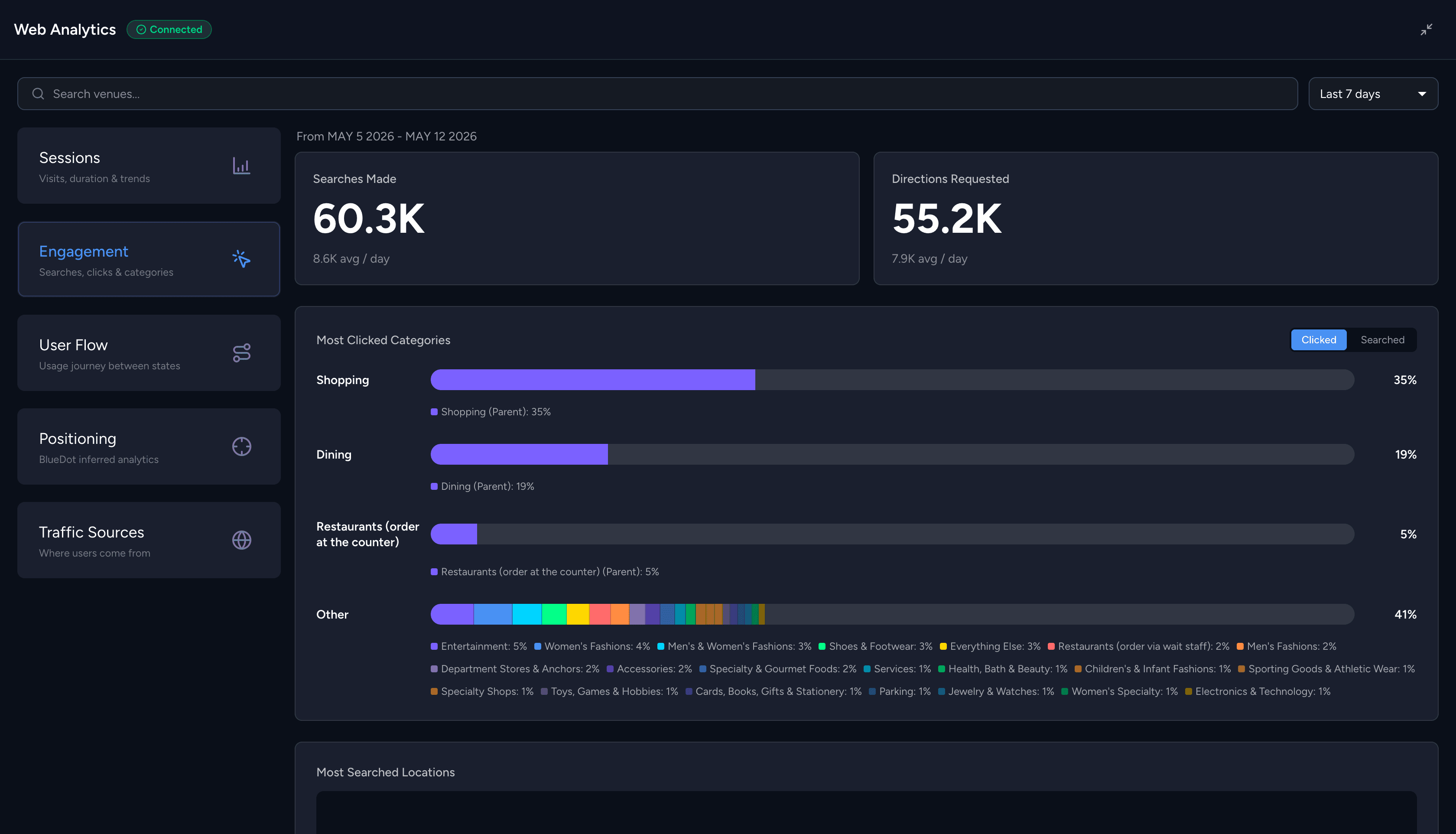
Mappedin's Analytics surfaces visitor search behavior, navigation patterns, foot traffic, space utilization, session duration, and popular destinations.
- Stadium and entertainment venue operators use it to staff amenity areas and reduce congestion.
- Mall and mixed-use operators use this data to inform tenant placement decisions and lease negotiations.
- Airport digital teams use it to optimize passenger flow.
Concept3D
Concept3D provides visitor journey analytics covering discovery, navigation, events, engagement, and measurement. For a university admissions team tracking campus visit conversion or an events team measuring attendance, that's the right data.
The verdict
The analytics layer reflects who each platform was built for. Both collect meaningful data. But the data each platform surfaces is calibrated to a different kind of decision-maker.
Accessibility and compliance
Mappedin
Mappedin is audited against WCAG 2.2 A and AA, and its accessible routing actively prioritizes elevators and ramps in route generation with accessible profile switching built into the navigation layer.
Mappedin holds SOC 2 Type II certification with penetration testing across core applications and data hosted on ISO 27001-certified AWS and Azure infrastructure.
Concept3D
Concept3D cites more than 10 years of accessibility leadership with UsableNet validation and holds SOC 2 certification with documented resilience for high-traffic events.
The verdict
Both platforms meet WCAG 2.1 AA standards, and both are credible for enterprise procurement requirements, though the specifics of each organization's security review will determine which posture is a better fit.
Consider Mappedin if...
- You value enterprise venue breadth: shopping mall portfolios, international airports, NFL and MLS stadiums, hospital systems, convention centers, and multi-location university systems at a scale and vertical range that Concept3D doesn’t match today
- You’re seeking operational platform depth: live data integrations, no-code Data Sync, facilities and security team tooling, and multi-system indoor data management go well beyond Concept3D's designed scope
- You need navigation capability: turn-by-turn directions, Blue Dot positioning, multi-floor routing, and real-time closure management represent a more complete best mapping software stack than Concept3D's current offering
- You require a multi-department spatial system of record: While Concept3D targets prospective student recruitment and event calendars, Mappedin powers the whole digital campus from wayfinding to campus safety routing, facilities management, and accessibility planning.
— Patrick Flanagan, SVP, Digital Development, Operations & Strategy and Data Protection Officer, Simon Property Group
Ready to see how Mappedin could work for your organization? Book a custom demo of Mappedin →
Consider Concept3D if...
- You are on an Admissions or Student Marketing team: Concept3D offers an enrollment-focused web portal with 360° tours, and public event calendar feeds.
- You view maps as a web marketing asset rather than operational infrastructure: You need a high-level 3D visual for web visitors, but don't need back-of-house spatial controls, live updates, or multi-system operations tooling.
- You need deep community event features: Destination marketing organizations and community event platforms are a unique Concept3D focus
Frequently asked questions
Is Concept3D only for universities?
No, but higher education is a market it serves. Concept3D also serves destination marketing organizations, sports venues, and convention centers. Its events calendar and 360° tour tooling are most naturally suited to visitor engagement and event promotion contexts.
Can Mappedin be deployed at a university campus?
Yes. Mappedin has active deployments at Bowie State University, Mohawk College and University of Waterloo, among others. For universities whose primary need is indoor wayfinding and operational coordination rather than admissions-focused visitor engagement, Mappedin is a credible fit.
Can Mappedin handle event calendars and room bookings?
Yes, through integrations with Microsoft Places, Zoom, Yarooms, and Tableair. These are not native products within Mappedin, so organizations where event promotion is the primary use case should evaluate whether integration-based support meets their needs.
What is the difference between Mappedin's Data Sync and a standard API integration?
Data Sync is a no-code tool that connects external data sources to Mappedin's map and CMS without requiring developer involvement for each connection. A standard API integration typically requires custom development work to configure, maintain, and update. For operations teams managing multiple live data feeds, Data Sync removes the engineering bottleneck from routine data connections.
Does Mappedin require developers to manage map content?
No. Mappedin's production CMS allows facilities and operations teams to update space configurations, tenant information, and routing rules without developer involvement. The SDK is available for custom app builds, but it's not required for day-to-day content management.
Which platform is better for a venue with both public-facing wayfinding and internal operations needs?
Mappedin. If a venue needs to serve visitors with navigation while also coordinating facilities management, security workflows, and live data across operational systems, Mappedin's platform architecture is designed for that scope. Concept3D is optimized for the public-facing layer.
How do the two platforms compare on security and compliance?
Both carry SOC 2 certification. Mappedin holds SOC 2 Type II with penetration testing across core applications; Concept3D holds SOC 2 certification with documented high-traffic resilience. Both support WCAG 2.1 AA. Mappedin additionally holds GDPR compliance and hosts data on ISO 27001-certified infrastructure.
Mappedin vs. Concept3D: The bottom line
The choice between Mappedin and Concept3D comes down to primary use case and team requirements. If the goal is a polished, public-facing visitor experience with a native events calendar and 360° virtual tours, Concept3D is a mature product that's well-matched to that problem.
If the goal is to run a complex venue – coordinating facilities, operations, security, and visitor experience across a live indoor data environment – Mappedin is purpose-built for that. The platform's depth in venue operations software, live data management, and multi-system coordination reflects a product roadmap that was designed around the people responsible for the building, not just the people visiting it.
Related resources:


Share