A traveler anxious about missing their connecting flight isn't looking to explore duty-free. Lost time is lost revenue, and knowing what passengers need and when they need it is core to a functional terminal experience.
For too long, indoor mapping has over-promised and under-delivered. Mappedin has focused on one vision: mapping the indoors at scale.
Where other tools map the anatomy of a space, we build its nervous system. Passenger experience teams use VenueOS, Mappedin’s indoor operating platform, to move travelers from parking to gate without friction, then turn the minutes they save into non-aeronautical revenue. We deliver real, airport-scale mapping, so operators can command their spaces, not just view them.
VenueOS can power exceptional passenger experiences and improve landside operations. Book a demo →
Key takeaways at a glance
- Indoor maps are more than just wayfinding. The map is a revenue channel. Interactive maps act as an ad channel, letting operators feature sponsored restaurants and targeted shopping, nearby lounges, or concessions along walking routes to capture underutilized terminal retail.
- One platform, one source of truth. Keep web, app, directory, and signage accurate across construction detours, closed security lanes, and temporary concourse closures, and let your own operations team adjust routing in real time.
- Location-aware data changes the journey. When routing, security clearance levels, accessible paths, and live queue sensors share one location-aware map, a traveler's route to their gate can balance checkpoint loads, avoid stairs, and adjust for swing gates.
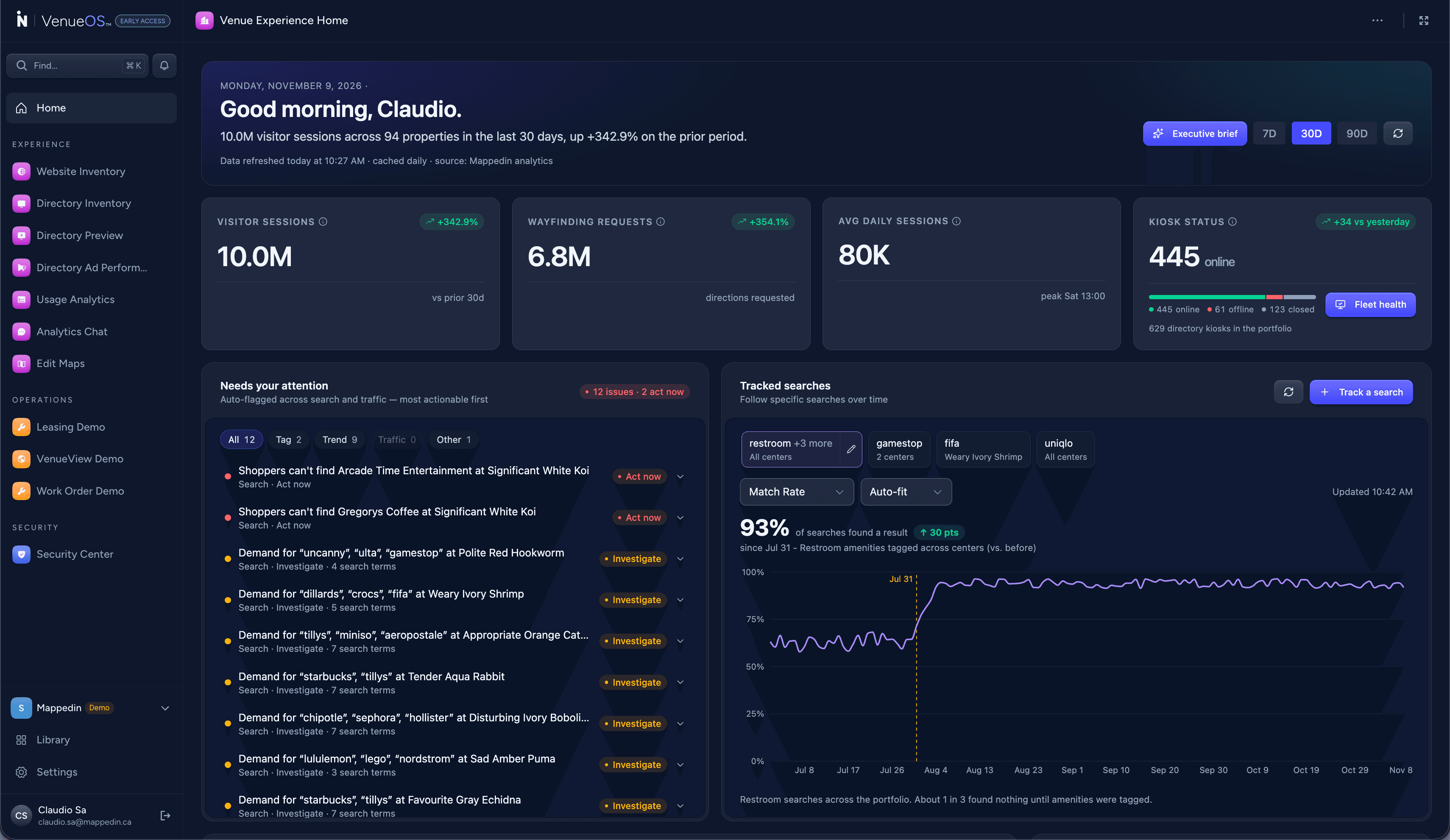
10 actionable ways Passenger Experience teams use VenueOS
A terminal only has so much square footage, staff, and time. From the parking garage to the boarding gate, every piece of the passenger journey is an opportunity for operators to remove friction and capture value. Here are ten ways VenueOS empowers airport operators to ensure positive traveler experiences, generate more revenue, and streamline operations.
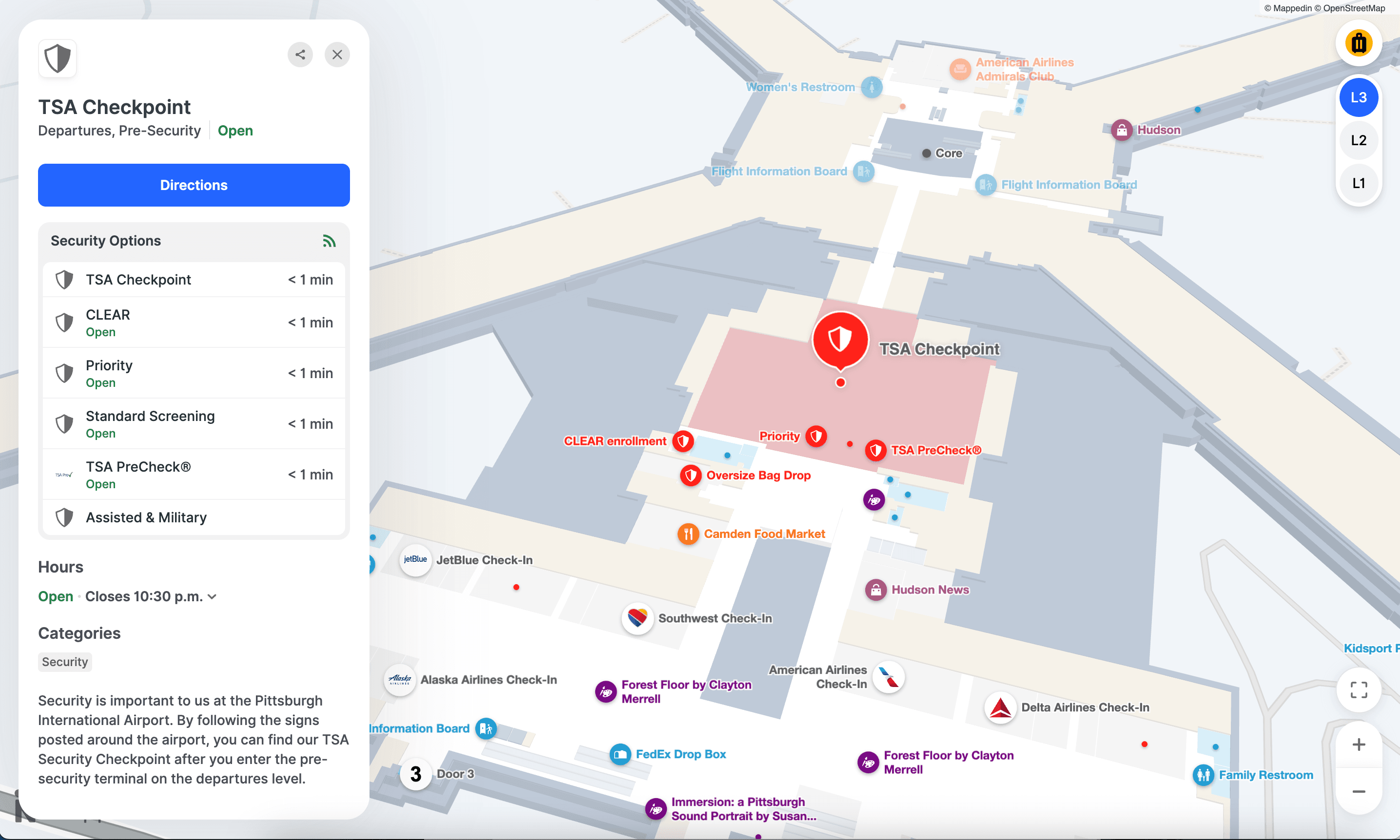
1. Balance security wait times with checkpoint orchestration
Passengers panic when wait times are unknown, leading to security bottlenecks and passenger anxiety at primary checkpoints. Integrating live queue sensors like LiDAR or Wi-Fi onto the map provides step-by-step directions that balance passenger flow across checkpoints, such as North vs. South TSA. The outcome is improved passenger throughput and faster security clearance.
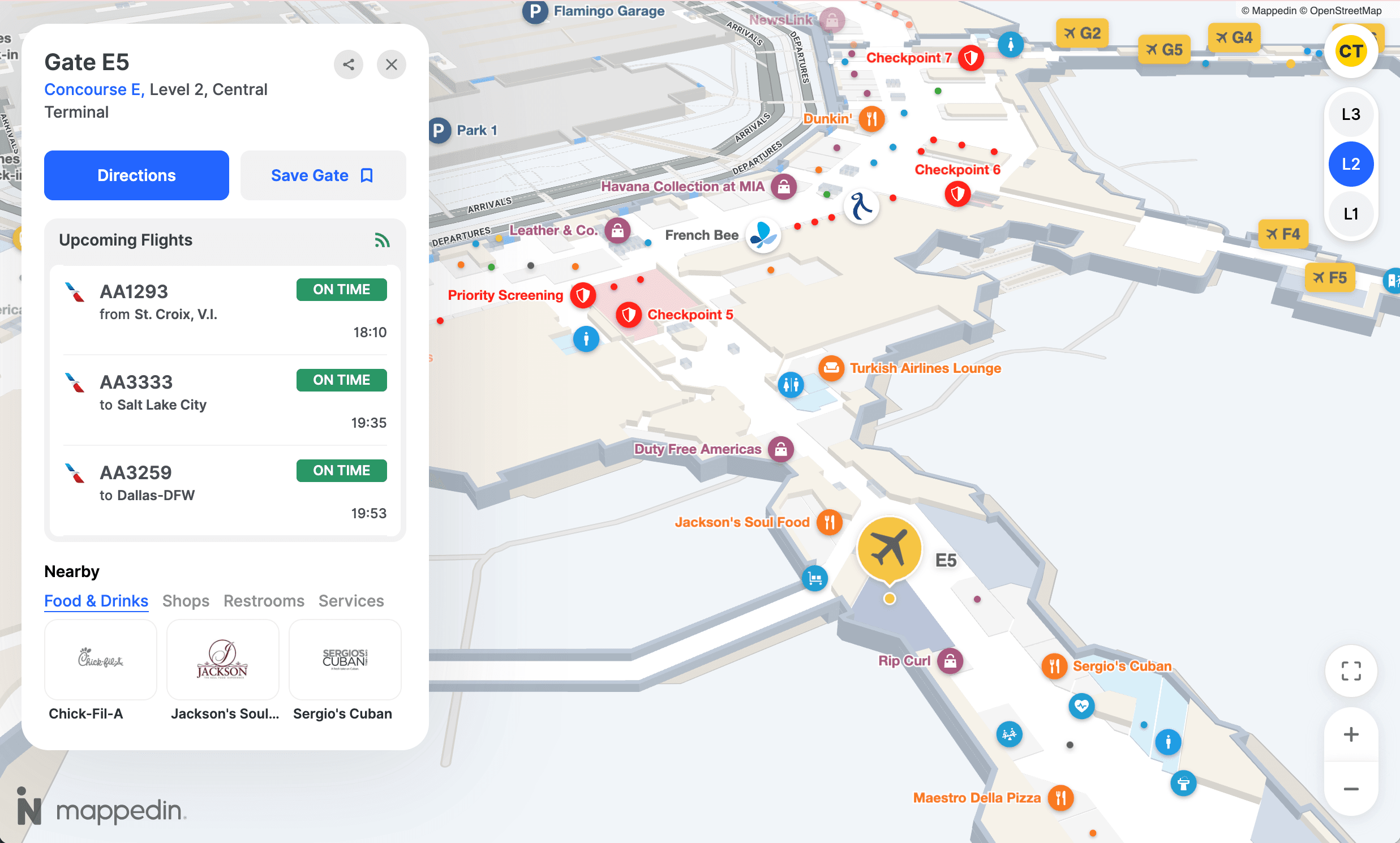
2. Provide gate-to-gate and flight-aware wayfinding
When travelers aren't confident about walking times to their connecting gate, they experience anxiety and skip terminal dining and shops. Flight-aware directions show precise walking routes and times from their current location, giving passengers peace of mind. The result is higher Airport Service Quality (ASQ) scores and improved passenger Net Promoter Score (NPS).
3. Drive non-aeronautical revenue through concession discovery
Concessions hidden in sprawling concourses suffer low foot traffic, resulting in underutilized terminal retail and low concession spend. The interactive map acts as an ad channel, letting operators feature sponsored restaurants, duty-free deals, and targeted ad placement directly along passengers' walking routes. This increases non-aeronautical revenue and concession revenue per enplanement.
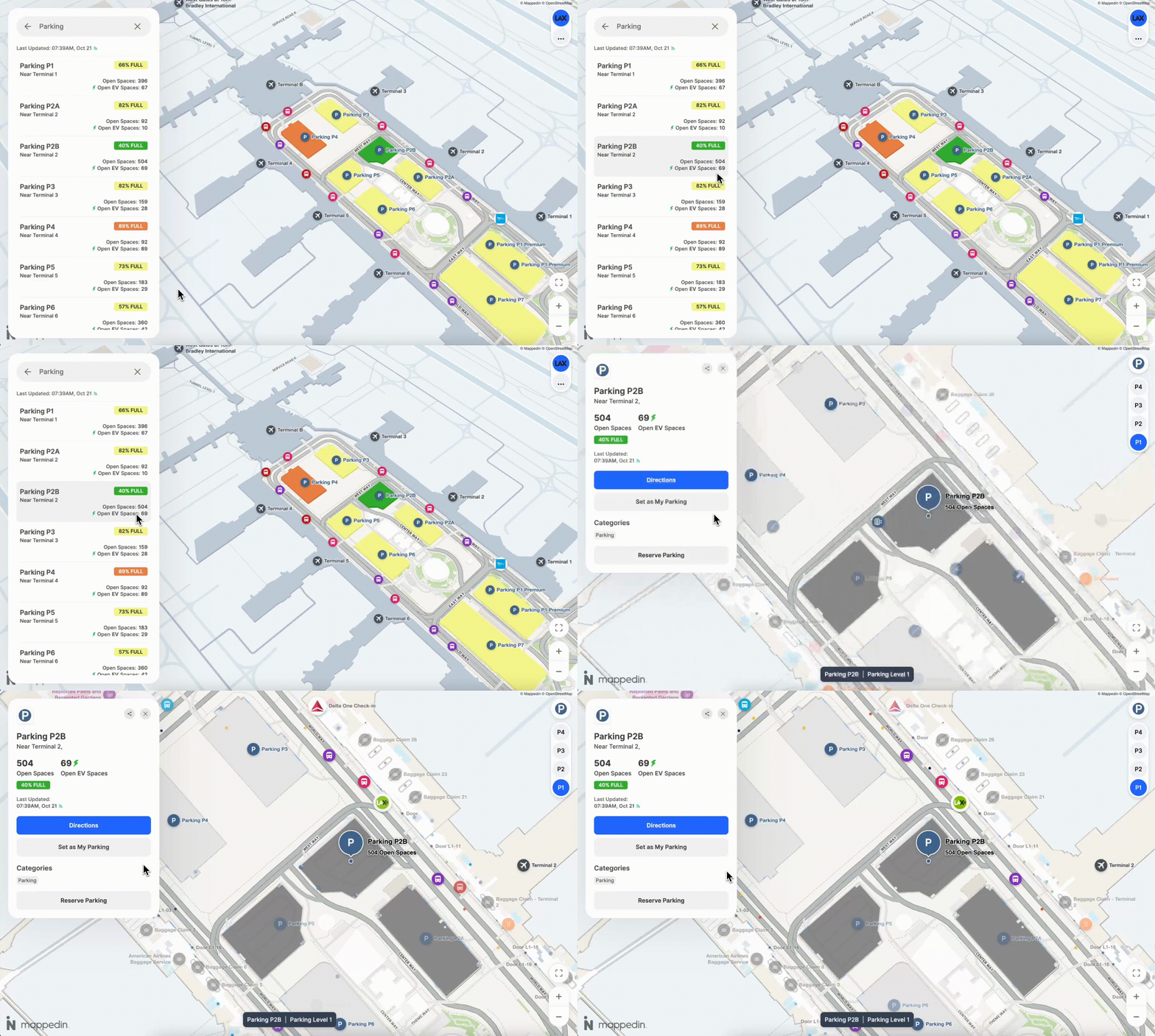
4. Route passengers continuously from parking to gate
Massive garages cause curbside navigation stress and lost parked vehicles, creating anxiety before travelers even reach the terminal check-in. The map provides end-to-end continuous blue dot guidance from parking garages to terminal check-in, allowing travelers to save parking floor or zone pins and locate elevators back to their vehicles.
5. Personalize routes for duty-free and retail shopping
Airports struggle with under-utilized dwell time as passengers sit idly at gates instead of exploring high-margin duty-free and specialty retail. The map guides passengers through retail zones, highlighting duty-free, lounges, and luxury concessions tailored to flight dwell time and terminal profile.
6. Streamline international connections and swing gates
Different border controls, customs routing, and security clearance levels (like TSA PreCheck or Global Entry) cause missed flights and frustrated travelers, reflecting poorly on the airport. VenueOS allows passengers to search by flight or security clearance level to receive dynamic, gate-to-gate turn-by-turn routing – efficiently guiding them through security checkpoints and customs corridors to eliminate missed connections.
7. Navigate terminal disruptions with real-time map updates
Construction detours, closed security lanes, and temporary concourse closures lead passengers to blocked pathways. Airport operations can quickly open or close corridors and adjust turn-by-turn routing in real time based on terminal conditions or operational changes.
8. Ensure step-free routing for universal accessible compliance
Passengers with wheelchairs, strollers, or heavy luggage get stuck at stairs and escalators, leading to mobility friction and high assistance costs. Dedicated accessible routing automatically directs passengers via elevators and wide corridors to meet ADA and WCAG standards.
– Bart Smith, General Manager, The Calgary Airport Authority
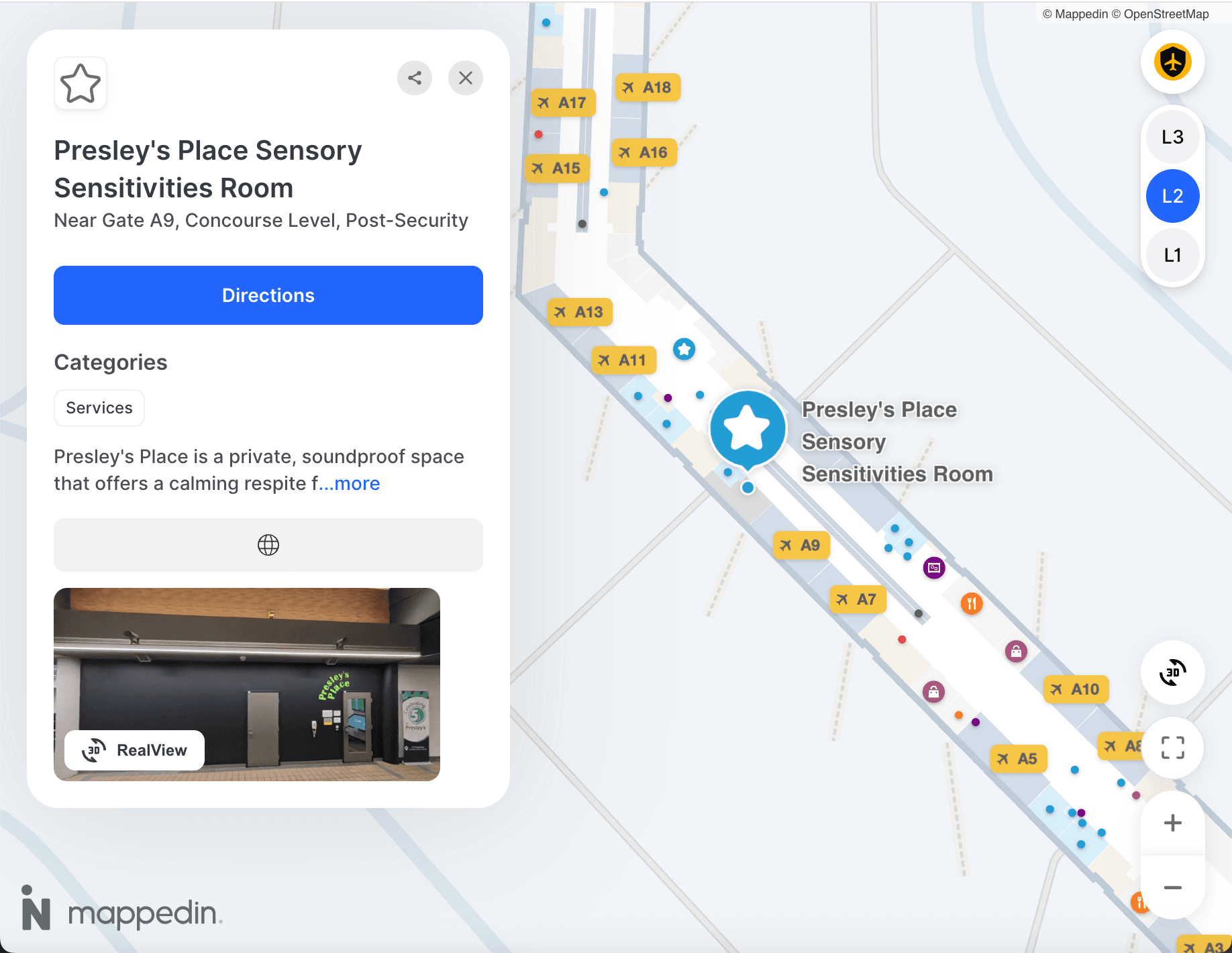
9. Support neurodivergent travelers with sensory wayfinding
Complex airport environments often route travelers along paths that provide sensory triggers, such as overly crowded spaces. The map generates a dynamic pathway that takes passengers through quiet sections for ease of travel and allows them to preview quiet zones or booths before arrival.
10. Track ground transit, parking, and shuttles to reduce curbside congestion
The traveler journey begins and ends outside the terminal, where curbside confusion and lost vehicles increase operational costs. Overlaying live GPS transit positions for trams, rental buses, and rideshare zones onto the map prevents curbside congestion and coordinates shuttle times.
Why airports choose VenueOS for passenger experience
Many terminals run separate vendors for the app map, directories, parking, and accessibility. Each has its own data, and they drift out of sync, so the app, the directory, and the physical signage say different things.
With VenueOS, gate routing, points of interest, featured retail partners, accessibility, and live transit feeds all live on one location-aware map. It’s the only platform that powers every system: wayfinding, security, leasing, asset management, maintenance, and public safety, breaking down silos between teams. It serves as ground truth for every building.
Implementing VenueOS before the next peak travel season
Maps are created at a speed, scale, and cost no one else can match – in weeks, not years. Launching should follow a checklist rather than a one-off project:
- Decide who owns map edits (i.e., Digital, Passenger Experience, or Ops) and who approves changes for construction or gate realignments.
- Build a map layout template for standard operations and emergency contingencies, so swing gate changeovers follow a routine.
- Choose where the map goes live: website, airline ticket emails, airport app via the SDK, terminal directories, and curbside signage.
- Load the concessions with retail and dining details, plus lounge access, premium security lanes, and step-free accessible routes.
- Decide which food and retail partners get featured placement and how you'll report foot-traffic results back to them.
- Set KPI baselines for ASQ and CSAT, security clearance times, concession revenue per enplanement, and assistance costs, so you can show the lift later.
A functional terminal journey and stronger revenue
A frictionless passenger journey and terminal revenue are actually parts of the same whole, and one indoor operating platform is the lever that connects them. Increased revenue and improved passenger satisfaction are what happens when discovery, step-free routing, and targeted retail placement live on a single source of truth instead of drifting across vendors.
VenueOS ties together the disparate data systems inside a venue, in real time. A terminal is a living space where routing, security operations, accessibility, and transit systems respond to every traveler. The operators who treat it that way keep the advantage, because they command their spaces instead of just viewing them.

Turn passenger dwell time into revenue
Guide travelers from curb to gate, put duty-free and dining on the way, and grow terminal revenue.
Get startedShare